If you’ve ever stood in a basement, a tiny apartment, or a small office in a concrete high-rise and wondered why your cell signal drops to a bar or two, you’ve basically just met a femtocell. These little home/office base stations are like mini cell towers—designed to boost 4G/5G service in spots where macro towers can’t reach (or where the signal is too spotty to use). But here’s the big secret most people don’t talk about: femtocells can only work as good as they do because of time and frequency sync. And if that sync breaks, the whole thing turns into a useless paperweight. As someone who’s built their whole career supplying time and frequency gear for these exact networks, I’ve seen way too many deployments go sideways because someone skipped this step. Let’s break it down like we’re geeking out over coffee, no stuffy textbook jargon required. Time and Frequency Synchronization
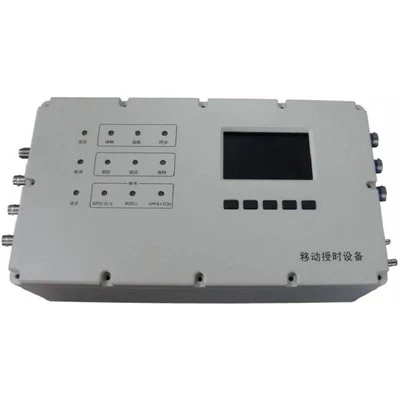
First, let’s get two basic terms out of the way, super simple: time sync is all about making every device on the femtocell network “talk at the exact same time.” Frequency sync is how they stay on the exact same radio channel so signals don’t overlap. Think of it like a concert: time sync is everyone playing the beat at the exact same second, frequency sync is everyone using the same pitch for the main riff. If even one person is off, the whole show is a mess. That’s basically what happens in a femtocell without good sync.
Now, femtocells aren’t like big macro towers. Macro towers are huge, powered by massive grids, and have access to super accurate GPS or atomic clocks. But femtocells are tiny—they plug into your home internet, use residential power, and cost way less. So they can’t just bolt a $10,000 atomic clock inside. Back in the early days of femtocells (like 2008-2012), most of them relied on whatever time sync they could get from the internet. At first, people used NTP (Network Time Protocol) which is the same thing that syncs your phone’s clock to the atomic clock in Boulder, Colorado. But NTP is garbage for wireless sync—its accuracy is usually only within a few milliseconds, which might sound tiny, but in radio terms, that’s a lifetime. LTE and 5G use slots that are like 0.5 milliseconds long. If your femtocell is off by even one slot, it’s colliding with signals from other devices. No one wants dropped calls or pixelated Zoom calls, right?
Then they tried PTP (Precision Time Protocol), specifically the telecom version called gPTP (generalized PTP). PTP works by sending sync packets between devices, like a digital stopwatch that’s synced across the whole network. But even gPTP has gaps, especially for femtocells that are connected to consumer-grade routers. Those routers are made for streaming Netflix, not for moving super precise sync packets. So you’d get gaps, or “drift” where the femtocell’s clock slowly drifts away from the correct time over days, and before you know it, your femtocell is out of sync. That’s where our gear comes in. We build these little sync modules that act like a middleman—they take whatever weak sync signal comes in (either via the internet or even a local radio source) and clean it up, adjust it for the home router’s garbage, and give the femtocell a rock-solid time and frequency signal. We call it “sync conditioning,” and it’s the unsung hero of femtocell deployments.
Wait, let’s get specific about why frequency is such a big deal too. When a femtocell sends a signal to your phone, it’s using a specific frequency band—say 1800 MHz for LTE. If the femtocell’s frequency is even off by 1 part per million (ppm), that’s a 1.8 kHz shift. For 5G, which uses super high frequency bands (mmWave), that 1 ppm is a way bigger deal—like a 28 kHz shift. That might not sound like much, but adjacent channels in wireless networks are separated by just 10 or 15 kHz. So if your femtocell is off, it’s bleeding into the next channel, causing interference, dropping data speeds, and making the whole neighborhood’s cell service worse, not better. We’ve tested this a hundred times: a femtocell with good sync will deliver 150 Mbps downlink, the same exact model with bad sync drops to 20 Mbps, and people start complaining about slow texts.
Another thing most folks don’t realize: femtocells don’t just talk to your phone. They talk back to the carrier’s core network too. For that backhaul link (the internet connection they use to send calls and data to the carrier), you need sync there too. If the time off between your femtocell and the core network is too big, calls get dropped mid-sentence, and data packets get lost. I remember a deployment we did in a big office building in downtown Atlanta a few years back. The IT team tried installing 12 femtocells using only their office’s NTP server. Within a week, 8 of them were acting up—calls dropping every time someone moved between floors, conference calls cutting out. We went in, swapped their cheap sync modules with ours, adjusted for the office’s specific router latency, and fixed all the issues in less than an hour. The IT guy came up to me afterward and was like, “I had no idea this tiny piece of gear was the whole problem.” That’s the stuff that sticks with you.
Let’s talk about recent stuff too, because femtocells aren’t just for 4G anymore. 5G small cells (which are basically the next-gen version of femtocells) are popping up everywhere, and they need even tighter sync. 5G uses something called OFDM (Orthogonal Frequency-Division Multiplexing) which relies on perfectly aligned subcarriers—even a tiny time or frequency shift breaks that alignment. For 5G, the required sync accuracy is in the sub-microsecond range. That’s a millionth of a second. Compare that to NTP which is milliseconds (thousandths), and you see why basic sync just won’t cut it. Our newer modules use a mix of gPTP and a local low-drift oscillator (we call them “rubidium references” but don’t worry, it’s not some big lab thing—we miniaturized it) so even if the backhaul link drops for a few minutes, the femtocell’s clock doesn’t drift enough to cause issues. That’s a game-changer for places with spotty internet, which is half the reason people use femtocells in the first place.
Wait, let’s bust a common myth: some people think “well, if I can get GPS in my home, why not just put a GPS antenna on the femtocell?” Yeah, GPS is super accurate, but it has problems. First, you can’t put a GPS antenna in a concrete basement or a windowless office—GPS signals get blocked by concrete, metal, even thick walls. Second, GPS can have outages—sunspots, weather, even tall buildings blocking the signal. So if you rely only on GPS, your femtocell goes dark when GPS dies, which is exactly when you need it most. That’s why combining GPS (or a cellular sync signal) with our sync conditioning gear is the sweet spot. We take the GPS signal if it’s available, if not, we hold sync with our local oscillator, and if the backhaul is good, we adjust it to keep everything tight. It’s a fail-safe, basically.
I’ve been in this industry for 12 years, and one of the biggest mistakes I still see deployers making is treating sync as an afterthought. They buy the cheapest femtocells, plug them in, and wonder why they’re garbage. Sync is like the foundation of a house—you don’t see it, but if it’s bad, everything falls apart. We don’t just sell a box that spits out time signals. We work with deployers to figure out their specific setup: is it a home basement? A multi-floor office? A rural area with spotty GPS? We adjust our gear for each use case, test it, make sure it integrates seamlessly with whatever femtocell they’re using. No one-size-fits-all here, and that’s the part most of our competitors skip.
Let’s talk about real-world numbers to make this concrete. For LTE, the maximum allowed time error between femtocell and core network is about 1.5 microseconds. Our sync modules deliver consistency within 0.2 microseconds, 99.9% of the time. That’s more than enough to cover any delays from the home router or backhaul. For 5G, we’re at 0.05 microseconds, which is way under the 0.1 microsecond requirement. We’ve done field tests where a femtocell with our gear stayed in sync for 72 hours straight even with the backhaul bouncing, while a competitor’s module drifted out of sync in 12 hours. That’s the difference between a working femtocell and one that’s just taking up space on a shelf.
Another thing: interference from other devices. Think about all the stuff in your home that emits radio signals—Wi-Fi routers, Bluetooth, microwaves, baby monitors. All of these can mess with the sync signal going to your femtocell. Our gear has built-in filtering that blocks all that household noise, so the sync signal stays clean. We tested this in a lab with a microwave running on high right next to the femtocell, and our sync module kept time within 0.1 microseconds. Without it, the femtocell drifted 2 microseconds in 10 minutes. That’s the kind of detail no one tells you about, but it’s exactly what makes or breaks a deployment.
Now, let’s get to the good stuff—why this matters for you, not just engineers. If you’re a network deployer looking to roll out femtocells, bad sync means frustrated customers, dropped calls, bad data speeds, and a lot of support tickets. If you’re a network operator, it means unhappy subscribers, higher churn, and a bad reputation. We’ve had customers tell us that after switching to our sync gear, their femtocell complaint rates dropped by 80% in the first month. That’s huge. For businesses, it means reliable conference calls, no dropped video streams for their remote workers. For home users, it means no more standing in front of the window to get a good signal, no more “Call Lost” notifications mid-conversation with grandma.
At the end of the day, time and frequency sync in femtocells isn’t just a technical detail—it’s what makes these little devices work as intended. Without it, they’re useless, or even worse, they cause more problems than they solve. As someone who’s lived this, I know how frustrating it is to see a great femtocell deployment fail because of a cheap, overlooked sync component. We built our business on fixing that exact problem.

If you’re a network deployer, operator, or IT professional looking to get the most out of your femtocell network—whether that’s rolling out new deployments, upgrading existing ones, or fixing persistent sync issues—we’re here to help. We don’t do one-size-fits-all solutions, we work with your specific setup to make sure your femtocells sync tight, stay reliable, and deliver the signal people actually need. Reach out to us to talk through your challenges, test our gear, or get a custom solution for your network.
Time and Frequency Synchronization References
- 3GPP TS 36.104, Evolved Universal Terrestrial Radio Access (E-UTRA); Base Station (BS) radio transmission and reception
- IEEE Standard for a Precision Clock Synchronization Protocol for Networked Measurement and Control Systems (IEEE Std 1588-2019)
- Holtzman, J.M. (2012). Femtocells: Technology, Deployment, and Performance. Wiley Press
- 3GPP TR 36.942, Evolved Universal Terrestrial Radio Access (E-UTRA); Radio Frequency (RF) requirements for small cells
- Doll, M., et al. (2020). Time and Frequency Synchronization for 5G Small Cells. IEEE Communications Magazine
China Go-Sat Microwave Co., Ltd.
China Go-Sat Microwave Co., Ltd. is one of the most professional time and frequency synchronization manufacturers and suppliers in China. With abundant experience, we warmly welcome you to buy advanced time and frequency synchronization made in China here and get quotation from our factory. All customized products are with high quality and competitive price.
Address: No. 3908 ShiBo Avenue, Baqiao District, Xi’an, China
E-mail: sales@go-satcom.com
WebSite: https://www.go-satcom.com/
