If you’ve ever worked with electrical wiring—whether you’re an electrician wiring a commercial building, a hobbyist building a DIY speaker system, or an engineer designing custom electronics—you’ve likely encountered the quiet, unassuming layer around copper wire: insulation. It’s easy to overlook, but that thin plastic or rubber coating is the barrier that keeps current where it belongs, preventing shocks, short circuits, and fires. As a copper wire supplier, I get asked this question all the time: “What’s the dielectric strength of copper wire insulation, and why does it matter for my project?” Copper Wire

The short answer? Dielectric strength is a measure of how well an insulation material resists electrical breakdown—meaning it can withstand a certain amount of voltage before it stops being an insulator and starts conducting electricity. For copper wire insulation, this value isn’t one-size-fits-all; it depends on the type of insulation, its thickness, operating conditions, and how the wire will be used. But let’s break this down in plain, practical terms, because this isn’t just textbook science—it’s what determines whether your wiring works safely and reliably, day in and day out.
First, let’s make sure we’re on the same page. Copper is an excellent conductor, which is why it’s the go-to for electrical wiring, motors, transformers, and countless other applications. But left uncoated, copper would oxidize, corrode, and create a path for stray current. Insulation turns copper wire into a usable component, and its dielectric strength is its most critical specification. Think of it this way: if you have a 120V household circuit, the insulation has to keep that 120V from leaking to ground or another wire. If the insulation’s dielectric strength is too low, even a small voltage spike could punch a hole in it, leading to a short circuit.
So, what’s the actual number we’re talking about? Dielectric strength is measured in volts per mil (V/mil) or kilovolts per millimeter (kV/mm), where 1 mil equals 0.001 inches. Common insulation materials for copper wire include PVC (polyvinyl chloride), cross-linked polyethylene (XLPE), rubber, Teflon (PTFE), and silicone. Each has its own dielectric strength range, and that’s where you’ll find the numbers that matter.
For example, standard PVC insulation, used in most residential building wire, has a dielectric strength of around 15 to 20 kV/mm, or roughly 38 to 51 V per mil. That means a 1-mil thick PVC layer can withstand about 38 to 51 volts before breaking down. Wait—so a 1-mil layer is enough for 120V household wiring? No, not exactly, because voltage isn’t the only factor. Thickness is a big one. If you use a thinner insulation layer, its effective dielectric strength drops, and you also have to account for real-world conditions: heat, moisture, mechanical stress, and age. A 10-mil thick PVC layer, common in general-purpose building wire, can handle hundreds of volts, which is why it’s safe for 120V and even 240V circuits.
XLPE, a harder, heat-resistant insulation used in high-voltage power cables, has a higher dielectric strength, around 20 to 30 kV/mm (51 to 76 V/mil). That’s why it’s the go-to for underground power lines, where wires have to withstand thousands of volts without failing. Teflon, used in aerospace, automotive, and high-temperature electronics, tops the list at around 60 to 100 kV/mm (152 to 254 V/mil)—it’s designed for extreme environments, where even tiny insulation failures can lead to catastrophic issues.
But here’s the thing: dielectric strength isn’t a fixed number you can look up and call it a day. As a copper wire supplier, I’ve seen projects go wrong because someone only checked the base dielectric strength without considering how it will perform in their application. Let’s talk about the factors that change that number, because that’s where the rubber meets the road (pun intended).
First, thickness. Dielectric strength is often tested on thin, uniform material samples, but when you’re working with copper wire insulation, the thickness varies by wire gauge and application. The general rule is: thicker insulation = higher breakdown voltage, but not in a perfect linear way. If you double the thickness, you won’t double the dielectric strength. There’s a threshold where beyond a certain point, adding more insulation doesn’t give a proportional increase in performance. For small gauge wires used in electronics, insulation thickness is minimal, so you have to rely on materials with higher inherent dielectric strength, like PTFE or polyimide, instead of thicker PVC.
Then there’s temperature. All insulation materials degrade when they get too hot, which lowers their dielectric strength. PVC, for example, is rated for 60°C standard use, but if it gets exposed to continuous heat above that, its insulation resistance drops, and it can break down at 20-30% lower voltage than its rated value. XLPE is rated for 90°C, and high-temperature silicone can go up to 200°C, making them essential for appliances, industrial machinery, and automotive wiring where heat is a constant. If you’re using copper wire in an oven component, for example, you can’t use standard PVC—you need insulation that maintains its dielectric strength at high temps.
Moisture is another big one. Most insulation materials are hydrophobic, but not entirely. If insulation absorbs water, that creates conductive pathways on the surface, lowering the effective dielectric strength. Underwater cables, for example, need special water-resistant insulation, because even a small amount of moisture can reduce dielectric strength by 50% or more. I’ve had customers working on marine electrical systems come to me asking for wire with water-blocked XLPE insulation, because standard PVC would fail quickly in saltwater environments.
Mechanical stress also matters. If insulation gets nicked, scraped, or stretched during installation, that creates thin spots where breakdown is far more likely. Dielectric strength is tested on undamaged samples, but a tiny scratch can reduce the effective thickness by half, leading to a short circuit. That’s why for tight, high-stress applications like robotics or medical devices, we supply copper wire with extra-thick, flexible insulation that resists nicks and abrasion, rather than standard insulation that works fine for dry, low-stress building wiring.
Age and chemical exposure are final factors. Over time, insulation can become brittle, crack, or react with oils, solvents, or other chemicals, which degrades its dielectric properties. Industrial wiring in factories, for example, is often exposed to oils from machinery or cleaning chemicals, so we recommend insulation that’s oil-resistant—again, a spec that directly impacts dielectric strength over the life of the wire.
Now, why does this matter to you, whether you’re specifying wiring for a project or buying copper wire for your products? Let’s use real-world examples from the customers I work with every day. A few months back, a commercial electrician came to me with a problem: he’d installed standard PVC building wire in a new retail space, and within a month, several short circuits were happening near the loading dock. The dock area gets very cold in winter, and standard PVC gets brittle at low temperatures, leading to cracks in the insulation. The solution? We swapped in low-temperature-rated PVC insulation, which maintains its dielectric strength at -40°C, and that fixed the issue.
Another recent example: a manufacturer of electric bike motors needed copper wire for their stator windings. They initially used copper wire with standard XLPE insulation, but when the motor ran, it generated high heat that caused the XLPE’s dielectric strength to drop, leading to intermittent shorts. We recommended our high-temperature, high-dielectric PTFE-coated copper wire, which can handle the motor’s operating temp of 150°C without losing insulation performance. That small change prevented thousands of dollars in warranty claims for the manufacturer.
As a copper wire supplier, my job isn’t just to sell wire—it’s to help you choose the right insulation for your application, because dielectric strength isn’t just a number on a spec sheet. It’s the difference between a wiring system that works safely for 20 years and one that fails in a year. Too many customers make the mistake of buying the cheapest wire, only to run into issues down the line because they overlooked dielectric strength and the factors that impact it.
Let’s also clear up a common misconception: higher dielectric strength isn’t always better. For some applications, you don’t need the highest possible dielectric strength, and that extra performance adds unnecessary cost. A simple 120V indoor circuit doesn’t need Teflon insulation—it would be overkill, and far more expensive than needed. The key is matching the insulation’s dielectric strength (and its ability to maintain that strength under your operating conditions) to the voltage, environment, and lifespan you need.
So, when you’re evaluating copper wire for your next project, don’t just look at conductivity (which copper delivers better than any other common metal) or price. Ask about the insulation’s type, its rated dielectric strength, and how it performs in the conditions your wire will face—temperature, moisture, mechanical stress, and chemicals. That’s the part that will keep your system safe and reliable.
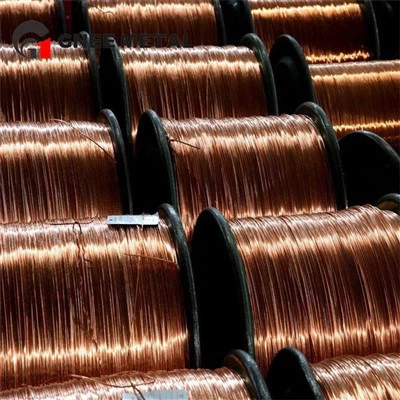
If you’re in the market for custom copper wire, or you have questions about which insulation is right for your specific application, I’m here to help. Whether you’re wiring a small home project, a large industrial system, or a specialized electronics application, we can provide copper wire with insulation rated for the exact dielectric strength and environmental conditions you need. Reach out to our team to discuss your requirements, and we’ll work with you to find the right solution for your project.
Copper Bar References:
- ASTM International. Standard Test Method for Dielectric Breakdown Voltage and Dielectric Strength of Solid Electrical Insulating Materials at Commercial Power Frequencies. ASTM D149-21, 2021.
- Nelson, J.K. Dielectric Phenomena in High Voltage Engineering. Kluwer Academic Publishers, 2000.
- Underwriters Laboratories Inc. Standard for Safety for Insulated Wire and Cables. UL 83, 2022.
- Ross, R. Electrical Insulation for Wire and Cable: Materials, Properties, and Applications. CRC Press, 2017.
Gnee Steel (Tianjin) Co., Ltd.
Gnee Steel (Tianjin) Co., Ltd. is one of the leading copper wire manufacturers and suppliers in China. We warmly welcome you to buy discount copper wire for sale here from our factory. All our products are with high quality and competitive price. Contact us for more cheap products.
Address: No.4-1114, Beichen Building, Beicang Town, Beichen District, Tianjin, China
E-mail: sales@gneemetal.com
WebSite: https://www.chinacopperalloys.com/
