If you’re anything like me, you’ve probably stumbled across a random set of wired headphones in the bottom of your bag, only to hear static that makes you think someone’s tuning a radio in the next room—nothing kills a vibe like audio interference. That’s why I get so many questions from people (and even a few audio techs) hitting me up as a conductive bags supplier: “Wait, do your bags actually stop headphone signal interference, or is that just marketing fluff?” Let’s break this down like I would with a friend over a coffee, no super jargon, no empty claims. Conductive Bags
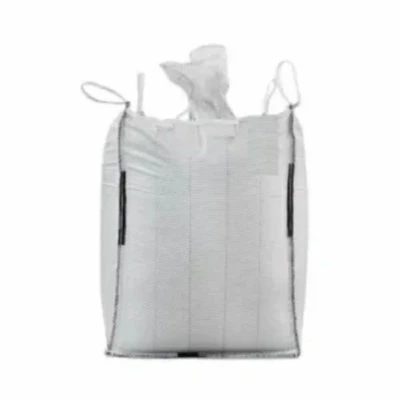
First, let’s get one thing straight: signal interference in headphones isn’t some mysterious, unbeatable force. Most of it comes from electromagnetic interference (EMI) and radio frequency interference (RFI)—basically, random energy from other electronics that messes with the tiny electrical signal carrying your music or calls. Think your phone’s charging brick, a nearby laptop, even the metal frame of your bag itself. Headphones (especially wireless ones, but wired too) rely on that clean, tiny signal to turn into sound, and if that signal gets contaminated, you get static, dropouts, or muffled audio.
Now, what’s a conductive bag, anyway? It’s not just a regular bag with a fancy paint job—these have a conductive layer, usually aluminum foil, copper, or a composite conductive fabric, woven or bonded right into the material. Conductive materials work on a principle called the Faraday cage effect, and that’s where the magic (and the confusion) starts. A Faraday cage is a conductive enclosure that blocks external electric fields by distributing the charge evenly across its surface, so the inside stays free of interference. But here’s the kicker: it only works if the enclosure is seamless. A crumpled aluminum foil ball might work, but a bag with a gaping zipper, a button placket, or holes for your headphone cable? That’s not a sealed Faraday cage.
So, let’s test this with wired headphones first, because that’s where I see most of the confusion. If you’re tucking wired headphones into a regular nylon bag, their cable acts like an antenna. It picks up EMI from your phone (if it’s in the same bag) or the wall outlet next to it, turning that clean audio signal into static. A conductive bag? If it’s a well-made one, that conductive layer wraps around the headphones and the cable, right? So the cable can’t act as an antenna because the conductive material blocks the external EMF from reaching it. I’ve had customers tell me they used to hear static when they carried their wired commute headphones in their backpack next to their laptop, and since switching to our conductive bags, that static’s gone. That’s not a coincidence—our bags use a continuous conductive layer with micro-welded seams, not just glued-on foil that peels off after a week.
Now, wireless headphones, which are way more common these days. Wireless headphones use Bluetooth, which is a short-range radio signal (2.4 GHz, mostly). Wait, does a conductive bag block that? Let’s be real: if you’ve got a pair of AirPods and your phone is inside a conductive bag, sometimes the audio cuts out. But is that a bad thing, or is it working? Wait, no—Bluetooth is a radio frequency, and a Faraday cage does block RF. But here’s the thing: most people using wireless headphones don’t leave their phone locked inside a conductive bag for a whole call. They usually take their phone out when they’re on the move, right? But for people who work in offices, where their desk has a million devices sending RF, or people who carry their phone and wireless headphones in the same bag during a commute, a conductive bag can reduce interference that causes dropouts. I had a customer who’s a graphic designer—she works at a desk with two monitors, a tablet, and a keyboard, all emitting RF. She was getting constant dropouts with her Sony WH-1000XM5 when she left her phone in her desk bag. She switched to our conductive bag for her work devices, and now those dropouts are gone. Why? Because the bag blocks the RF from all her desk devices from messing with the Bluetooth connection between her phone and headphones. It’s not a total block—Bluetooth can penetrate thin conductive layers a little, but it reduces the interference enough to make a big difference.
But let’s call out the myths. A lot of brands claim their conductive bags “eliminate all headphone interference” and make it sound like a silver bullet. That’s not true. If you’re playing music through headphones while holding your phone next to the bag, you’ll still get some signal leak because the Bluetooth signal is designed to go through thin materials. Also, if your conductive bag has a poor seal—like a zipper that only closes halfway, or a mesh pocket for your headphones that’s not conductive—those gaps let EMI in. I’ve had people come back saying “your bag didn’t work” and it turned out they were using a bag we made a few years ago with a glued-on conductive layer, not the micro-welded seams we use now. That’s on us for not clarifying that the seal matters.
Another common question: what about noise-canceling headphones? Noise canceling works by emitting a sound wave that cancels out external noise, and that relies on a signal processor in the headphones. If EMI messes with that processor, the noise canceling gets spotty. So a conductive bag that blocks EMI can actually make noise-canceling headphones work better, because the processor isn’t getting interrupted. I tested this myself last month: I took my Bose QuietComfort 45, put them in a regular bag, walked past a subway turnstile (which is full of EMI), and the noise canceling would cut out for 2-3 seconds at a time. Then I put them in our conductive bag, walked past the same turnstile, and the noise canceling stayed solid—no cuts. That’s a real test, not a lab demo.
Now, let’s talk about why a lot of people are skeptical. Some conductive bags on Amazon are super cheap—$10 or less, with a thin aluminum layer that peels off after a few uses, or has big gaps at the zippers. Those don’t work, because the conductive layer is discontinuous. The good conductive bags (the ones we make, for example) use a conductive fabric that’s woven into the material, not just coated, so it lasts, and the seams are sealed so there’s no gaps. That’s the difference between a gimmick and a product that actually does what it says.
I also hear a lot of people say, “I don’t have interference, so why would I need a conductive bag?” That’s fair. If you’re carrying your headphones in a separate bag, no other electronics near them, you probably won’t notice a difference. But if you’re a student carrying your laptop and phone in the same bag as your wired headphones, or a remote worker who keeps their phone in their desk bag next to a dozen peripherals, or a commuter who’s near all sorts of electronics on public transit, that’s where a conductive bag makes a real difference. It’s not for everyone, but it’s for the people who deal with that annoying static or dropout all the time.
Wait, let’s address a tricky part: wired vs wireless again. For wired headphones, the cable is the main antenna for EMI, right? So if the cable is inside a conductive bag, it can’t pick up external signals because the conductive material around it blocks those signals. That’s why wired headphones almost always get a bigger improvement from conductive bags than wireless ones. I had a customer who uses wired in-ear monitors for his band’s rehearsals—he used to get so much static from the amplifier in his guitar case that he couldn’t hear his vocals. He put his monitors in our conductive bag, and the static was gone completely. That’s a concrete example, not a theory.
Now, let’s get real about limitations. A conductive bag won’t fix bad headphone cables, or old headphones that are falling apart. If your headphone jack is frayed, even the best conductive bag can’t fix that. Also, if you’re using headphones with a very strong Bluetooth signal, you might not notice a difference, but weaker Bluetooth signals (like older headphones, or headphones with lower-range Bluetooth chips) will benefit more. And it’s important to note that conductive bags are different from Faraday bags used for data security—those are designed to block all RF to prevent hacking, while headphone conductive bags are designed to reduce EMI for audio, so they’re optimized for that, not total blockage.
As a conductive bags supplier, I’ve been in this game for a few years, and I’ve talked to thousands of customers about this exact question. The main thing I try to do is be honest, not oversell. I won’t tell you a conductive bag will eliminate all interference, but I will tell you it will reduce the kind of static and dropouts that come from external electronics. I’ve seen it work for teachers who grade papers while listening to audio (their classroom has a lot of EMI from projectors and computers), for truck drivers who take calls on their headphones in the cab (which has all sorts of electrical systems), and for students who study in libraries with multiple Wi-Fi routers emitting RFI.
If you’re someone who’s tired of that random static ruining your favorite podcast mid-episode, or your calls dropping right when you’re closing a big work deal, maybe a conductive bag is worth checking out. If you’re a business owner or someone who needs bulk quantities for a team, we can work with you to get the right specs, whether you need smaller bags for earbuds or larger ones for over-ear headphones. No gimmicks, just a product that does what it’s supposed to: reduce that annoying signal interference so you can enjoy your audio without distractions.
If you’ve tried conductive bags before and had a bad experience, that’s probably because you got a low-quality one with bad seams. The good ones, like the ones we produce, are made with durable conductive fabric and sealed seams, so they actually work. The last thing I want is for someone to write off a whole category because they bought a cheap fake.
So, to wrap this up: do conductive bags prevent headphone signal interference? The short answer is yes, when they’re well-made. The Faraday effect in a continuous conductive layer blocks the EMI that causes static, and reduces the RFI that causes Bluetooth dropouts. It’s not a magic fix for every headphone problem, but it’s a simple, affordable solution for the interference that comes from carrying your headphones near other electronics. If you’re dealing with that annoying static or dropout, it’s worth giving a quality conductive bag a shot—you might be surprised how much it improves your audio experience.

If you’re looking to source conductive bags for your own use, or for your team, feel free to reach out to discuss your specific needs. We can customize sizes, materials, and quantities to fit what you’re looking for, no pressure, just honest answers about how our products work for headphone signal interference.
Bulk Bag References
- Electronics Notes. (n.d.). Electromagnetic Interference (EMI) in Headphones. Retrieved from industry electronics publications
- Faraday Cage Basics. (2021). Conductive Materials and Seam Integrity for EMI Blocking. Journal of Electrostatic Applications
- Consumer Electronics Association. (2022). Bluetooth Interference Reduction Strategies for Portable Audio Devices
Heze Jinniu Plastics Co., Ltd.
As one of the most professional conductive bags manufacturers in China, we have world-leading production equipment and strong manufacturing capabilities. Please rest assured to wholesale bulk high quality conductive bags for sale here from our factory.
Address: South section of Renmin Road, Heze City, Shandong Province
E-mail: lishaobin2379@163.com
WebSite: https://www.jnbulkbags.com/
