If you’ve ever reached out to a CNC milling service for parts, chances are you’ve asked: “What’s your minimum order quantity (MOQ)?” As a CNC milling supplier who’s answered that question hundreds of times in my 12 years in the game, I can tell you it’s not a one-size-fits-all number. MOQs aren’t just a random bar we set to weed out small orders—they’re rooted in real manufacturing costs, machine capacity, and the care that goes into making precision parts. Let’s break down what MOQs actually mean for CNC milling, why they exist, and what you can do if your project is too small to hit a standard MOQ. CNC Milling Service
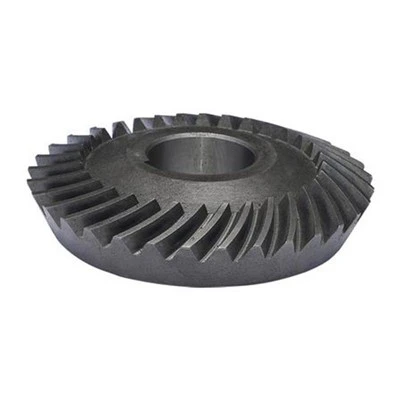
First, let’s get clear on what CNC milling MOQ is, specifically for our shop. MOQ is the smallest number of identical parts a client can order in a single production run without paying extra fees. That sounds straightforward, but it’s tied to the hidden costs no one talks about when you request a quote. When a part is programmed, set up, and run on a CNC machine, most of the time is spent on prep work, not cutting metal. Let’s take a typical aluminum bracket we make for aerospace: it takes 45 minutes to design the toolpath, secure the stock in a vice, calibrate the machine’s alignment, and do a test cut. Once all that is set up, actually milling the bracket takes 12 minutes. So if we run just 1 bracket, we’re spending 45 minutes of setup for 12 minutes of production—hardly profitable. If we run 20 brackets, that same 45 minutes of setup is spread across all 20, bringing the per-part cost down drastically. The MOQ is how we make sure that setup time doesn’t eat into our profit, and keep our prices fair for everyone, from small startups to large corporations.
That said, MOQs vary wildly based on three big factors: the part’s design, the material you choose, and the machine we use. Let’s start with part design. A simple, symmetrical part like a small bushing has a low MOQ—usually 10 pieces. It’s easy to program, fits on a small CNC machine, and doesn’t require special tools or custom fixtures. A complex part, though—think a medical implant with internal channels, tight tolerances (±0.0005 inches), and multiple sides that need milling—has a much higher MOQ, often 50 or more. Why? Complex parts take longer to program, require custom fixtures to hold them steady during milling, and need multiple tool changes, each adding setup time. If we ran just 1 complex implant, the setup time alone would cost more than the part is worth, so we need to spread that cost across more units.
Next, material choice is a huge MOQ driver. If you order parts from a common, easy-to-machine material like 6061 aluminum or 304 stainless steel, our MOQ is usually lower—10 to 25 pieces—because we keep stock of these materials in standard sizes, so we don’t have to wait for delivery before starting your order. But if you pick a more exotic material, like titanium 6Al-4V, Inconel, or a custom alloy, your MOQ jumps to 50 or even 100 pieces. Exotic materials are harder to machine—they dull tools faster, require slower spindle speeds, and need more frequent cooling, so each part takes longer to cut. Also, these materials are more expensive, and we can’t hold large stock quantities because they sit in inventory, tying up cash, so we need to run enough parts to justify ordering the material.
Then there’s the machine we use for your order. Our shop has a mix of CNC mills: small vertical mills for parts under 6 inches, large horizontal mills for parts up to 4 feet long, and 5-axis mills for complex geometries. The MOQ for a small 3-axis mill is low, but a 5-axis mill has high setup costs because it’s programmed for multi-side cutting, so we need a higher volume to make it worth running. For example, a small aluminum bracket on a 3-axis mill might have an MOQ of 10, but the same bracket on a 5-axis mill (if designed for that) could have an MOQ of 25.
Now, let’s talk about the myths around MOQs. Some new clients think MOQs are just a way for suppliers to charge more, but that’s not the case. When you order more parts, per-part costs go down, and that’s not just because of setup. Tooling wear: each time a mill cuts a part, it wears down the cutting tool, and tool changes are expensive. Running more parts means we’re spreading that tool cost across more units, so you pay less per part. Also, quality control: we spend the same amount of time inspecting 1 part as 10? No—wait, actually, we inspect every part, but if we run a production run, we can do in-process inspections, pulling parts mid-run to check tolerances, which is more efficient than inspecting a single one-off. And for our repeat clients, we often adjust MOQs once we have their part program and fixtures set up, because we know their work and can optimize runs. For example, a medical device startup we work with had an initial MOQ of 50 for their sensor housing, but after the first run, we kept the fixture and toolpath saved, so their second order had an MOQ of 15, since setup was no longer needed.
What if your project is smaller than our MOQ? We get this all the time—small startups, hobbyists, or teams prototyping a new product might only need 1 or 2 parts, and can’t hit our standard MOQ. Here’s what we offer in that case: first, we can sometimes combine small orders from multiple clients into one production run. For example, if three different clients need a small aluminum bracket, we’ll schedule all their runs on the same mill at the same time, split the setup costs, and offer a lower MOQ for each. It’s a win-win: you get the parts you need without paying extra, and we fill up unused mill time that would otherwise go to waste. Second, we offer a prototype run fee for one-off or small orders. This fee covers the extra setup, tooling, and inspection time that goes into a small order, and once you move to production, we’ll credit that fee toward your next order. For example, if you need 2 prototype brackets, we charge a $150 prototype fee plus the cost of the two parts, and when you order 20 pieces for production, that $150 comes off your total. Third, for very small parts (under 1 cubic inch), we sometimes offer a lower MOQ because we can fit dozens of them on a single stock blank, so setup time is spread across many small parts, even if your order is just a handful.
Let’s use a real example from our shop to make this concrete. Last month, a startup came to us needing 3 custom PLA mounts for their smart thermostat prototype. PLA is a plastic, but they wanted it machined, not 3D printed, for tighter tolerances. Our standard MOQ for PLA parts is 20, but their order was only 3. Instead of turning them away, we checked our schedule: we had a small 3-axis mill free that day, with a fixture that fit mounts of that size. We combined their setup with a small batch of PLA parts for a local maker, so their setup cost was split between both clients. We charged them a small prototype fee, and their total cost was $45, which was fair—way better than the $200 setup fee they would’ve paid if we’d run it alone. That startup is now ordering 100 mounts for their first production run, so it’s a long-term relationship we wouldn’t have gotten if we’d stuck strictly to the MOQ without flexibility.
Another example: a defense contractor needed 12 titanium brackets for a test part. Our standard MOQ for titanium is 50, but their test only needed 12. We worked with them: we ordered a small block of titanium, set up the mill for that specific part, ran 12 brackets, and charged a premium that included the extra material cost and the specialized tooling needed for titanium. They loved the flexibility, and later ordered 200 brackets for their full production run. So flexibility on MOQ isn’t just good for small clients—it’s good for us, because we build relationships with clients that grow with their business.
Now, let’s talk about how to get the best MOQ for your project. When you reach out to a CNC milling service, here are a few things you can do to negotiate a MOQ that works for you: first, provide as much detail as possible about your project: part drawings, material, tolerances, lead time, and whether it’s a prototype or production run. The more we know, the better we can adjust MOQ to fit your needs. Second, consider using standard materials and simple designs if you’re not tied to exotic materials or complex geometries. If your part can be designed to fit a standard stock size, we can lower MOQ because we don’t have to source custom material. Third, be open to phased orders: if you need 100 parts total, order 25 first, then 75 later. We’ll keep your toolpaths and fixtures on file, so the second order will have a lower MOQ because we don’t have to re-setup everything. Fourth, ask about combined orders or leftover stock: sometimes we have extra parts from a previous run that are identical to what you need, so we can sell you those at a discount, with no minimum order. For example, we had a run of 50 aluminum brackets, and 8 were left over because the original client only needed 42. We sold those 8 to a small hardware store for a fraction of the regular per-part cost, and the store didn’t have to meet a MOQ.
At the end of the day, MOQs aren’t designed to be a barrier—they’re a tool to keep our shop running efficiently, so we can offer high-quality, consistent parts at fair prices to every client, no matter their size. If you’re working on a project, whether it’s a one-off prototype or a full production run, don’t let MOQ scare you off. We’re happy to walk through your specific needs, explain how our MOQ works for your part, and find a solution that fits your budget and timeline.
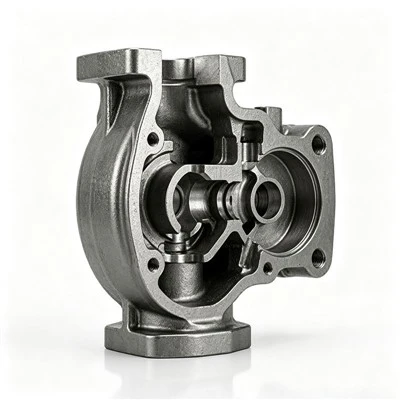
If you have questions about MOQ for your CNC milling project, or you’re ready to get a quote, reach out to us to discuss the details of your order. We look forward to helping you bring your parts to life.
Iron Casting Machining References
- Groover, M.P. (2020). Fundamentals of Modern Manufacturing: Materials, Processes, and Systems (7th ed.). Wiley.
- CNC Machining Industry Association. (2022). MOQ Best Practices for Precision Machining Services. Technical Report, CNC Machining Industry Association.
- DeGarmo, E.P., Black, J.T., & Kohser, R.A. (2019). Materials and Processes in Manufacturing (13th ed.). Pearson.
Ningbo Yirui Machinery Manufacturing Co., Ltd.
As one of the most professional cnc milling products manufacturers and suppliers in China, we’re featured by quality products and good price. Please rest assured to wholesale durable cnc milling products made in China here from our factory. Customized orders are welcome.
Address: No.107, Wanzhong Village, Jishigang Town, Haishu District, Ningbo City
E-mail: James.he@yiruitek.com
WebSite: https://www.yiruime.com/
