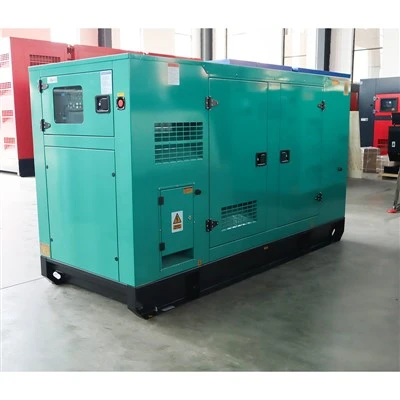
If you’ve ever spent time around mission-critical power systems—whether at a hospital’s backup suite, a commercial data center, or a remote industrial site that can’t afford downtime—you know MTU diesel generators are the backbone of reliable continuous power. As a supplier who’s worked with these generators for over a decade, I’ve lost count of the questions I get from maintenance teams, facility managers, and new operators about one of the most critical components keeping those engines running: coolant. Most people ask basic questions like “which coolant do I use?” but don’t realize that picking the wrong fluid isn’t just a minor mistake—it can lead to overheating, corrosion, even engine failure that costs tens of thousands in repairs and unplanned downtime. Today, I’m breaking down exactly what’s recommended for MTU diesel generators, why it matters, and how to get it right for your specific unit. MTU Diesel Generator
First, let’s set the baseline for how MTU engines work with coolant, because this isn’t a one-size-fits-all scenario. MTU designs its diesel generators to operate at precise temperatures, usually between 82°C and 95°C for normal load conditions, and coolant is the only system that keeps that thermal balance steady. Coolant does more than just stop freezing and boiling, either: it prevents cavitation (that tiny, damaging bubble collapse in engine liners), stops rust and scale in the cooling passages, and lubricates the water pump seals. For MTU, which builds engines to run nonstop for thousands of hours, cutting corners here is a fast track to expensive issues.
Early on, most MTU engines used conventional ethylene glycol (EG) coolants, the same kind you’d put in a passenger car. But MTU updated its recommendations decades ago after identifying flaws in those standard coolants for heavy-duty, high-load diesel applications. Conventional coolants use additives that break down quickly under continuous high heat, load, and pressure—things you don’t see in passenger cars, which only run for short periods at moderate loads. That’s why MTU’s primary official recommendation today is MTU Approved Long-Life Coolant (LLC), often referred to by its OEM code: 325.5. This isn’t a generic “long-life coolant” off the shelf; it’s formulated specifically for MTU’s engine metallurgy and operating parameters.
Let me be clear: I’ve seen facility managers grab a generic LL-C coolant from a local parts store because it’s cheaper, and it always ends badly. MTU 325.5 is a monoethylene glycol (MEG) based formula with a proprietary package of additives that protect the specific metals in MTU engines: cast iron liners, aluminum cylinder heads and blocks, copper water tubes, and solder points in heat exchangers. Generic LL-C coolants often use silicates to protect metals, but silicates can gel over time in high-heat diesel engines, clogging cooling passages or causing abrasive damage to the water pump. MTU’s 325.5 uses a combination of organic acid technology (OAT) and hybrid organic acid technology (HOAT) that works without silicates, providing protection for up to 6,000 operating hours or five years, whichever comes first—way longer than the 2,000-hour life of conventional coolants. That’s not just a sales pitch; I’ve worked with clients who stuck to 325.5 and only flushed their cooling system every five years, vs. a client who used a generic LL-C and had to flush every two years, plus replace a clogged water pump after three.
Now, there are edge cases where MTU approves alternate coolants, but only under very specific circumstances, and only for certain engine models. For example, some older MTU Series 4000 engines (built before 2005) that were originally filled with conventional coolant can use MTU Approved Extended Life Coolant (ELC), code 325.55, which is a slightly modified formula compatible with older additive packages. But here’s the catch: when switching from conventional coolant to 325.5 or 325.55, you have to perform a full, professional flush of the entire cooling system. No leftover fluid of any kind can mix with the new coolant, because even a small amount of conventional fluid will contaminate the LL-C additives and cut its lifespan drastically. I’ve had one client skip that step, and their 325.5 only lasted 1,500 hours instead of 6,000—costing them an extra flush and extra coolant, not to mention unnecessary wear on the engine.
Another common question I get: can I use propylene glycol (PG) based coolant instead of ethylene glycol? PG is less toxic than EG, which is attractive for facilities that work around food or water supplies, but MTU’s recommendations are strict here. MTU only approves PG-based coolants in very limited scenarios, and only when they meet MTU specification 325.5 or 325.55 and are explicitly labeled for heavy-duty diesel engines. Generic PG coolants don’t have the same corrosion protection, and their lower heat transfer rate can lead to overheating in MTU’s high-load generators. I’ve had a food processing plant client ask for PG coolant for safety, and we recommended MTU-approved PG 325.5 to meet their needs without risking their generator’s performance, vs. a client who used a cheap PG coolant and had a liner pitting issue six months later.
Now, let’s talk about the biggest mistakes people make when using MTU coolant, because even with the right fluid, misuse can cause problems. First, never mix different coolant types. I’ve seen clients mix conventional, generic LL-C, and MTU-approved LLC all in the same system, and the result is a sludge buildup that clogs the radiator and leads to overheating within months. Second, never use straight coolant—coolant is a 50/50 mix of water and glycol, right? Wait, almost. For most MTU generators, the recommended mix is 40% coolant to 60% demineralized water, not 50/50. Demineralized water is key here; tap water has minerals like calcium and magnesium that cause scale buildup, and hard water will eat away at corrosion inhibitors over time. One client used tap water instead of demineralized, and within a year, their cooling system had so much scale that the generator’s operating temperature rose 10°C, leading to reduced power output and higher fuel consumption. It’s not a failure by design, it’s a preventable mistake.
Third, follow the flush and replacement schedule to the letter. MTU spells out the maintenance intervals in the engine’s operating manual, but as a supplier, I always remind clients that this interval is based on operating conditions. If your generator runs 24/7 in a dusty, dirty environment, or at low load for extended periods, you may need to shorten the flush interval by 20-30% to keep coolant effective. Low load is a big one; MTU engines need to run at least 30% of their rated load to burn off moisture and combustion byproducts, and if they run lighter than that, coolant additives break down faster because the engine doesn’t reach full operating temperature. I worked with a data center that ran their generator at 10% load for months during a grid upgrade, and their coolant life dropped from five years to two—we adjusted their maintenance schedule and added a load bank test monthly to bring it up to recommended operating levels.
Now, let’s address a common myth: some people think any MTU-approved coolant is the same, even for different engine series. That’s not true. MTU’s Series 2000, Series 4000, and Series 1600 engines all have slightly different metallurgy and operating requirements, so their coolant specs are not interchangeable. For example, the Series 2000 uses a 325.5 variant optimized for its smaller, higher-revving design, while the Series 4000 (used in large, high-power generators) uses a modified 325.5 to handle extreme continuous load. Always cross-reference your engine’s serial number and model code with the coolant spec—never guess based on engine size alone. I once had a client swap coolant between a Series 2000 and a Series 1600, and they got a small leak in the cylinder head gasket within 500 hours, because the coolant’s lubrication package didn’t match the Series 1600’s water pump seal design.

As a supplier who’s installed and serviced hundreds of MTU generators across North America, I can tell you that the best way to avoid coolant-related issues is to work with someone who knows MTU’s specific recommendations, not just generic “best practices.” When you choose the right coolant, follow the mixing and maintenance rules, and stick to MTU’s approved specs, your generator will run reliably for tens of thousands of hours, with minimal unplanned downtime. If you’re not sure which coolant is right for your MTU diesel generator, need help with a coolant flush, or want to order OEM-approved fluid, reach out to our team to discuss your specific unit and application. We can help you confirm the exact spec, adjust maintenance schedules for your operating environment, and make sure your power system stays online when you need it most.
Silent Generator Set References
MTU Friedrichshafen. (2021). Operation and Maintenance Manual for MTU Diesel Generators Series 2000, 4000, and 1600. MTU Americas.
MTU Friedrichshafen. (2022. Coolant Specification and Application Guide for Heavy-Duty Diesel Engines. MTU Technical Publications.
Society of Automotive Engineers (SAE). (2020). Performance Requirements for Organic Acid Technology Coolants for Heavy-Duty Diesel Engines. SAE International.
Taizhou Jinte Electromechanical Technology Co., Ltd.
We are one of the most professional mtu diesel generator manufacturers and suppliers in China. With abundant experience, we offer a wide range of generators with superior quality. Please rest assured to buy advanced mtu diesel generator for sale here from our factory. Customized orders are welcome.
Address: Room 207-214, Eurasia International Garden Commercial Center, Hailing District, Taizhou City
E-mail: Sales@generatorschina.com
WebSite: https://www.jintepower.com/
