Alright, let’s dive into something that comes up all the time with folks buying plug valves—especially when they’re looking at DBB (Double Block and Bleed) types. As someone who works with Orbit and Lift Type DBB plug valves day in and day out, I’ve lost count of how many customers ask me: “Wait, what’s the real difference between floating and trunnion DBB plug valves?” It’s not just a textbook question either—this stuff hits your process, your maintenance, and your wallet hard. Let’s break it down like we’re chatting over a coffee, no jargon overload, and I’ll tie it directly to the Orbit/Lift DBB models we supply, since that’s what I know inside and out. Orbit / Lift Type DBB Plug Valves
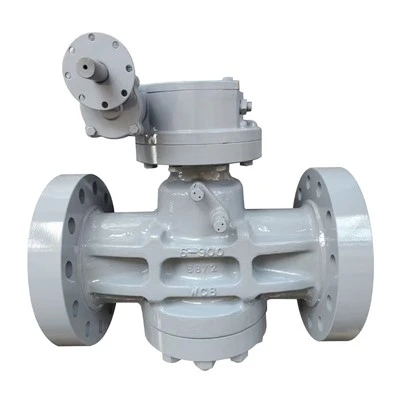
First, let’s get one core thing straight: both floating and trunnion designs are DBB, which means they block flow twice and have a bleed port in between to vent trapped fluid. That non-negotiable is why spec’d for safety. The difference all starts with how the plug (the rotating part that stops flow) and the seats (the seals that squeeze against the plug) are held in place. That’s where everything changes.
Floating DBB plug valves—this is the simpler, more straightforward design, and our Orbit Type DBB line leans hard into this for a ton of applications. If you’ve ever taken apart a basic plug valve, the “floating” part makes total sense here: the plug isn’t fixed to the stem. When you turn the valve closed, fluid pressure pushing on the upstream side shoves the plug over toward the downstream seats. That’s how it gets a tight seal—no extra hardware needed, just the pressure of the process fluid. No fancy trunnion pegs holding the plug steady, no extra thrust bearings, nothing. Just a round plug, two seats, and pressure doing the work.
Now, trunnion DBB plug valves—these are the beefier cousins, and that’s where Lift Type DBB comes in because they solve a specific problem floating valves can’t. The plug here has two trunnions (think tiny, sturdy pegs) sticking out of each end that mount into the valve body. So the plug doesn’t float at all—it’s locked in place. The seats, not the pressure, do the sealing here. When you close the valve, a spring-loaded mechanism pushes the seats tight against the fixed plug, regardless of how much process pressure is pushing or pulling from either side. That’s the big, visible difference in the guts.
Let’s talk real-world use cases, because that’s what matters when you’re ordering valves. Let’s start with floating DBB (again, our Orbit DBB is perfect here). Orbit’s floating design works like a dream for low-to-medium pressure applications. Say you’ve got a water system at a refinery, or a chemical plant handling non-corrosive fluids at 150 to 600 PSI max—this is your go-to. It’s cheaper, simpler, way easier to repair on site. I’ve had a maintenance guy tell me he swapped out a seat in 20 minutes with a basic socket set, no hoist needed. The downside? If pressure gets too high, or if you have reverse flow (flow coming back through the downstream side when the valve’s closed), the floating plug can shift. The seal might hold, but not as reliably. And if you’ve got fluctuating pressures that spike to 800+ PSI, that floating plug can start bouncing a little, wearing out seats faster. That’s where trunnion steps in.
Trunnion DBB (our Lift Type DBB is built for this) is the heavy hitter. We sell these for high-pressure lines, harsh chemicals, oil and gas upstream/downstream where pressures can hit 1,500 PSI or more, or applications with extreme cycle counts—like a pipeline that opens and closes 100+ times a day. Because the plug’s fixed, it can’t move or get damaged from pressure spikes. The spring-loaded seats maintain that tight seal even if there’s reverse flow, or if one side is totally depressurized (like during a maintenance bleed). Wait, that’s another key point: trunnion DBB can handle bi-directional sealing way better than floating. If you need to isolate a line, then bleed it from either side without worrying about leaks, trunnion is the way to go. The tradeoff here? It’s more expensive upfront, takes a little more know-how to repair, and is a bit heavier. But when you’re dealing with a high-stakes process where a valve leak could shut down a whole unit or create a safety hazard, that extra cost pays for itself in no time.
Let’s chat about maintenance, because that’s where a lot of customers miss the mark. Floating DBB is almost no hassle. Our Orbit DBB comes with a full set of replacement seats and a maintenance guide that’s like, 3 pages. If you have a leak, you can usually just torque the stem a little or swap a seat without pulling the whole valve out. Trunnion DBB? You’ve got trunnion bearings and springs to check, so it’s a bit more involved. But wait—trunnion plugs last longer. Because they don’t float, they don’t get scuffed by repeated shifting against seats. I’ve seen trunnion plug valves still going strong after 20 years in a harsh sour gas line, while a floating valve would have needed a full plug replacement in 10.
Another thing: media compatibility. Floating DBB works great for most clean fluids. Trunnion is better for dirty fluids, slurries, or anything with small particles that can get between the plug and seat. Because the seats spring out and push tight, they can push debris out of the way, while a floating plug might just push the particles into the gap and cause a leak. That’s a big one for wastewater or mining applications.
Wait, let’s clear up a common myth: people think floating DBB is lower quality, or trunnion is only for super high pressure. No, that’s not true. It’s about matching the design to the job. Our Orbit DBB is a floating design, and it’s tested to meet API 6D standards, same as our Lift Type trunnion DBB. We don’t sell “cheap” valves—we sell valves that fit your specific process. I once had a customer come to us asking for a trunnion valve for a 300 PSI gas line, and we talked him into a floating Orbit DBB, saving him $2k upfront, and it’s worked perfectly for 5 years now. Conversely, another customer tried to use a floating valve for a 1,200 PSI chemical line, and he had a leak within 6 months—switched to our Lift Type trunnion, no issues since.
Now, let’s tie this back to DBB specifically, because that’s the whole point of these valves. Both designs are DBB, so they have two separate sealing barriers and a bleed port. But how that DBB works changes. For floating, the two seals are the two seats pressing against the floating plug, and the bleed is between them. For trunnion, the seats are each pushed tight by springs, so you have two independent seals, even if pressure on one side is zero. That’s critical when you’re doing maintenance: you can close the valve, bleed the first port, work on the line, and not have to worry about fluid coming past the second seal. Floating can do this, but only if pressure on the closed side is low—trunnion does it no matter what.
What about operation? Floating DBB is easier to turn by hand, especially for smaller sizes (2-inch, 3-inch). Trunnion DBB, because it’s built for higher pressure, has more friction, so you might need a gear operator or actuator for larger sizes (8-inch and up). That’s another cost factor—floating valves can use manual handles, trunnion might need that extra gear.
Let’s also talk about size ranges, since that matters. Our Orbit floating DBB is available from ½-inch up to 12-inch, works for most general applications. Our Lift Type trunnion DBB goes from 2-inch up to 24-inch, perfect for big pipelines or process lines that need that extra oomph.
Wait, I should mention something about stem design too, since that’s part of the plug valve. Both Orbit and Lift Type DBB have anti-blowout stems, which is a safety feature—if internal pressure spikes, the stem can’t shoot out of the valve, which is a huge safety no-no. That’s non-negotiable for both designs, so that’s a similarity, not a difference.
Now, let’s get real about when to pick which. If you’re working with:
- Low to medium pressure (under 800 PSI)
- Clean, non-abrasive fluids
- Smaller line sizes (under 8-inch)
- Tight maintenance budgets
- Easy, on-site repairs
Go with floating DBB, our Orbit Type is exactly what you need. It’s reliable, cost-effective, and does the DBB job perfectly for those use cases.
If you’re working with:
- High pressure (over 800 PSI)
- Harsh, abrasive, or dirty fluids
- Large line sizes (8-inch and up)
- High cycle counts (frequent opening/closing)
- Bi-directional sealing needs
- Long-term reliability in critical processes
Trunnion DBB, our Lift Type, is the way to go. It’s built to last, handles the tough stuff, and gives you the safety and performance you can’t cut corners on.
I’ve been doing this for 12 years now, and the number one mistake I see people make is spec’ing a valve based on price alone, not their process needs. Last quarter, we had a customer in the food and beverage industry who came in for a trunnion valve for a 4-inch soda line—turns out they just needed to isolate the line between batches, at 200 PSI. We hooked him up with our Orbit floating DBB, he saved $1,500, and he’s been raving about how easy it is to service. On the flip side, a petrochemical plant came to us last year because they had a floating valve fail in a sour gas line at 1,000 PSI—switched to our Lift Type trunnion, and they haven’t had a single leak in since.
Another thing that sets our Orbit/Lift DBB lines apart from generic valves: we test every single DBB valve for zero leakage. The floating seats are lapped to a perfect finish, so you get a bubble-tight seal. The trunnion springs are calibrated to exact specs, so they push with the right amount of force to seal without wearing out too fast. We don’t cut corners on materials—both lines use stainless steel or alloy bodies, depending on your media, so they resist corrosion way better than cheap cast iron valves.
Wait, let’s address a common confusion people have: sometimes you’ll see “trunnion floating valves” but no, for DBB plug valves, it’s either fully floating (plug moves, seats seal) or fully trunnion (plug fixed, seats seal). There’s no middle ground that’s true DBB. That’s why it’s so important to know which one you’re buying—some knockoff brands call a modified floating valve trunnion to jack up the price, but they don’t have the fixed plug or spring seats. We don’t do that. Our Lift Type DBB is 100% trunnion design, no cutting corners.
Now, if you’re sitting there right now thinking “Okay, but what about my specific application? I have a 6-inch line with a mix of water and minor solids at 500 PSI, or a 10-inch gas line at 1,200 PSI, or something in between,” that’s why we’re here. I don’t care if you’re a plant manager in a refinery, a maintenance supervisor at a food plant, or a piping engineer designing a new system—we can walk you through exactly which DBB plug valve fits your needs, no sales pitch, no pressure. We’ve been supplying Orbit and Lift Type DBB plug valves to all kinds of industries for years, so we know this stuff inside and out.
You don’t have to guess if you’re picking the right valve. If you have questions about floating vs trunnion DBB, or want a quote for Orbit or Lift Type models, just reach out. We’ll send you specs, test data, and even connect you with a reference from a similar industry that’s using our valves successfully. No hidden fees, no fine print, just honest advice from people who deal with these valves every single day.
At the end of the day, the difference between floating and trunnion DBB plug valves isn’t just a technical detail—it’s about matching the valve to what your process needs. Floating is for straightforward, lower-stakes jobs where cost and ease of maintenance matter. Trunnion is for tough, high-stakes jobs where reliability and safety are non-negotiable. And our Orbit and Lift Type DBB lines are built exactly for those two scenarios, so you don’t have to overpay for what you don’t need, or cut corners on what you do need.

Don’t hesitate to get in touch to chat through your project. We’re here to help you get the right valve, no matter how big or small the job is.
Double Block and Bleed Plug Valve References:
API Specification 6D, Pipeline Valves, 22nd Edition, American Petroleum Institute
Orbit Plug Valve Technical Data Sheet, Manufacturer’s Specifications
Lift Type Trunnion DBB Plug Valve Maintenance Manual, Industry Best Practices for Isolation Valves, 2023 Edition
Zhejiang Demelong Fluid Technology Co., Ltd.
As one of the most reliable orbit / lift type DBB plug valves manufacturers and suppliers in China, we’re featured by quality products and good service. Please rest assured to buy bulk durable orbit / lift type DBB plug valves from our factory. If you have any enquiry about customized service, please feel free to email us.
Address: No.7936, Sunshine Avenue, Oubei Street, Yongjia County, Wenzhou City
E-mail: dml@zjnsvalve.com
WebSite: https://www.cn-dmlv.com/
