As an elevator parts supplier who’s spent the last 12 years walking job sites, talking to maintenance technicians, and troubleshooting everything from a faulty limit switch to a worn traction sheave, I get asked this question all the time: “How often should elevator parts be inspected?” It’s not a one-size-fits-all answer, and I’ve watched way too many building owners cut corners on inspections only to end up with costly, and sometimes dangerous, breakdowns. Let’s break this down with real-world context, industry standards, and what works for different types of buildings. Elevator Parts

First, let’s start with the basics: why inspection frequency isn’t just a suggestion. Elevators are mechanical systems, and every part—from the smallest roller guide to the main hoisting rope—takes a beating every single time the car moves. A passenger elevator in a 50-story office building runs 10 to 15 hours a day, carrying thousands of people, putting tens of thousands of cycles on its parts annually. A residential elevator in a 10-unit apartment building might only run 2 hours a day, but it’s still subject to temperature swings, humidity, and the occasional heavy furniture load. Neglecting inspections doesn’t just lead to downtime; it can violate local building codes, void equipment warranties, and put riders at risk. That’s why I don’t sugarcoat this with customers: inspection frequency ties directly to how often the equipment is used, its age, and its environment.
Let’s start with the most commonly inspected parts, and their recommended frequencies. First on the list: hoisting ropes. These are the lifeline of the elevator system, holding up thousands of pounds of car and passengers. Industry standards from ASME (the American Society of Mechanical Engineers) and the National Elevator Industry, Inc. (NEII) say that for new ropes, a visual inspection every 6 months is non-negotiable, and a more detailed non-destructive test (NDT)—like magnetic particle testing—every 12 months. Wait, but why so often? I recently had a customer who skipped a 12-month NDT on their 10-year-old ropes, and by the time they finally got around to it, there was a hidden broken strand deep inside the core. That broken strand caused uneven wear, which frayed three more strands within 2 weeks. If we’d caught it earlier, they would have only needed to replace a few sections, not the full set of 8 ropes at $1,200 each. For higher-use systems—think office buildings, hotels, or hospitals—we bump the NDT to every 8 months, because ropes see 30% more cycles annually than residential units.
Next, safety components: limit switches, safety brakes, and door interlocks. These are the parts that prevent catastrophic failures—like the car overshooting a floor or the door opening mid-move. Door interlocks, specifically, are under massive stress every time a door opens or closes. ASME A17.1, the global standard for elevator safety, requires functional testing of door interlocks every 3 months, and a physical inspection of the latch mechanism every 6 months. I’ve seen interlock latches worn down to the point where they couldn’t detect if the door was fully closed—one mistake there, and the car could try to move with the door open. For high-traffic areas, like airport terminals or shopping malls, some technicians I work with do a monthly visual check of interlock contacts, because those systems see hundreds of cycles a day. Safety brakes, meanwhile, should be inspected every 6 months, with a full load test annually. If a brake doesn’t engage when it’s supposed to, the car can free fall—so this is not a part to cut corners on.
Then there’s control components: circuit breakers, door operators, and the main controller. These are the “brain” of the system, and their failures are often harder to predict because they don’t make obvious noise like a worn bearing. For circuit breakers and fuses, a visual inspection for corrosion or loose connections every 6 months, with a thermal scan every 12 months to catch overheating. Door operators—whether hydraulic or electric—should be inspected for wear on gears and belts every 6 months, and their motorized components tested annually. Last year, we supplied a set of door operator belts to a customer in a 20-story apartment building who’d waited 18 months to inspect theirs. The belts stretched so much that the door would close halfway, and when it reopened, the controller threw an error that shut down the elevator for 8 hours during rush hour. It cost them 3 times the labor to fix because they had to call after-hours service, plus a few angry tenants who missed work. That’s the kind of cost that could have been avoided with a scheduled inspection.
Now, let’s talk about the variables that change frequency, because not all elevators are the same. Age is a big one. For elevators older than 20 years, parts wear faster, and sometimes harder to source. I recommend bumping inspection frequency by 25%: hoisting ropes get NDT every 8 months, safety components get monthly visual checks, and control parts get a thermal scan every 8 months. I have a customer with a 35-year-old freight elevator in a warehouse—they run it 24/7 for loading docks—so we schedule monthly inspections of the load bearings and hoist ropes. Last quarter, their technician found a cracked bearing on the drive sheave, which would have seized up the elevator entirely within a week. Replacing that bearing cost them $450, compared to $15,000 in downtime if it had failed on a busy shipping day.
Environment matters too. If an elevator is in a coastal area with salt air, or a basement parking garage with high humidity, parts corrode faster. Salt air eats through metal components, so we suggest adding a salt spray inspection every 6 months for exterior parts like guide rails and door frames, and lubricating moving parts more often than the standard schedule. I work with a hotel in Miami where salt air rusted the interlock contacts on their elevator doors within 9 months. If they’d stuck to the standard 6-month inspection, we would have caught the corrosion earlier and cleaned the contacts for $50, instead of replacing the entire interlock assembly for $1,800. For industrial elevators, which carry heavy loads that put extra stress on every part, we recommend increasing load-related inspections—like checking for stretched hoist ropes or worn guide shoes—every 4 months, instead of 6.
Wait, but what about “minimum required” vs. “best practice”? A lot of building owners look at the code and stick to the bare minimum, but here’s the thing: the code sets a baseline, not a target. Local building codes often require annual inspections, but that’s for the overall elevator, not every individual part. Many technicians will tell you that a full annual elevator inspection is a good time to check all parts, but that catching small issues before they become big ones is cheaper. I’ve had customers who followed the exact code schedule and still had breakdowns because they skipped the part-specific checks. For example, a customer in Chicago told me they did their required annual inspection, but didn’t have the technician check their emergency power supply’s batteries. The batteries died during a power outage, stranding 12 people in the elevator for 2 hours. That’s a problem that would have been caught with a 6-month battery test, which is part of best practice but not always required by code.
Another common question: can you do your own inspections? I get it, some building managers want to save money by checking parts themselves. But here’s the catch: elevator parts inspections require specialized knowledge. A loose bolt on a guide rail might look harmless, but if it’s missing, the guide shoe can wobble, causing noise, wear on the hoisting ropes, and even the car to misalign in the shaft. I’ve seen untrained managers mistake a small grease spot for a worn seal, or a minor rattle for a normal part of operation. That’s why I always recommend working with a certified elevator technician for inspections, but doing a quick visual check of key parts monthly—like the door closing mechanism, the emergency call button, and the hoist rope for fraying—can catch small issues early.
Now, let’s talk about how inspections tie into part replacement. When a part is inspected, it’s not just checking for wear—it’s planning for replacement. For example, if a technician finds that a hoisting rope has 6 broken strands, that’s the point where you plan to replace the ropes in the next 3 months, not wait until 10 strands are broken and it’s a safety hazard. As a parts supplier, I work with technicians to stock parts based on their inspection schedules. If a customer knows their door operator belts stretch every 18 months, they can keep a spare set on hand, so when a belt fails, it takes 10 minutes to replace instead of 2 hours waiting for a delivery. That cuts downtime a lot. For high-use systems, we even offer custom part kits based on inspection schedules, so customers don’t get stuck scrambling for parts when a failure happens.
I want to be clear: this isn’t fear-mongering. Inspections don’t have to be a hassle, or a huge expense. A good schedule can cost a fraction of the downtime or replacement costs from a preventable failure. Last year, one of my regular customers, a small office building in Denver, did their part inspections on time, replaced a worn limit switch for $200, and avoided a $10,000 fine from the city when a nearby elevator failed a code inspection. They told me it was the best $300 they spent all year—because it kept their elevators running, avoided fines, and kept tenants happy.
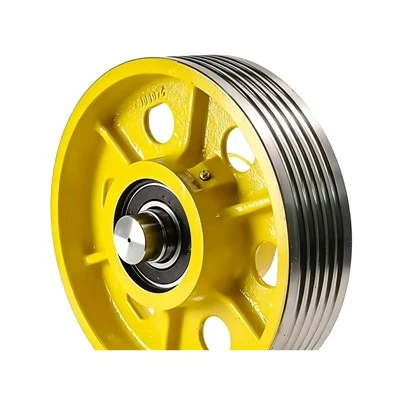
If you’re a building manager, maintenance technician, or property owner who’s still figuring out your elevator part inspection schedule, don’t go it alone. I’ve been in this industry long enough to know that every elevator is different, and the right inspection frequency depends on your equipment, its use, and your location. We work with all kinds of customers—from small residential buildings to large hospital systems—to tailor inspection schedules to their needs, and we stock the parts you need, when you need them, so repairs are fast and affordable. If you’re looking to review your current inspection plan, or source reliable elevator parts that will hold up to your schedule, feel free to reach out to discuss your needs.
Silk Machinery References
ASME A17.1-2023: Safety Code for Elevators and Escalators. American Society of Mechanical Engineers.
National Elevator Industry, Inc. (NEII) Maintenance Guidelines for Modern Elevator Systems, 2022.
Occupational Safety and Health Administration (OSHA) Standard 1910.69: Elevator Safety. U.S. Department of Labor, 2021.
Haining Defuli Intelligent Equipment Co., Ltd.
As one of the most professional elevator parts manufacturers and suppliers in China, we’re featured by quality products and good service. Please rest assured to buy customized elevator parts made in China here from our factory. Welcome to contact us for pricelist.
Address: No.8-1, Anlan Road, Chang’an Town (Agricultural Development Zone), Haining City, Zhejiang Province, China
E-mail: Jiajie.jin@fukang-china.com
WebSite: https://www.cndefuli.com/
