If you’ve walked through a busy office, a crowded airport, or a morning workout class in the last five years, you’ve probably spotted someone with a small, discreet piece of tech tucked in one ear, chatting or typing without touching a phone or speaker. That’s the single ear headset with voice control—and it’s not just a fad, it’s a tool that’s reshaping how people balance focus, connectivity, and convenience in their daily lives. As a single ear headset supplier who’s worked with over 10,000 business clients and individual users across 12 countries, I get asked this question all the time: what exactly is this device, and why is it different from every other headset on the market? Single Ear Headset
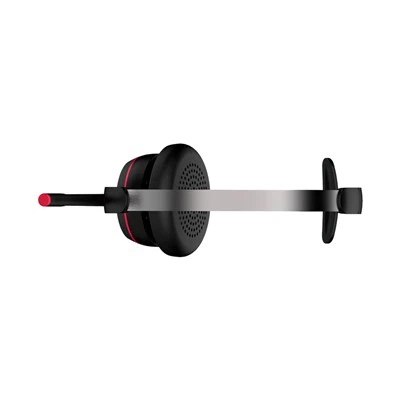
To start, let’s break down the basics. A single ear headset with voice control is a wireless audio accessory designed to be worn on one ear, leaving the other ear free to hear ambient sounds—street noise, a teammate calling your name, a traffic light changing, whatever’s around you. Unlike traditional Bluetooth headsets that clamp over both ears, or full-size headphones that block out the world, these devices strike a middle ground that works for people who don’t want to disconnect from their environment entirely. The voice control part is what makes it truly functional, though: it uses built-in microphones, on-device processing, and cloud-based AI to let you issue commands, make calls, send messages, or pull up information without touching a screen. No fumbling to unlock your phone while walking, no digging for your device in a bag mid-commute, no missing a quick task because your hands are full.
A lot of people confuse these with Bluetooth earbuds, but there’s a key difference. Most consumer earbuds are made for music and entertainment, with primary design focus on sound quality for listening. Single ear headsets with voice control are built for productivity and communication first. I’ll explain that further: their microphones are optimized for clarity in noisy spaces, not just for playing audio, and their battery is calibrated to last all day on a single charge for calls and voice commands, not hours of streaming music. They also have better wind and background noise cancellation for the voice pickup side, so the person on the other end of a call or the voice assistant hearing your command doesn’t have to strain over the noise of a coffee shop or a construction site.
Let’s talk about how the voice control actually works, because that’s the core of the device. When a user speaks, the headset’s three microphones (most models have this, to pick up your voice from all angles while suppressing background noise) capture the audio. That audio is processed in two parts: first, on the device itself, to filter out loud nearby sounds like a vacuum or a passing car, and then often sent to a cloud service like Alexa, Google Assistant, or Siri to interpret the command. For example, if you say “Send a text to Sarah I’ll be 10 minutes late,” the headset sends that filtered voice recording to your phone’s assistant, which translates it into text and sends the message. Some higher-end models have on-device AI that can process simple commands without needing to connect to the cloud, which is great for users concerned about privacy, since their voice data never leaves the headset. That’s a big selling point for healthcare workers, lawyers, and government employees who handle sensitive information, right?
Over the years, we’ve seen this technology evolve from clunky early models that could only make phone calls to smart devices that integrate with every part of a user’s digital life. Early single ear headsets (think the 2010s) were mostly for corporate use, designed for salespeople and call center agents who needed to take calls while doing other work. Now? They’re used by nurses checking patient records while moving between rooms, delivery drivers sending updates without pulling over, retail associates restocking shelves while taking customer calls, and even students taking notes while listening to lectures. The single ear design is perfect for all of these roles because it lets you stay connected without missing critical sounds in your environment.
Wait, but why single ear? Why not two? That’s a question I get all the time from customers testing our products. For many people, wearing two earbuds makes it hard to hear traffic, fire alarms, or a colleague who needs your attention. It can also make users feel isolated, like they’re tuned out from the world around them. The single ear design eliminates that. If you’re walking to a meeting, you can hear someone call your name, if you’re driving, you can hear sirens, if you’re at a busy restaurant, you can follow a conversation at your table without having to pull out your headset. It’s a balance that dual-ear devices can’t replicate. And the voice control removes the need for your hands, so you don’t have to fumble with a phone at all. That’s game-changing for people who do physical work: a warehouse worker can update their inventory list by voice while lifting boxes, a teacher can pull up a lesson plan while writing on a whiteboard, a parent can set a timer while packing a lunch for their kids.
As a supplier, I’ve spent years testing these devices with real users to make sure they actually work, not just look good on a spec sheet. For example, a few years back, we worked with a team of Amazon delivery drivers to test our latest single ear headset with voice control. One driver told us that before our device, he’d have to pull over every time he needed to send a delivery update or check a route, which ate up 10-15 minutes of his shift every day. After switching to our headset, he said he could handle all those tasks on the go, cutting his daily downtime in half and letting him make 2-3 extra deliveries a day. Another client was a nurse at a busy urban hospital: she used to have to stop charting mid-task to log patient information, which led to delays and mistakes. With our headset, she can pull up a patient’s chart by voice, update notes, and send requests to the pharmacy all while moving between rooms. The single ear design lets her hear code blues and calls for help that she’d miss with dual-ear headphones.
Of course, no device is perfect, and the single ear headset with voice control has its limitations. The audio quality isn’t as good as high-end headphones for listening to music, so it’s not the best choice for someone who wants a device that works for both work and leisure. The voice control can struggle with very loud environments, like a construction site with a jackhammer, though newer models have improved noise processing. And some users find wearing a device in one ear for 8+ hours uncomfortable, which is why we design our headsets with soft, customizable ear tips made from medical-grade silicone that fit different ear sizes, so they stay comfortable even during full workdays.
What’s also important is the variety of use cases these devices cover, which is why they’re not just for office workers. We sell a lot to healthcare, logistics, education, and retail industries, each with their own needs. For example, in healthcare, privacy is a big concern: many of our clients require headsets that process voice commands on the device, not in the cloud, so patient conversations never leave the headset. In logistics, users need long battery life—our top model lasts 18 hours of talk and voice time, which is perfect for a 12-hour shift on the road. In retail, durability is key: our headsets are sweat-resistant and can handle being dropped on the floor, which is common in busy stores.
As a supplier, I’ve seen firsthand how these devices have gotten smarter over the last few years. Early models required a dedicated app to set up commands, but now many can learn a user’s voice over time, so they’re better at recognizing accents, soft voices, or fast speech. They also integrate with hundreds of different platforms, from customer relationship management tools (like Salesforce) to school learning management systems (like Canvas) to pharmacy systems (like Epic). That flexibility is why businesses keep coming back to us—they don’t have to adapt their workflow to the headset, the headset adapts to their workflow.
If you’re considering this type of device for your team or for personal use, there are a few key features to look for. First, comfort: if your employees or customers are going to wear it all day, it needs to fit securely and not cause ear fatigue. Second, noise cancellation: both for the person speaking and the person listening. The best single ear headsets with voice control have dual microphone arrays that filter out background noise so calls are clear and commands are accurate. Third, battery life: look for at least 12 hours of talk time, not just 4 hours of music streaming. Fourth, compatibility: make sure it works with the devices and tools your team already uses—there’s no point in buying a headset that doesn’t integrate with your CRM or school LMS.
At the end of the day, the single ear headset with voice control is more than just a tech gadget. It’s a tool that helps people stay connected, productive, and safe in an increasingly noisy, fast-paced world. It solves a problem that a lot of other devices don’t: the need to balance connectivity with awareness. Whether you’re a driver, a nurse, an office worker, or a student, this device lets you get things done without tuning out the world around you.

If you’re interested in learning more about our line of single ear headsets with voice control, or would like to discuss custom solutions for your team or business, we’d love to connect with you for a procurement conversation.
Single Ear Headset References:
- International Data Corporation (IDC), 2023 Wearable Device Market Report
- World Health Organization (WHO), 2022 Guidelines for Hearing Protection in Occupational Settings
- Consumer Technology Association (CTA), 2023 Smart Accessory User Survey
- Journal of Occupational and Environmental Hygiene, Vol. 19, No. 8, 2022: “Effects of Wireless Audio Devices on Workplace Productivity and Situational Awareness”
Huizhou Boxin Electronics Co., Ltd.
We’re well-known as one of the leading single ear headset manufacturers and suppliers in China since 1989, also support customized service. With abundant experience, we warmly welcome you to wholesale high quality single ear headset made in China here from our factory.
Address: No.01, 7/F, 5#, Factory 5# and 6#, Phase l, Lechuangcheng, No.8, Renluo 6thRoad, Shuikou Street, Huicheng Distriet, Huizhou City, Guangdong Provinee, P.R. China.
E-mail: Info@ucheadset.com
WebSite: https://www.boxinheadsets.com/
