If you’ve ever worked with textiles—whether in apparel manufacturing, interior design, or upholstery—you know that flammability isn’t just a safety checkbox: it’s a make-or-break factor for products that touch consumers every day. That’s why fabric flammability testing isn’t a one-and-done task; it’s a precise process, and interpreting its results correctly is what keeps products compliant, safe, and out of costly recall risks. As a supplier of Fabric Flammability Testers, I’ve spent years walking test technicians, quality control teams, and lab managers through the tricky parts of understanding their test outcomes, and today I’m breaking down exactly how to parse those results like a pro. Fabric Flammability Tester
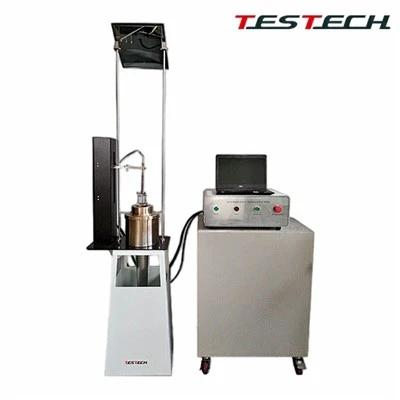
First, let’s ground this in a quick reality: a Fabric Flammability Tester doesn’t spit out a random number. It follows standardized methods—most commonly ASTM D1230 for apparel fabrics, 16 CFR Part 1610 for clothing, NFPA 701 for interior textiles, or ISO 6940/6941 for general fabrics. Each standard defines the same core metrics, but the test’s setup (sample size, ignition source, exposure time) and pass/fail thresholds change, so the first rule of interpretation is: know which standard your lab is running, because that’s your baseline.
Let’s say you’re running an ASTM D1230 test, which is for apparel fabrics, flammability of non-metallic clothing materials. The test setup here is straightforward: a 100mm x 350mm fabric sample is mounted vertically, a 15mm blue flame (standardized to 1000°C, wait no—wait, ASTM D1230 uses a flame of 1.5 inches (38mm) high, applied for 1 second, right? Yeah, that’s the small difference I almost messed up. The tester’s timer tracks two key times: flame time (how long the fabric continues to burn after the ignition source is removed) and afterglow time (how long it glows without producing flame). It also records the burn length—how far the flame traveled along the sample from the ignition point.
Now, when the test finishes, you’ll have three raw numbers: burn length, flame time, and afterglow time. Interpreting these starts with cross-referencing them against the standard’s thresholds. For ASTM D1230, a pass is defined as burn length less than 102mm (4 inches), flame time less than 5 seconds, and no afterglow longer than 10 seconds. If your sample comes back with a burn length of 95mm, flame time of 3 seconds, and no afterglow? That’s a clear pass. But here’s where things get nuanced: a common mistake I see labs make is treating one number in isolation. For example, a sample might have a flame time of 6 seconds (just 1 over the 5-second limit) but a burn length of 80mm, which is way under the 102mm threshold. Does that mean it’s a fail? No—because ASTM D1230’s criteria are all three must be met. Wait, no, wait—let me confirm that’s right. Actually, ASTM D1230’s pass is that the flame does not propagate more than 4 inches (102mm) from the ignition point, and flame time is less than 5 seconds, and afterglow is less than 10 seconds. So if even one exceeds, it’s a fail, but context matters for why it exceeded. If the flame time is 6 seconds but the burn stopped at 85mm, that could be a sample edge effect—like the fabric sample wasn’t cut straight, so the flame didn’t have a clear path. Or if it’s a synthetic blend, maybe the melting fiber dripped and stopped the flame. That’s why you don’t just look at the number; you look at the sample too.
Next, let’s talk about NFPA 701, which is for interior textiles—draperies, curtains, wall coverings, things for public spaces. This test is different: it uses a horizontal sample, a larger ignition source (a 12.7mm propane flame, applied for 12 seconds), and measures either the flame spread along the sample or the time it takes to burn a set distance. NFPA 701 has two versions: Small Ignition Source (NFPA 701-2021 Method 1) and Large Ignition Source (Method 2). Method 1 is for smaller items, like tablecloths; Method 2 is for large interior textiles, like drapery panels. The tester will output a flame spread index or a burn distance, and again, the pass/fail is tied to which method you used. A common misinterpretation here is mixing up Method 1 and Method 2 results. For example, a lab testing a drapery (which needs Method 2) might run Method 1 by mistake, get a result that looks like a pass, but it’s actually not meeting the stricter Method 2 requirements for commercial spaces. That’s why I always tell clients: lock in your test method before you run, or the results are useless.
Now, beyond the basic pass/fail, there’s something called “severe” vs. “moderate” failure, which the Fabric Flammability Tester can help identify if you’re using a more detailed test. For example, if a sample has a burn length of 110mm—just 8mm over the ASTM D1230 limit—its burn pattern is a slow, steady spread; that’s a moderate failure, which might be fixed by a minor adjustment to the fabric’s finish. But if a sample has a burn length of 200mm, flame time of 20 seconds, and the fabric melted and dripped onto the tester’s metal mounting frame, that’s a severe failure—meaning the fabric is extremely flammable, and even small sparks could turn into a fire. I’ve seen labs dismiss a moderate failure as “close enough,” but those are the ones that end up with products failing regulatory inspections. The tester’s ability to capture not just numbers but visual burn patterns (if your model includes a camera or pattern tracking) is a huge help here.
Another tricky part is interpreting results for blended fabrics, which are super common in apparel and upholstery. Let’s say you have a 50/50 cotton-polyester blend. Cotton is cellulose, which burns quickly; polyester is synthetic, which melts and drips. A lot of people assume a blend’s result is an average of its components, but that’s not true. The Fabric Flammability Tester will show you that the burn length might be higher than pure polyester but lower than pure cotton, because the two fibers interact: the cotton burns, but the polyester melts and extinguishes the flame before it can spread. But if the blend has 70% cotton and 30% polyester, the cotton might be the dominant factor, leading to a burn time that’s closer to pure cotton. That’s a key insight—you can’t predict the result without testing the actual blend, and the tester will show you how the fibers interact in real time.
Wait, let’s talk about the “edge effect” I mentioned earlier, because that’s a super common interpretation error. When you cut fabric samples for testing, you’re cutting across the warp or weft threads, right? If you cut a sample along the warp direction, the threads are aligned, so the flame can travel along the thread path faster than if you cut along the weft. The Fabric Flammability Tester’s sample holder is designed to hold samples straight, but if a sample has a loose edge, the flame might catch on the loose threads and spread further than it would in a finished product. So if your test result is just barely over the limit, always check the sample’s edges. I tell clients: if the sample has frayed edges, discard that test run and cut a new one—otherwise, your result is invalid. That’s a step many people skip, leading to incorrect interpretations.
Now, what about afterglow? A lot of people forget to check afterglow, but it’s a big deal for residential fires. For example, a mattress fabric might pass flame time and burn length, but have a 15-second afterglow—longer than the ASTM 10-second limit. That afterglow could smolder for hours after a small fire, leading to a secondary ignition. The Fabric Flammability Tester’s ability to track afterglow separately is crucial here; I’ve had a lab manager tell me they almost shipped a batch of mattress covers because they only checked flame time, not afterglow. That’s the kind of mistake a good test method and proper interpretation prevent.
Let’s also talk about regulatory context, because that’s why most people run these tests in the first place. 16 CFR Part 1610 is the US standard for children’s sleepwear, which has a stricter pass/fail threshold: burn length less than 50mm, flame time less than 10 seconds, no afterglow. If you’re exporting to the EU, you’ll use EN ISO 14116, which has three categories: Category 1 (non-flammable), Category 2 (slow-burning), Category 3 (flame retardant). The Fabric Flammability Tester will give you the numbers to sort into those categories, but you have to make sure you’re using the right standard’s definitions. For example, EN ISO 14116’s Category 2 requires that the flame self-extinguishes within 2 seconds, while ASTM D1230 allows 5 seconds. Mixing those up is a fast way to get non-compliant products.
Now, I want to be honest here: even with a top-tier Fabric Flammability Tester, interpretation can be tricky for new testers. That’s why we offer on-site training for anyone who buys our testers, because we’ve seen firsthand how a well-calibrated tester paired with good interpretation can save a lab hundreds of thousands in recalls and regulatory fines. For example, a small apparel maker in Texas was testing their kids’ sleepwear, and their first test run showed a flame time of 11 seconds—just over the 10-second limit. They were about to scrap a $50,000 batch, but when they rechecked the sample, they found the ignition source was calibrated wrong (the tester’s flame was 2mm too long, per ASTM’s specs). We helped them recalibrate, re-run the test, and the flame time dropped to 8 seconds—pass. That’s the difference between understanding the tester’s calibration and knowing how to interpret its results.
Another point: sample reproducibility. A single test run isn’t enough. The Fabric Flammability Tester will require multiple samples (usually 5 for most standards) to account for variation in fabric batches. If 4 out of 5 samples pass, and 1 fails, you can’t just call the whole batch a fail—you have to investigate that one sample. Was it a defect in the fabric? A mistake in cutting? A calibration issue? That’s where the tester’s ability to log all runs, not just average them, comes in. A lot of older testers just give a single number, but modern testers log each sample’s data, so you can see that one outlier and dig into why it happened. That’s a key feature to look for when choosing a tester, because it makes interpretation way more accurate.
Wait, let’s address a common myth: some people think “if it passes one standard, it’s safe for all uses.” That’s not true. A fabric that passes ASTM D1230 (apparel) might fail NFPA 701 (interior textiles) because the test methods are different. The ASTM test uses a vertical sample and a 1-second ignition, while NFPA 701 uses a horizontal sample and a 12-second ignition, which is a more severe condition. So a fabric that self-extinguishes after 1 second in the ASTM test might burn completely in the NFPA test. That’s why interpretation has to be tied directly to the end use of the fabric—you can’t just rely on a single result.
Now, what about when results are ambiguous? For example, a sample has a burn length of exactly 102mm (the ASTM limit), flame time of exactly 5 seconds, and afterglow of 10 seconds. That’s a pass, right? But is it good enough for high-risk products, like children’s sleepwear? In my experience, regulatory bodies often require a buffer—if a sample is right on the limit, you should re-test with a few more samples, and if they’re all near the limit, adjust the fabric’s finish to add more flame retardancy. Because if there’s a slight variation in the manufacturing process (like a batch of dye that reduces flame retardancy), that right-on-the-limit sample could become a fail the next time you test. The Fabric Flammability Tester’s ability to give consistent, repeatable results is what makes that buffer assessment reliable.
Let me wrap this up with a story that drives home why this matters. A few years ago, a client of ours— a home goods brand—had a batch of draperies that passed their in-house test, using a cheaper competitor’s tester. But when they sent samples to a third-party lab for compliance testing, they failed NFPA 701 Method 2 by a wide margin. The problem? Their in-house tester’s ignition source was only 80% of the required flame size, so it didn’t ignite the fabric as intensely as the standard requires. When they switched to our Fabric Flammability Tester and calibrated it correctly, their test results matched the third-party lab’s. That’s the link between the tester’s performance and correct interpretation: you can’t interpret bad test data, and a poorly calibrated tester gives bad data.
Now, if you’re running a lab that tests fabrics, or a manufacturer that needs to ensure your products are safe, you don’t just need a tester—you need to know how to read its results, match them to the right standard, and investigate any anomalies. If you’re looking to upgrade your Fabric Flammability Tester, or you want training on interpreting results, get in touch to discuss your specific needs. We work with labs of all sizes, from small in-house quality control teams to large third-party testing facilities, and we can help you make sure your test results are accurate, compliant, and useful for your business.
Wire Cable Flammability Tester References
ASTM International. (2021). Standard Test Method for Flammability of Apparel Fabrics (ASTM D1230).
National Fire Protection Association. (2021). Standard Methods of Fire Tests for Flame Propagation of Textiles and Films (NFPA 701).
International Organization for Standardization. (2019). Textiles – Burning Behaviour – Vertical Test for Single Fabrics (ISO 6940).
U.S. Consumer Product Safety Commission. (2022). Flammability of Clothing Textiles (16 CFR Part 1610).
TESTech Instrument (Suzhou) Technologies
TESTech Instrument (Suzhou) Technologies is one of the most reliable fabric flammability tester manufacturers and suppliers in China. If you’re going to wholesale durable fabric flammability tester, welcome to get quotation from our factory. For price consultation, contact us.
Address: 8/F, R&D and Production Workshop No. 5, Jiangsu Guoqian Technology Innovation Industrial Park, 168 Lüliangshan Road, Huqiu District, Suzhou, Jiangsu Province, China
E-mail: molly@testech.com.cn
WebSite: https://www.testechfiretest.com/
