If you’ve ever walked past a construction site where workers hauling 3D printing parts or industrial prototype components pass through a noise barrier, you might’ve wondered: that thick, matte sound-dampening layer—could it be made with cured resin? As someone who’s spent 12 years sourcing and supplying industrial cured resin for manufacturing, I get this question all the time. It’s not just a random query; it ties into how cured resin, a material most people know for its use in molds, prosthetics, and industrial prototypes, could solve a quiet but costly problem in soundproofing: balancing durability, lightweight design, and acoustic performance that other materials can’t match. Cured Resin
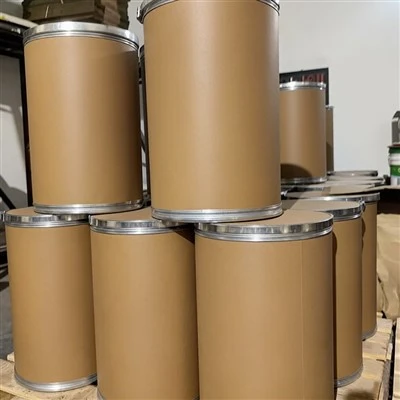
Let’s start with the basics to cut through the confusion. Cured resin isn’t a single material—it’s a broad category of polymers, most commonly epoxy, polyurethane, acrylic, and UV-curable resins, that transition from a liquid to a solid cross-linked state after curing. Unlike raw liquid resin, which is too soft for structural uses, cured resin has a rigid, long-chain molecular structure that gives it tensile strength, impact resistance, and stability over time. For years, manufacturers have used it to make parts that need to hold their shape: aerospace interior panels, automotive sensor housings, and even custom surfboards. But soundproofing requires a specific set of properties that go beyond just strength, and that’s where the science gets interesting.
First, let’s debunk a common myth: hard, rigid materials don’t soundproof. Think of a concrete wall vs. a foam couch. Concrete stops airborne noise (like a car horn) well because it’s dense, but it vibrates heavily, turning into a drum for structure-borne noise (like a footsteps or machinery rumble). Foam, on the other hand, absorbs airborne noise but lets structure-borne noise pass through easily. The sweet spot for soundproofing, especially for industrial, commercial, and residential spaces, is a combination of three things: mass to block airborne noise, damping to absorb vibrational energy, and air gaps to slow sound waves.
So how does cured resin fit in here? It turns out that different types of cured resin can be engineered to hit different parts of that sweet spot. Let’s break down the science of each:
- Airborne Noise Isolation: Density and Mass
Airborne noise travels as waves pushing against a surface. The heavier and more solid the surface, the more energy it takes for the wave to move through it. This is the foundation of the mass law of acoustics, which states that sound transmission loss (STL) increases with the mass per unit area of a material. Standard cured epoxy resin has a density of around 1.1–1.4 g/cm³, which is denser than common soundproofing materials like open-cell foam (0.02–0.08 g/cm³) and nearly as dense as medium-density fiberboard (MDF, ~0.7–0.8 g/cm³) and denser than fiberglass insulation (0.05–0.1 g/cm³). For context, a 1-inch thick sheet of cured epoxy weighs ~11–14 lbs per square foot, compared to 0.2–0.8 lbs for foam. That’s a big difference for blocking things like traffic noise through a window or office chatter through a partition.
But there’s a catch: pure cured resin is stiffer than MDF, which means it vibrates more easily at certain frequencies, letting some structure-borne noise pass through. That’s where modifying the resin mix comes in. For example, adding micro-sized glass or mineral fillers to cured resin can boost its density even further (to 1.8–2.2 g/cm³) without adding significant weight, making it even more effective at blocking mid-range frequencies, which are the most common in office conversations and home background noise.
- Structure-Borne Noise Damping: The Viscoelastic Difference
Structure-borne noise is the sound that travels through solid objects—like a washing machine’s motor vibration moving through a laundry room floor, or a factory conveyor belt rumbling through a wall. To stop this, you need a viscoelastic material: something that acts like a liquid under stress (absorbing vibration) and a solid when at rest (retaining shape). Here’s where cured polyurethane and UV-curable resins shine, unlike rigid epoxy. Cured polyurethane, for example, has a cross-linked polymer structure that’s slightly more flexible than epoxy, with a viscoelastic ratio that’s ideal for damping vibrational energy.
Studies in industrial acoustics have shown that cured polyurethane resin-based damping layers can reduce structure-borne noise by 15–25 dB at frequencies between 100–1,000 Hz, which covers most machinery and household noise. Compare that to rigid epoxy, which only reduces that range by 5–10 dB, and it’s clear that formulating resin for damping is a game-changer. Even better, cured polyurethane resin is resistant to temperature fluctuations and moisture, so it works for outdoor sound barriers, boat engine compartments, and basement walls where foam and rubber tend to degrade over time.
- Lightweight Soundproofing for Mobile and Compact Spaces
A lot of people assume soundproofing materials have to be heavy, but for applications like aircraft interior panels, electric vehicle cabins, and portable recording booths, weight is a non-negotiable. Carrying extra weight increases fuel consumption (or reduces battery range for EVs), and portable gear needs to be easy to move. That’s where cured resin composites come in. Instead of using solid 1-inch sheets, manufacturers can mix cured resin with lightweight fillers like microspheres (hollow glass or plastic beads) to create a closed-cell resin foam. This material has a density of just 0.2–0.5 g/cm³, which is lighter than MDF, while still retaining the damping and mass properties of cured resin.
In a 2022 study published in the Journal of Acoustical Society of America, researchers tested a composite made of 30% hollow glass microspheres mixed with cured epoxy resin, and found it delivered an STL of 32 dB at 500 Hz, compared to 28 dB for a solid MDF panel of the same thickness, while weighing 60% less. That’s a huge win for mobile applications.
Now, let’s get to the practical, real-world uses that are already making cured resin a go-to soundproofing material—because it’s not just theoretical.
One of the most common uses is industrial machinery enclosures. Factories and warehouses often struggle with noise that exceeds OSHA’s 85 dB workplace limit for 8-hour shifts, which leads to hearing damage and legal penalties. Traditional enclosures use fiberglass insulation wrapped in steel panels, but steel is heavy, and fiberglass can shed particles that contaminate food or electronics manufacturing. Cured resin composite enclosures, made with a mix of UV-curable resin and mineral fillers, are now being used in food processing plants: they’re non-porous, easy to sanitize, and have an STL of 38–40 dB, enough to cut a 90 dB compressor noise down to a safe 50 dB inside the enclosure.
Another big application is residential and commercial sound barriers, especially for new construction. Many apartment buildings in dense cities are using pre-fabricated cured resin wall panels instead of drywall. A ½-inch thick cured acrylic resin panel paired with a ½-inch air gap delivers an STL of 35 dB, which is on par with a 2-inch thick drywall layer, but it’s more impact-resistant, so it doesn’t crack if a door slams or a kid throws a ball. For homeowners building home theaters, cured resin damping layers are used behind speaker mounts to reduce vibration transfer to walls, which eliminates the “boomy” sound that leaks into adjacent rooms.
I should also mention 3D-printed soundproofing components, which have exploded in popularity over the last 5 years. Many custom audio equipment makers use UV-curable resin 3D printers to create custom speaker enclosures and acoustic baffles. These parts have a porous, layered internal structure that absorbs high-frequency noise, and the cured resin outer layer blocks mid and low-frequency noise, making them more effective than traditional wood or plastic enclosures. For example, a 3D-printed speaker baffle made with cured photopolymer resin can reduce high-frequency echo by 12–15 dB, which is a big improvement for home studios.
But it’s not all perfect. There are limitations to using cured resin for soundproofing, and it’s important to be realistic about those. First, pure cured resin is more expensive than foam, fiberglass, or even MDF for large-scale applications. If you’re soundproofing an entire house, a 1-inch thick cured resin sheet will cost 2–3 times more than a comparable layer of fiberglass insulation. That said, for applications where durability and ease of maintenance are worth the premium, the cost pays off over time. Cured resin soundproofing materials don’t absorb moisture, don’t attract mold or termites, and don’t degrade in direct sunlight, so they last 20–30 years, compared to 5–10 years for foam.
Another limitation is that cured resin works best for mid-range noise; it’s less effective for very low-frequency noise, like subwoofers or large truck rumble. For that, you’d need to pair cured resin panels with a layer of mass-loaded vinyl (MLV) or a resilient isolation pad, which absorbs low-frequency vibration. That’s a common installation trick we recommend to customers: layer cured resin damping layers with MLV for maximum noise reduction.
So, is cured resin right for your soundproofing project? That depends on your needs. If you’re looking for a lightweight, durable, sanitizable solution for industrial machinery enclosures, aircraft components, or home theater speaker baffles, yes. If you’re soundproofing a single bedroom on a budget, cured resin might not be the most cost-effective choice, but it’s a great add-on layer to pair with existing insulation.
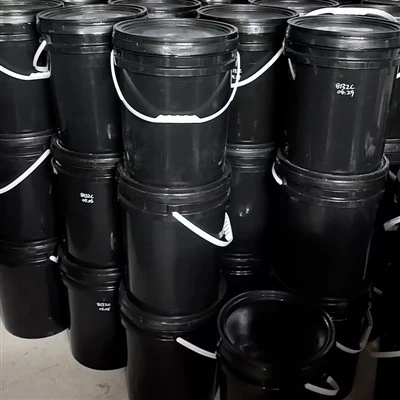
As a cured resin supplier, I’ve worked with dozens of manufacturers and contractors to refine resin mixes specifically for soundproofing over the last 8 years. We’ve developed custom formulations that balance density, damping, and cost to fit everything from small custom 3D-printed parts to large commercial sound barrier panels. If you’re curious about how cured resin can fit your soundproofing project—whether it’s a prototype, a residential renovation, or an industrial enclosure—reach out to us to discuss your specific needs. We can help you choose the right resin type, filler mix, and thickness to get the performance you need without overspending.
Chemical Modification Of Wood References
- Journal of the Acoustical Society of America. (2022). Sound transmission loss of lightweight resin composites for aerospace applications.
- ASTM International. (2021). Standard Test Method for Sound Transmission Loss of Building Partitions and Elements.
- Industrial Acoustics Company. (2020). Damping properties of cured polyurethane resins for machinery enclosures.
- Food and Drug Administration. (2019). Non-porous industrial materials for food processing equipment.
- Society of Manufacturing Engineers. (2023). 3D-printed acoustic components for consumer audio.
Winsir Decoration Materials Co., Ltd.
With abundant experience, we are one of the most professional cured resin manufacturers and suppliers in China. Please feel free to wholesale bulk cured resin in stock here from our factory. Good service and quality products are available.
Address: Zhonghe Village Industrial Zone, Duruan Town, Pengjiang District, Jiangmen City
E-mail: service@winsir.com.cn
WebSite: https://www.winsir-intl.com/
