If you’ve ever stood on a factory floor, watching parts come off a CNC machine or a stamping press, you know that tiny, sharp burrs can turn a seemingly perfect component into a problem. These leftover metal shavings—just a fraction of a millimeter thick—can scratch mating surfaces, damage assembly tools, or even cause product failures down the line. For years, manufacturers relied on solid abrasive wheels, wire brushes, or manual sanding to tackle deburring, but these methods often came with trade-offs: uneven finishes, too much material removal, or high wear on tools. That’s where non-woven wheels come in, and if you’ve ever wondered, “Can non-woven wheels be used for deburring?” the short answer is a resounding yes. But to really get why they work, and why so many fabricators are ditching old methods for these versatile tools, let’s break down the science, the real-world use cases, and why as a non-woven wheel supplier, I’ve spent the last 12 years refining these tools to meet the exact needs of shops like yours. Non-Woven Wheel
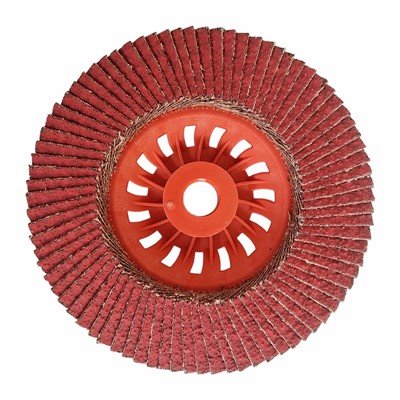
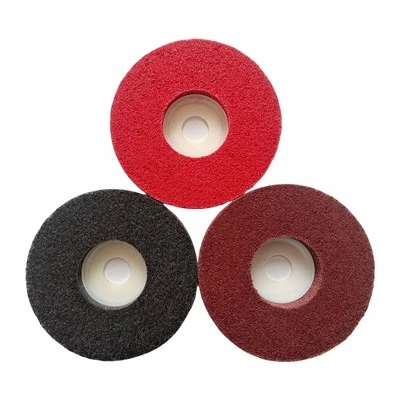
First, let’s talk about what non-woven wheels actually are, because their structure is everything when it comes to deburring. Unlike a solid abrasive wheel, which is a rigid block of grit bonded tightly together, a non-woven wheel is made from three core components: a flexible, porous nylon web, abrasive grains embedded in a thermoset resin binder, and a saturant that coats the web to control the cut. Think of it like a dense, scrubby sponge, but with tiny, sharp grains attached. The porosity of the web is key here—it lets the wheel conform to the shape of a part, so it doesn’t just grind a flat, uniform surface; it gets into edges, corners, and even the small crevices of a stamped or CNC-machined part. That flexibility is why it works so well for deburring, a task that isn’t just about removing material, but removing it evenly without damaging the part itself.
Now, let’s get into the science of why this works for deburring specifically. Burrs form in two main ways, depending on the manufacturing process: for cutting operations like sawing, punching, or stamping, burrs are “ductile” (soft, curled, and often along the edge of the part); for machining operations like milling or turning, burrs are “transitional” (harder, thicker, and often on the exit side of the cut). Non-woven wheels target both because their abrasive grains are held in a flexible matrix, so they don’t dig into the parent material the way rigid abrasives do. When you run a non-woven wheel against a burr, the grains shear the burr away at a consistent rate, rather than plowing through the part. That means you get full burr removal without removing excess material—something that’s critical for precision parts, like medical implants or aerospace components, where even a few thousandths of an inch of material loss can render a part unusable.
I’ve seen this play out time and time again in our customer shops. Last year, a client in the automotive parts space was deburring brake calipers, which had thick, uneven burrs from the casting process. They were using a solid grinding wheel that was removing 0.015 inches of material from the edge of each caliper, leading to 8% of parts being rejected for being too thin. They switched to our medium-density non-woven wheels (the ones with 120 grit, perfect for heavy deburring) and cut material removal to just 0.002 inches per part. That small change saved them $120,000 a year in rejected parts and reduced their deburring cycle time by 30%. That’s the kind of result that makes non-woven wheels indispensable, and it’s exactly why I tell every customer who asks, “Can non-woven wheels be used for deburring?” that it’s not just a yes—it’s a game-changer for efficiency and quality.
But not all non-woven wheels are created equal, and that’s a mistake a lot of new fabricators make when they first test them. You can’t grab any random non-woven wheel and expect it to handle every deburring job. The key variables here are grit size, density, and the type of abrasive grain, and matching those to the burr’s size and the part’s material is what makes it work. Let’s break that down:
Grit size is the first call. For heavy deburring—think thick, metal burrs from stamping or casting—you need coarser grit, usually 60 to 120. That aggressive grain will shear through the burr quickly without loading up (another big advantage of non-woven wheels: their porous structure keeps the abrasive from clogging with metal shavings, which lets the wheel work longer between cleanings). For light deburring or edge blending, you go finer: 180 to 320 grit works for removing tiny burrs from CNC-machined aluminum, and even 400 to 600 grit for deburring and finishing parts that need a smooth surface, like kitchen appliances or medical devices.
Density is the second big factor. Non-woven wheels come in three main densities: light, medium, and heavy. Light-density wheels (sometimes called “conforming” wheels) are super flexible, perfect for deburring soft, thin materials like sheet metal or copper tubing, where you don’t want to bend or damage the part. Medium-density is the workhorse, great for most general deburring jobs on steel, aluminum, or brass. Heavy-density is rigid enough for heavy-duty deburring on thick steel parts, like agricultural equipment components or heavy machinery parts, where you need a consistent, powerful cut.
And then there’s the abrasive grain type, which matters for material compatibility. We offer three main grain types for our non-woven wheels, and each works best for specific materials. Aluminum oxide is the workhorse for steel, stainless steel, and most ferrous metals— it’s tough, sharp, and doesn’t wear out quickly. For non-ferrous metals like aluminum, brass, and copper, we use zirconia alumina, which is less likely to burn or discolor the soft metal, so you don’t have to go back and polish after deburring. And for hard materials like ceramics or hard metals, we offer silicon carbide, which cuts through those burrs without breaking down.
I’ve had customers come to me before saying, “I tried a non-woven wheel once and it didn’t work for deburring,” and nine times out of ten, the problem was they picked the wrong grit, density, or grain for their job. A few years ago, a fabricator was deburring small titanium components for aerospace, and they used a medium-density aluminum oxide wheel—titanium is a hard, non-ferrous metal, so the aluminum oxide was too soft, and the wheel just smoothed the surface instead of removing the burr. We swapped them for our zirconia alumina, light-density wheel, and suddenly they were removing all the burrs without scratching the titanium. That’s the fine-tuning that comes with working with a non-woven wheel supplier who knows their stuff.
Another big benefit of non-woven wheels for deburring is safety and consistency, which are huge for shop floors. Unlike wire brushes, which can shed metal bristles that can cause injury or get trapped in parts (a big no-no for food service or medical parts), non-woven wheels are made of synthetic nylon and abrasive grains, so there’s no risk of loose bristles. They also produce less dust and noise than solid grinding wheels, which helps shops meet OSHA standards for workplace safety. And because the cut is consistent from wheel to wheel, you get uniform burr removal across all parts, no matter who’s operating the grinder. That consistency means less rework, fewer rejects, and a smoother workflow.
But wait—can non-woven wheels be used for all deburring jobs? No, and it’s important to be realistic about their limits. They aren’t going to remove extremely heavy, thick burrs from rough castings on their own; for those, you’d first use a more aggressive tool, like a flap disc or a solid grinding wheel, to knock down the big burr, then follow up with a non-woven wheel for the final edge blending and removing any remaining small burrs. They also aren’t ideal for deburring hard, brittle materials that can crack when exposed to the flexible wheel—like glass or some ceramics, where a rigid abrasive might be a better fit. But for 90% of the deburring jobs I see in shops every day, from automotive parts to consumer goods to medical devices, non-woven wheels are the perfect tool.
As a supplier, I’ve also learned that many shops don’t realize how versatile non-woven wheels are beyond just straight edge deburring. You can use them to deburr internal holes (the porous structure lets the wheel get into small bores), to remove weld burrs on large pipe sections, and even to deburr the edges of plastic parts from injection molding. I had a customer last year who made plastic toys, and they were using sandpaper discs to deburr the mold lines and burrs on the parts, which was labor-intensive and left inconsistent edges. We recommended our fine-grit non-woven conical wheels, which fit into the mold lines easily, cut the burrs evenly, and let their workers deburr 200 more parts an hour than before. That’s the kind of cross-use that makes non-woven wheels such a smart investment—they don’t just do one job; they adapt to multiple needs on the shop floor.
So, if you’re still relying on old, inefficient methods for deburring, it’s worth testing non-woven wheels to see if they can work for your operations. The key is to work with a supplier who can help you pick the right combination of grit, density, and grain for your specific parts and materials, because that’s what makes the difference between a good tool and a game-changing one.
Whether you’re a small machine shop with a few grinders or a large manufacturing facility with a full line of parts to deburr, non-woven wheels can streamline your process, reduce waste, improve quality, and make your team’s job easier. If you’re ready to see how non-woven wheels can work for your deburring needs, reach out to discuss your application. I and my team are here to help you find the right solution for your parts, no matter your material or burr size.
Flap Disc References
- Malkin, S., & Cook, N. H. (1996). Grinding Technology: Theory and Applications of Machining with Abrasives. Industrial Press.
- Smith, G. T. (2017). Abrasive Materials and Processes for Manufacturing. Springer.
- OSHA Technical Manual, Section 5: Abrasive Wheel Machinery. U.S. Department of Labor.
- Non-Woven Abrasive Products: Manufacturing and Application Guidelines. Abrasive Manufacturers Association, 2021.
- Titanium Machining and Finishing Guidelines. Aerospace Industries Association, 2019.
Henan Yandisc Hardware Tools Co., Ltd.
As one of the most professional non-woven wheel manufacturers and suppliers in China, our products have good reputation in the market. Please feel free to wholesale high quality non-woven wheel made in China here from our factory. Customized orders are welcome.
Address: Zinan Road, High-tech Industrial Development Zone, Zhengzhou, Henan, China
E-mail: info@yandisc.com
WebSite: https://www.yandisc.com/
