Hey folks, let’s cut to the chase – if you’re running a pyrolysis plant, you know the grind: you’re processing waste tires, plastics, even industrial sludge to turn ’em into fuel oil, carbon black, and syngas, right? But here’s the thing most plant ops sleep on: water treatment. Pyrolysis doesn’t just spit out the goods you want – it creates wastewater, full of contaminants that’ll gum up your equipment, violate local regs, or kill your output if you don’t handle it right. As a pyrolysis plant auxiliary equipment supplier, I talk to plant managers every week who’re stuck picking cheap gear that falls apart fast, or who skip key setups entirely. Today, I’m breaking down exactly what auxiliary equipment you can’t skip for that water treatment loop – no fluff, just what actually works, and why. Pyrolysis Plant Auxiliary Equipment
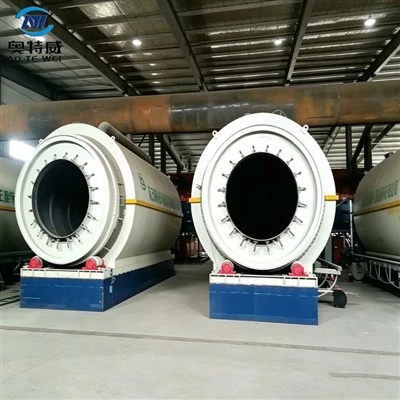
First off, let’s get one thing straight: pyrolysis wastewater isn’t your regular sink water. It’s got mixed organic compounds, volatile solids, sometimes heavy metals, and that funky, stinky “pyrolysis tar” residue that’ll coat pipes like glue if you don’t catch it early. Skimping on the right gear here means downtime, fines, or even worse – ruining your downstream processing gear. So let’s start with the first line of defense: wastewater collection & pre-treatment skids. Wait, skids are those pre-assembled units that save you from welding a dozen random parts together, right? That’s exactly what you want here, because pyrolysis plants are often in industrial zones where space is tight, and pre-built skids go up fast. The core parts of this? A storage tank with a decent mechanical screen – not the flimsy 1mm ones. We run 3mm screens with a self-cleaning rake; they catch big stuff like loose carbon clumps or plastic bits that’d clog your pumps before they even hit the next stage. Then there’s the equalization chamber. Pyrolysis wastewater flow isn’t steady – when you’re running a batch cycle, wastewater volume jumps right after the cooling stage. Skip equalization, and your treatment chemicals (we’ll get to those later) won’t work consistently, leading to wonky effluent. Equalization tanks also have mixers – submersible, not the old propeller ones that get tangled in solids. We use high-torque submersible mixers that handle that thick, tar-tinged sludge without burning out.
Next up, the workhorse: solids-liquid separation equipment. This is where you pull out the heavy stuff before moving to finer treatment. For pyrolysis, you don’t want a centrifuge here alone – wait, no, a decanter centrifuge is key, but you need a pre-step. Let’s talk about the belt filter press, but not the cheap ones that tear after 2 weeks. We spec filter presses with woven polymer fabrics rated for 120°C, because hot wastewater from pyrolysis can hit 80°C, and cheap fabric shrinks. The belt press takes the big, settleable solids out – and trust me, those solids are actually valuable: dewatered carbon sludge can get sold back to carbon black processors, so you’re not wasting it, you’re turning a problem into a side cash flow. Now, if you’ve got super fine solids or heavy metals, a decanter centrifuge is the way to go. It spins at high G-force, separates that tiny stuff that a belt press misses, and since it’s fully enclosed, there’s no stinky fumes leaking into your plant – huge for worker comfort and OSHA checks. I see a lot of guys skip the centrifuge to save cash, but 3 months later, they’re dumping sludge that’s still 70% water, so they’re hauling way more than they need to, and missing out on that saleable carbon.
Once you’ve got most solids out, you move to secondary treatment, and here’s where chemical treatment units come in. Pyrolysis wastewater is acidic, right? From the volatile acids released during pyrolysis, so you need a pH adjustment system – not a manual bucket, I beg. We use automated pH controllers with probes that can handle the gunk in this water; regular probes get coated with tar residue and give bad readings. The controller automatically doses caustic soda or lime, so you don’t have a guy standing around adding stuff by hand, which is both dangerous and inefficient. Then there’s coagulation and flocculation. Pyrolysis wastewater has dissolved organics that don’t settle, so you need to add coagulants like polyaluminum chloride (PAC) to bind those tiny particles, then flocculants (anionic or nonionic polymers) to clump ’em into flocs. The key here is a flash mixer for coagulation – super fast, high shear, so the chemicals mix evenly – and a slow-moving flocculation tank, so the flocs grow big enough to catch. If your mixers are too fast, you’ll break the flocs apart, and you’re back to square one. A lot of cheap setups use the same mixer for both, which doesn’t work.
Wait, what about the part where you need to treat dissolved organic compounds? That’s where activated carbon filtration systems come in, right? But not the big, slow sand filters – those don’t catch dissolved organics. We use pressurized activated carbon filter vessels, usually 2 or 3 in series, so you can backwash one while the others are running, no downtime. The carbon adsorbs all the funky, smelly organic compounds that’d make your effluent stink, and it’s easy to regenerate – you don’t have to buy new carbon every month, which saves you a ton on consumables. Pro tip: if your plant is treating waste plastic pyrolysis water specifically, that carbon needs to be rated for aromatic compounds, because plastic pyrolysis has way more of those than tire pyrolysis. I see guys grab generic carbon, and it gets exhausted in 2 weeks instead of 6, so that’s a mistake to avoid.
Oh, and don’t sleep on the effluent polishing stage – especially if you’re planning to reuse water in your pyrolysis plant (which you should, to cut down on makeup water costs). If you’re recycling water, you need a reverse osmosis (RO) system, but only after you’ve done all the prior treatment – RO membranes clog super easy if you skip the pre-steps. Wait, but what about brine from RO? That’s a small waste stream, but you don’t want to dump it, so we pair RO with an evaporator unit for brine. It’s not as big as it sounds, and it turns that brine into solid salt waste and clean water you can reuse. For small to mid-size plants, a compact evaporator that runs on waste heat from your pyrolysis furnace is perfect – no extra energy costs, which is a huge win for your bottom line.
Now, let’s talk about something everyone ignores: fume control for this whole setup. Pyrolysis wastewater treatment stinks – that’s a fact. The volatile organic compounds (VOCs) from the water will leak from tanks, mixers, and filters, and if you don’t catch ’em, you’ve got a OSHA complaint on your hands, plus your workers will be miserable. So we pair the entire water treatment skid with a compact biofilter. It’s a bed of organic media (like wood chips or peat) that eats the VOCs – no chemicals, just natural bacteria, and it’s low maintenance. Skip a biofilter, and you’ll end up with fumes that drift into your plant’s control room, making it hard for operators to stay focused. I’ve had plant managers tell me they skipped it, and their workers were quitting because of the smell – not worth the $5k you save on skipping a biofilter.
Wait, let’s circle back to why I’m sharing this as a supplier, not just some random blogger. I’ve seen too many pyrolysis plants go with the cheapest auxiliary equipment, and within a year, they’re dealing with: 1) Clogged pipes that cost $10k to replace, 2) Fines from environmental agencies for bad effluent, 3) Lost revenue from wasted carbon sludge. The right auxiliary equipment isn’t just gear – it’s an investment that keeps your plant running, compliant, and making money. For example, a pre-built water treatment skid I supply comes with all the pre-treatment, solids separation, and chemical dosing, sized for your plant’s batch output – no guessing, no mismatched parts. I don’t sell you a centrifuge that’s too big for your 5-ton-per-day plant, or a filter press that can’t handle hot water.
Quick, real-world example: Last quarter, I worked with a tire pyrolysis plant in Ohio. They were using a DIY setup – a big tank, a random pump, and a sand filter. Their effluent was failing state tests, and they were dumping 2x more sludge than necessary, spending $800/month on sludge hauling. We swapped their gear for the equalization tank, decanter centrifuge, and activated carbon filters I mentioned. Now, their effluent meets regs, they sell the dewatered carbon sludge for $300/ton, and their sludge hauling cost dropped by 60%. They paid for the whole setup in 8 months – that’s the kind of ROI you care about.
Another thing to note: don’t overbuy. If you’re a small plant (1-2 tons/day), you don’t need a industrial-scale centrifuge that costs $50k. We do compact, modular setups that scale with you – add a filter or a RO unit when you expand, instead of buying everything at once. That’s why modular skids are so good for pyrolysis plants – most start small, then ramp up as they get more clients for their fuel oil.
Now, let’s cover the non-negotiables you can’t skip, no matter your plant size: 1) Solids-liquid separation (belt press or centrifuge, depending on your flow), 2) Automated pH adjustment, 3) Activated carbon filtration for organics, 4) Fume control. The rest (RO, evaporator) are optional if you’re just dumping effluent, but if you’re recycling water (which cuts your water costs by 70%+), they’re a no-brainer.
Wait, I should also mention maintenance. All this gear needs regular checks, right? We supply not just the equipment, but quick-change parts for filters, probes for pH controllers, and training for your ops team – because even the best gear breaks if you don’t know how to maintain it. A lot of suppliers just hand you the equipment and ghost, but that’s not how we roll. We’re here when you need a replacement filter fabric in 2 days, or when your centrifuge needs a routine service.
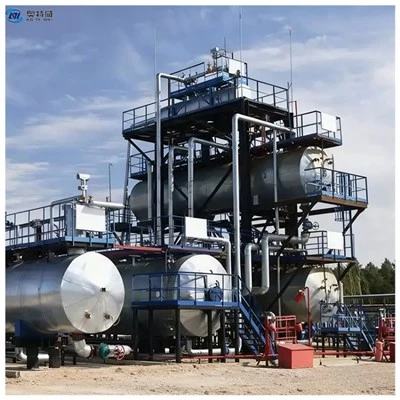
At the end of the day, water treatment for pyrolysis isn’t a afterthought – it’s the thing that keeps your plant legal, efficient, and profitable. Skipping key auxiliary equipment leads to downtime, fines, and lost revenue. If you’re tired of dealing with gunked pipes, failing effluent tests, or high sludge hauling costs, let’s chat. We can put together a custom setup that fits your plant’s size, your feedstock (tires vs plastic vs sludge), and your budget – no one-size-fits-all garbage. Just shoot me a message, and we’ll walk through exactly what you need, no sales pitches, just straight talk.
Pyrolysis Plant References
- Zhang, Y. et al. (2021). Water Treatment Technologies for Pyrolysis Wastewater: A Review. Journal of Environmental Management, Vol. 289, 112687.
- US Environmental Protection Agency (EPA). (2020). Pollution Prevention Guidelines for Pyrolysis Plants. EPA Region 5 Industrial Waste Series.
- Global Waste-to-Energy Association (GWTEA). (2022). Auxiliary Equipment Standards for Pyrolysis Plant Water Management. GWTEA Technical Report No. 04-22.
Shangqiu Aotewei Environmental Protection Equipment Co., Ltd.
Shangqiu Aotewei Environmental Protection Equipment Co., Ltd. is one of the most professional pyrolysis plant auxiliary equipment manufacturers and suppliers in China, also supports customized service. Please feel free to buy CE approved pyrolysis plant auxiliary equipment at competitive price from our factory. Welcome to contact us for pricelist.
Address: No.88 Longhai Road, Liangyuan District, Shangqiu City, Henan Province, China
E-mail: colin@henanpower.com.cn
WebSite: https://www.aoteweitech.com/
