As a ductile iron grate supplier, I get this question all the time—from construction project managers, municipal engineers, and even small business owners looking to replace worn grates in busy parking lots. It’s a fair question too. Heavy traffic areas demand materials that can withstand constant impact, weight, and corrosion, without failing prematurely or requiring costly repairs. For years, cast iron was the go-to for these applications, but ductile iron (often called nodular cast iron) has transformed the game. Let’s break down why ductile iron grates are not just a fit for heavy traffic—they’re often the best choice. Ductile Iron Grate
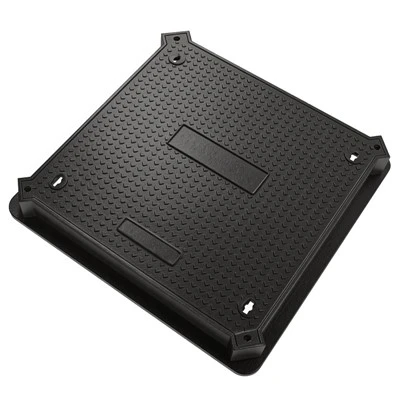
First, let’s get clear on what ductile iron is, because that’s the foundation of its performance. Unlike gray cast iron, which is brittle and can snap under sudden stress, ductile iron gets its name from the spherical graphite nodules embedded in its structure. Those nodules act like tiny shock absorbers, making the material far more flexible, tensile, and impact-resistant. A standard gray cast iron grate might crack under the weight of a 20-ton garbage truck rolling over it once, but a ductile iron grate will handle that load repeatedly without so much as a chip. That difference is non-negotiable for heavy traffic areas, where loads aren’t just occasional—they’re daily, sometimes hourly.
Take a municipal road’s storm drain grates, for example. Urban areas see constant traffic: passenger cars, delivery vans, semi-trucks, buses, and waste management vehicles. Over time, weaker grates can deform, crack, or even disappear entirely (a dangerous hazard for pedestrians and vehicles). I’ve seen projects where contractors tried to cut costs with gray cast iron grates in a bus lane, only to replace them twice in 18 months. Ductile iron grates we supply, by contrast, have a minimum tensile strength of 60,000 psi—far higher than gray cast iron’s 20,000 psi. That strength translates directly to load rating. Most heavy traffic grates we manufacture meet ASTM A536 standards, with load ratings from Class D (for medium-duty, 25,000 lbs) up to Class F (extra-heavy, 125,000 lbs). For reference, a Class F grate can support the weight of a fully loaded semi-truck without bending or failing.
Another key factor is durability against wear and tear. Heavy traffic isn’t just about weight—it’s about friction. Vehicles braking, accelerating, and turning place constant shear force on grates, especially in areas like roundabouts, truck loading docks, or factory access roads. Ductile iron’s hardness, typically between 120 and 180 Brinell, resists abrasion from tires, road debris, and even sand or salt spread in winter. We did a side-by-side test a couple years back: we installed two identical grates at a busy truck stop—one ductile iron, one a competing forged steel grate. After three years, the steel grate had 12mm of wear on its surface, while the ductile iron grate had less than 2mm. That’s a massive difference in longevity, which means lower long-term maintenance costs for the end user. For anyone managing a high-traffic property, that’s a big deal—you don’t want to shut down a loading bay or a busy intersection every six months to replace grates.
Corrosion resistance is another often-overlooked point, especially for grates in areas with moisture, road salt, or chemical runoff from factories or parking lots. Ductile iron doesn’t rust as quickly as mild steel, and when it does form a protective oxide layer, it’s denser and more adherent than gray cast iron’s. We’ve supplied grates to a coastal city’s port area, where salt air and constant moisture would turn steel grates to rust in under two years. Their ductile iron grates are still in service after five years, with only minor surface rust that doesn’t compromise structural integrity. Of course, proper coating (like epoxy or enamel) can extend this even further, but the base material’s natural corrosion resistance makes it a better bet than many alternatives for heavy outdoor use.
Now, you might be thinking: “What about cost?” That’s a common hesitation. Ductile iron grates often have a higher upfront cost than plastic, gray cast iron, or even some steel grates. But here’s the catch: total cost of ownership. Let’s do the math. A typical heavy traffic grate might cost $500 upfront for gray cast iron, $700 for ductile iron. But the gray cast iron grate has a lifespan of 3 to 5 years, while the ductile iron grate lasts 20 to 25 years. Over 20 years, you’d replace the gray grate four times—sinking $2,000 into replacements, plus labor costs for each installation. The ductile iron grate, on the other hand, is a one-time $700 investment. That’s a net savings of over $1,300, not to mention the downtime and disruption to traffic or business operations that come with repeated replacements. For a commercial property with multiple grates, that adds up quickly. I recently worked with a grocery chain that had 20 grates in their delivery bay; switching from gray to ductile iron saved them $18,000 over 10 years, even after accounting for the higher initial cost.
Of course, ductile iron grates aren’t a perfect fit for every heavy traffic scenario. There are some edge cases to consider. For extremely specialized applications, like temporary event access where weight isn’t a concern, or areas with unique load requirements (like aerospace manufacturing’s clean rooms, where heavy metal debris could be a hazard), lighter materials might make sense. But for 90% of heavy traffic areas—municipal roadways, truck loading docks, airport tarmacs, port access roads, busy retail parking lots, and industrial factory entrances—ductile iron is the clear leader. It’s versatile too; we manufacture ductile iron grates in a range of designs, from standard grid patterns for storm drains to custom-sized slotted grates for loading bays, so you can match the design to both function and aesthetics if needed.
One common misconception we run into is that ductile iron grates are too heavy to install easily. While they’re heavier than plastic or aluminum grates, their weight is actually an advantage for heavy traffic. A heavier grate stays put, reducing the chance of it shifting or bouncing under fast-moving vehicles, which can damage the grate or nearby pavement. Most modern installation tools can handle ductile iron grates, and for contractors, the longevity means they don’t have to come back to re-install them repeatedly. We also offer pre-drilled anchor points for easy, secure mounting, which cuts down on installation time.
Let’s talk about real-world examples to back this up. The city of Chicago replaced all 12,000 of its storm drain grates in bus lanes and major roadways with ductile iron grates starting in 2018. Before that, those grates were being replaced every 2 to 3 years due to heavy bus and semi-truck traffic. As of 2024, only 12 grates have needed replacement—most due to accidental damage from construction equipment, not wear from regular traffic. That’s a 10x improvement in lifespan, and the city estimates they’ve saved over $2.7 million in maintenance costs since the switch. Another example: a major port in Los Angeles switched to ductile iron grates in their container yard access roads in 2020. Those roads see over 500 truck movements a day, with each truck weighing up to 80,000 lbs. The original steel grates were cracking within a year; the ductile iron grates installed in 2020 are still performing flawlessly, with no signs of bending or fracture.
As a supplier, we don’t just sell grates—we work closely with clients to match the right product to their specific needs. If you’re outfitting a truck loading dock that will handle 100+ trailer deliveries a day, we’ll recommend a Class F ductile iron grate with extra ribbing for additional strength. If you’re renovating a downtown parking garage where aesthetics matter, we offer decorative ductile iron grates that still meet heavy load ratings, so you don’t have to choose between style and function. We also provide guidance on coating options, installation best practices, and even regular inspection schedules to ensure your grates last as long as possible.
At the end of the day, the question “Can ductile iron grate be used for heavy traffic areas?” isn’t just a yes or no—it’s a question of value. It’s about choosing a material that will perform for decades, not months, that reduces maintenance and replacement costs, and that keeps traffic safe and flowing smoothly. For any project where heavy, repeated loads are a factor, ductile iron grates are the most practical, cost-effective, and durable option on the market.
If you’re planning a project that requires grates for heavy traffic areas—whether it’s a municipal roadway, a commercial loading dock, an industrial facility, or a transportation hub—we’re here to help you find the right solution. We offer custom sizing, load rating consultations, and samples to test for your specific application. Don’t settle for grates that will need replacing in a year or two; contact our team today to discuss your needs and get a personalized quote.
Composite Manhole Cover References
ASTM A536/A536M – Standard Specification for Ductile Iron Castings
Municipal Engineers Association, "Heavy-Duty Grate Performance in Urban Traffic Applications," 2022
Port Equipment Manufacturing Association, "Material Durability for Heavy Load Industrial Access," 2021
Journal of Infrastructure Maintenance, "Total Cost of Ownership Comparison of Drainage Grate Materials," 2023
Hangzhou Hongkun Municipal Engineering Co., Ltd.
We are one of the most experienced ductile iron grate manufacturers and suppliers in China, also accept customized orders. We warmly welcome you to wholesale bulk high quality ductile iron grate in stock here from our factory. If you have any enquiry about quotation, please feel free to email us.
Address: No.666, Jiuheng Road, Shangcheng District, Hangzhou City, Zhejiang Province
E-mail: tsxhxw@126.com
WebSite: https://www.hkmuni.com/
