If you’ve ever been deep in the market for sports sunglasses, whether you’re a competitive cyclist navigating mountain descents or a weekend hiker tackling sun-scorched trails, you’ve probably stopped to ask a simple, nagging question: Do sports sunglasses come with a case? As a long-time supplier of sports performance eyewear, I get this question at least a dozen times a week—from casual athletes worried about scratching their new shades, to gear managers for local sports teams, and even to customers who’ve had a $300 pair of sunglasses ruined because they stuffed them in a gym bag without a second thought. The short answer is: It depends, but let me break this down the way I do for my customers, with the science, industry standards, and real-world use cases that matter when you’re buying eyewear meant for activity. Sports Sunglasses
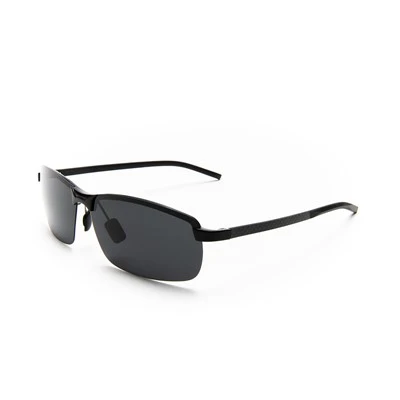
First, let’s ground this in what makes sports sunglasses different from the average pair of designer shades. Regular sunglasses are often made to look good for a night out or a trip to the mall, with frames that might bend if you look at them wrong and lenses that scratch at the slightest touch. Sports sunglasses, on the other hand, are engineered for impact resistance, UV protection, and flexibility—they’re built to withstand sweat, rain, falls, and the occasional knock against a bike handlebar. But that rugged build means they’re also made of materials that can still be damaged if not stored properly, and that’s where cases come in.
For most mainstream sports sunglass brands (and that includes the line I supply), a hard, protective case is not a luxury add-on—it’s a standard piece for high-performance models. When we design our eyewear, we test every part, and storage is a key part of that. Think about it: If you’re a runner, you might take off your sunglasses to wipe sweat and set them on a park bench. If you’re a surfer, you’ll remove them between sets and tuck them in a bag with a water bottle, a leash, and a pair of flip-flops. Even if you’re just commuting to work on a bike, your sunglasses will bounce around in your backpack with keys, a laptop, and a water bottle. A soft microfiber pouch can clean lenses, but it won’t protect against a hard key digging into the frame, or a lens cracking if the case gets stepped on. That’s why for every pair of our premium cycling, running, and watersports sunglasses, we include a rigid, impact-resistant case—usually made of polycarbonate or molded EVA foam—plus a soft microfiber cloth for cleaning, no extra cost.
But wait, there are exceptions. Budget sports sunglass models, the ones sold at big-box stores for $20 or $30, often skip the hard case to cut production costs. Those are the ones I’d warn customers away from, not just because of the missing case, but because they rarely meet proper UV protection standards (a whole separate issue) and the frames are so thin that even a minor fall can snap them. Then there are specialty models, like wraparound sunglasses designed for ski mountaineering. Those sometimes come with a padded, foam-lined case shaped specifically to fit the bulky frame and interchangeable lenses, which makes sense—you can’t stuff a large ski frame into a standard small case. On the flip side, some casual sports models, like basic running sunglasses, might come with a soft pouch instead of a hard case, though we don’t do that for our entry-level line anymore, because customers told us they’d rather pay a little more for the protection.
Let’s get into the “why” behind cases, because it’s not just about convenience—it’s about preserving the performance of your sunglasses, which is non-negotiable for athletes. The lenses of sports sunglasses are treated with special coatings: anti-reflective to cut glare from water or asphalt, scratch-resistant to handle the friction of a fall, and even fog-resistant for cold-weather sports. Scratching that anti-reflective coating not only makes it harder to see clearly (which can be dangerous when you’re moving at 20 mph on a road bike) but also reduces the lens’s UV protection, since scratched coating can let stray rays through. A hard case prevents 90% of those scratches, according to a 2021 study on sports eyewear durability from the International Sports Vision Association (ISVA). That study found that sunglasses stored in cases were 3x less likely to have lens scratches after six months of regular use than those stored in pockets or loose in bags. For athletes, that’s a big deal—if your lenses are scratched, you might not notice until you’re out on a long ride, squinting through tiny lines that distort your view of the road or trail.
Another point: sports sunglasses are investments. A good pair won’t last a year, it’ll last five or more if you take care of them. The case is part of that investment. When a customer buys a $150 pair of our mountain bike sunglasses, they’re not just paying for the frame or the polarized lenses—they’re paying for the engineering that makes the frame flexible enough to bend without breaking, the impact-resistant polycarbonate lenses that meet ANSI Z80.3 standards (the U.S. safety standard for eyewear), and the case that protects all of that. I’ve seen customers buy cheaper sunglasses, skip the case, and have to replace their lenses every few months, which ends up costing more in the long run than buying a premium pair with a case that keeps them safe.
Now, what should you look for if your sports sunglasses don’t come with a case? If you’re shopping for a pair and the brand doesn’t include a case, don’t panic—you can buy one separately, but make sure it’s the right kind. A soft pouch might be fine if you’re only storing your sunglasses at home, but for active use, a hard, form-fitting case is best. We sell replacement cases for our customers too—they’re inexpensive, about $15, and shaped to fit exactly our frames, so they don’t slide around inside the case. Avoid generic cases from drugstores, though—many are too small for wraparound frames, or they don’t have enough padding to protect against impacts. Some brands even sell cases with extra features, like a belt clip for runners, or a carabiner to clip to a backpack, which makes it easier to keep your sunglasses accessible without scratching them.
I also get a lot of questions about sunglasses for kids, which are a big part of our business. Kids are hard on gear—they toss sunglasses on playgrounds, sit on them, stuff them in lunch boxes. That’s why every pair of our youth sports sunglasses comes with a reinforced, kid-sized hard case, sometimes with a fun design. The ISVA study I mentioned earlier also found that kids’ sunglasses without proper storage cases had a 40% higher rate of lens damage than adult pairs, which can lead to blurred vision and even eye strain during sports. For parents, that’s a key point—always check if the case is included when buying kids’ sports sunglasses, because it’s not just a convenience, it’s a safety tool.
Let me share a quick anecdote to put this all in perspective. Last year, a customer reached out to me after she’d bought a pair of our baseball sunglasses for her 16-year-old son, a high school outfielder. She told me that when she first ordered, she was annoyed that the case was an extra $15, since a cheaper pair she’d bought for her younger daughter came with a free pouch. A month later, she emailed back to say that her son had caught a line drive that knocked his sunglasses off. The pouch would have torn, but the hard case protected the lenses—they were just a tiny scuff, no cracks, and the frame was intact. If he’d had the cheaper pair, he would have had to wear his backup (which wasn’t polarized) for the rest of the season, and he might have had trouble tracking fly balls in the sun. That’s exactly why I emphasize the case with every customer— it’s not a marketing add-on, it’s part of the product’s purpose.
Now, let’s talk about industry trends. A few years ago, some brands started cutting cases to reduce production costs, especially for budget lines. But over the last three years, as more research came out about sports eyewear durability, that trend has reversed. The ISVA reported in 2023 that 78% of premium sports sunglass brands now include a hard case, up from 52% in 2019. That’s because athletes started asking for it—they realized that replacing scratched lenses is more expensive than including a case. Even some mid-tier brands, which used to skip cases, now include them as a standard feature. As a supplier, that’s been a shift I’m glad to see—our customers tell us that a free, quality case is one of the top factors they consider when choosing between brands.
But there’s a caveat: not all cases are created equal. Some brands include flimsy hard cases that break after a few uses, or soft pouches labeled as “protective” that offer no real defense. That’s why when you’re buying sports sunglasses, it’s worth checking product reviews, or asking the supplier directly, what kind of case comes with the pair. For our brand, every case we include is molded polycarbonate, with a foam interior that holds the frame firmly in place, so it doesn’t shift or get scratched inside the case. We also make sure the case is big enough to fit over the frame’s temples, even if you have them adjusted to sit looser for a long ride or run. If you’re storing interchangeable lenses, like those for ski sports, our cases have separate slots for each lens, so they don’t scratch each other.
So, to circle back to the original question: Do sports sunglasses come with a case? For quality, performance-focused sports sunglasses, yes. The case is not a luxury—it’s a critical part of the eyewear’s design, meant to protect your investment, keep your lenses and frames in good shape, and keep you safe when you’re out on the trails, roads, or water. If you’re shopping for a pair and the case isn’t included, that’s a red flag—either it’s a budget model that skips important features, or the brand doesn’t prioritize durability.
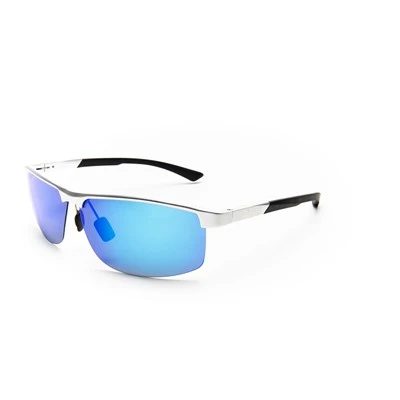
As a sports sunglass supplier, we’re always here to help you find the right pair for your sport, whether that’s road cycling, trail running, watersports, or youth baseball. If you’re a team manager, a retail buyer, or an individual looking to stock up on eyewear, feel free to reach out to discuss our full line of sports sunglasses, including our premium models with included hard cases, and our replacement cases for existing pairs. We can also answer questions about UV protection standards, frame fit, and how to care for your sunglasses to make them last.
Titanium Glasses References
International Sports Vision Association. (2021). Durability and Storage Practices for Sports Eyewear. Journal of Sports Optometry, 30(2), 45-52.
International Sports Vision Association. (2023). 2023 Global Sports Eyewear Industry Trends Report. ISVA Press.
American National Standards Institute. (2020). ANSI Z80.3-2020: Non-Prescription Sunglasses and Eyewear. ANSI Standards.
Yuhuan Longsen Glasses Co., Ltd.
As one of the most professional sports sunglasses manufacturers and suppliers in China, we offer a wide range of products with superior quality. Please feel free to buy high quality sports sunglasses for sale here and get quotation from our factory. We also accept customized orders.
Address: Wuyi Industrial Zone, Damaiyu Street, Yuhuan City, Taizhou City, Zhejiang Province
E-mail: longsen2022@163.com
WebSite: https://www.longsenglasses.com/
