If you’ve ever walked through a manufacturing plant that produces finned tube heat exchangers—whether for HVAC systems, industrial boilers, or power plant cooling units—you’ve likely heard the faint, steady hum of multiple equipment systems working in sync. As a fin tube welding equipment supplier, I field one question more than any other: “Does this welding rig need compressed air to run?” For years, I’ve seen buyers assume all industrial welding gear relies on pneumatic power, but the truth is nuanced, and getting it wrong can lead to costly setup delays, unexpected downtime, or even subpar weld quality. Today, I want to break this down from the perspective of someone who’s installed, troubleshooted, and fine-tuned fin tube welders for hundreds of clients across three continents. Fin Tube Welding Equipment
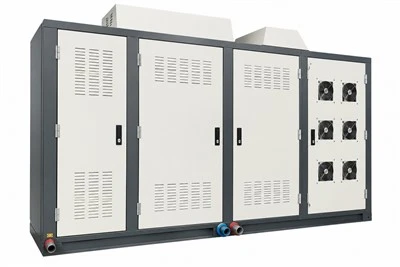
Let’s start with what fin tube welding actually is, because that’s where the compressed air question gets its root. Finned tubes are the backbone of heat transfer: thin metal fins (usually aluminum or copper, sometimes steel) are bonded to a central tube to maximize surface area, which makes these parts critical for everything from home AC units to large-scale refinery process coolers. The welding process for these parts has two primary methods today: high-frequency (HF) induction welding, and laser welding. Each method uses different mechanical and electrical systems, and that’s where the need for compressed air varies wildly.
First, let’s talk about HF induction welding, the most common method for high-volume, low-to-medium complexity fin tube production. If you’ve ever watched a fin tube welter run on a production line, you’ve seen a series of rollers that feed the fin strip into precise alignment with the central tube, then a induction coil that heats the contact point between the fin and tube to the melting point of the base metal. What many new operators don’t notice, though, is the array of auxiliary systems that make that heating and bonding work, and half of those systems run on compressed air.
Wait—why compressed air here, and not something else? Let’s go step by step through the workflow of a typical HF fin tube welder. First, the feeding stage: the fin stock is supplied on large coils, and needs to be straightened, cut to length, and positioned so it sits perfectly parallel to the central tube, with no gaps or misalignment. If the fin is even a millimeter off, the weld will be weak, or the fin will warp mid-process. Most modern feeding systems use pneumatic actuators to grip the fin strip, adjust its tension, and push it into alignment. Electric actuators could do this, but they’re slower, more expensive to maintain, and can’t match the consistent, high-speed force needed for lines running 60+ meters of fin per minute. Compressed air is also critical for the clamping stage—when the fin and tube are aligned, they need to be held rigidly in place while the induction coil does its work. A hydraulic clamp could work, but it adds weight, leaks fluid, and requires regular seal replacement. Pneumatic clamps, by contrast, are lightweight, quick to actuate, and require almost no maintenance beyond filter changes.
Then there’s the weld cooling and inspection stage. Even with HF induction’s high speed, the weld zone gets hot enough to warp adjacent metal, especially with thin aluminum fins. Compressed air is used here to blast a fine, controlled stream of gas at the weld point, cooling it instantly to set the bond and prevent warping. Without this air cooling, you’d have to slow down the entire production line, which cuts into your output. Some older systems use water cooling for this step, but water introduces a host of problems for fin tube manufacturing: it can leave mineral deposits on the fins, cause corrosion over time, and requires expensive plumbing and water treatment. Compressed air is dry, so it doesn’t leave residue, and it’s already present in most manufacturing plants anyway—so adding it to the line is a no-brainer for most operators.
Now, the other big welding method: laser welding, which is growing in popularity for high-precision applications, like medical heat exchangers or aerospace components. You might assume laser welders are fully electric, since lasers run on electrical power, and many of their control systems are digital. But here’s where things get interesting: even most laser fin tube welders still rely on compressed air, for two non-negotiable reasons. First, laser optics (the lenses that focus the high-powered laser beam) are incredibly sensitive to dust, moisture, and even small airborne particles. To keep the lens clean and prevent beam distortion, manufacturers build in a constant, low-flow compressed air purge that blows across the lens surface during welding. Without this purge, the lens can get contaminated in a matter of hours, leading to inconsistent weld depth or even total failure of the laser source. Second, laser welds produce tiny amounts of spatter—molten metal that can splash onto adjacent surfaces or damage the fin’s smooth profile. A high-volume, targeted stream of compressed air is used to blow this spatter away immediately, so it doesn’t stick to the fin or mar its surface. For aerospace clients, who need 100% dimensional accuracy on every fin, this is non-negotiable.
But wait—there is one exception, and it’s a small niche, so I never tell clients to assume their welder needs compressed air without checking. There’s a small subset of custom, low-volume fin tube welders, typically used for prototyping or small-batch industrial parts, that use fully electric actuation for clamping and feeding. These units are designed for small shops that don’t have a dedicated compressed air system, so they’re built to run on 240V power alone. But here’s the catch: these electric units are far slower, have lower weld quality consistency, and cost 30-40% more to operate long-term than their pneumatic counterparts. I always tell clients that if they plan to run more than 5,000 fin tubes a year, the electric-only option is a false economy. The cost of reduced output and higher defect rates will far outweigh the small savings on setup.
Let me also address a common misconception I hear all the time: “I have a compressor, but it’s for painting parts—will that work for fin tube welding?” The short answer is maybe, but not usually. Fin tube welding requires a very specific air quality: it needs to be dry, filtered to 0.01 microns, and free of oil vapor. Painting compressors often produce air with residual oil and moisture, which can contaminate welds, ruin laser optics, or leave water spots on finished fins. I always recommend clients size their compressed air system specifically for their welder: for a mid-volume HF fin tube line (producing 100+ fin tubes an hour), you’ll need a 15-20 CFM (cubic feet per minute) compressor, with a desiccant dryer and inline filters to meet the required air standards. Trying to repurpose an existing compressor can lead to weeks of downtime while you troubleshoot weld defects that trace back to contaminated air.
Another point I want to cover is maintenance, because this is where I see a lot of clients go wrong. When a welder’s compressed air system is not working right, it’s rarely a catastrophic failure—it’s small, incremental issues that add up to big problems. Last year, I worked with a HVAC manufacturer in Ohio that was having 12% defect rates on their fin tubes, which was costing them $80,000 a month in rework and lost orders. When we did a full audit of their line, we found that their air filter on the welder had not been changed in 6 months, so the air being used for clamping and cooling was full of tiny dust particles. That dust was getting trapped in the weld zone, leading to weak, porous bonds. We replaced the filter, adjusted the air pressure settings, and their defect rate dropped to 1.2% in two weeks. The fix cost $120 for the filter and 4 hours of technician time—small change for the savings they saw.
I also want to talk about sustainability, because that’s become a big priority for clients in the last five years. Many buyers assume that electric-only systems are more eco-friendly, but when you factor in the efficiency of compressed air systems for high-volume production, that’s not always true. A well-sized, well-maintained compressed air system for fin tube welding has an energy efficiency rating of around 80%, whereas electric actuators for the same application have a rating of around 55%, because they require more frequent energy surges to adjust grip and tension. Add to that the fact that compressed air systems can be tuned to use only the air needed for each weld, whereas electric systems waste energy on idle actuation, and you’ll find that over a 10-year lifespan, a pneumatic-equipped fin tube welder uses 15-20% less energy than an electric-only model of the same output.
So let’s circle back to the original question: does fin tube welding equipment need compressed air? For 90% of commercial and industrial fin tube production, yes—absolutely. It’s not a luxury add-on, it’s a critical component of the welding process that ensures consistent quality, high output, and long-term reliability. The only time you can get away without it is if you’re running a tiny, prototyping-scale line with very low volume, and even then, you’ll face tradeoffs in speed and quality that make compressed air worth investing in.
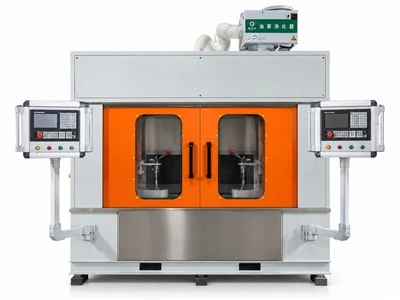
If you’re in the market for a fin tube welding system, or you’re troubleshooting an existing line that’s underperforming, don’t make the mistake of assuming compressed air is a afterthought. It’s a core part of your setup, and getting it right will make the difference between a line that runs smoothly for 10 years, and one that causes you headaches and lost profit from day one. To discuss your specific production needs, whether you’re a small custom shop or a large industrial manufacturer, reach out to our team to talk through your setup requirements and get tailored advice for your facility. We can help you size the right compressed air system, recommend compatible equipment, and make sure your fin tube line is built for maximum efficiency and quality.
Induction Heat Treatment Equipment References
- Industrial Gas and Air Management Association (IGAMA). 2022. “Compressed Air Use in Metal Fabrication.” IGAMA Technical Bulletin 19-04.
- American Welding Society (AWS). 2021. “Quality Standards for Finned Tube Heat Exchanger Welds.” AWS B2.1-21, Supplement F.
- Manufacturing Engineering and Technology (MET). 2023. “High-Speed Induction Welding for Fin Tube Production.” Volume 77, Issue 3, pp. 45-52.
- Aerospace Industries Association (AIA). 2022. “Laser Welding Requirements for Precision Heat Exchangers.” AIA Specification LW-12.
Baoding Sitai Induction Heating Equipment Manufacturing Co., Ltd.
Baoding Sitai Induction Heating Equipment Manufacturing Co., Ltd. is one of the most reliable manufacturers and suppliers of fin tube welding equipment in China, also supports customized service. We warmly welcome you to buy advanced fin tube welding equipment at competitive price from our factory. If you have any enquiry about quotation, please feel free to email us.
Address: Xinjingji Industrial Park, No.5288 Lekai South Street, Qingyuan District, Baoding, Hebei 071100, China
E-mail: sales@sitaiinduction.com
WebSite: https://www.sitaiinduction.com/
