Hey there! If you’re reading this, chances are you’ve just run a BDV test on transformer oil—you know, that critical test that tells you how well your insulation is holding up—and got a weird, out-of-spec result that made you go “Wait, that can’t be right.” Or maybe your Transformer Oil BDV Tester straight up threw an error code when you pressed “start,” and now you’re staring at it like it’s speaking a alien language. Full transparency: this is super common. We’re a BDV tester supplier, so we field these calls every single day. Let’s walk through this like we’re grabbing a coffee and troubleshooting together, no fancy tech jargon dumps. No “step 1, step 2” that makes you feel like you’re back in high school science lab, either. Transformer Oil BDV Tester
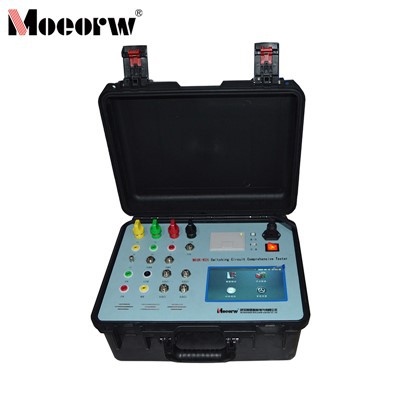
First, let’s cut to the chase: abnormal BDV results aren’t always about the tester being broken. Most of the time, it’s something way simpler—like how your phone dies not because the battery’s fried, but because the charger port has dust. I’ve seen techs spend 2 hours tearing apart a tester just to realize they poured dirty oil into the test cup. Let’s start with the stuff that’s easiest to check first, because that’s where 80% of fixes live.
First: The Oil Stuff (9 times out of 10, this is the culprit)
Wait, hold on—you’d be shocked how many folks skip prepping the oil properly because they’re in a rush. I once had a utility tech call panicking, saying his tester was spitting out a BDV of 12 kV for new, supposedly reconditioned oil. When I asked him how he handled the sample, he said he just poured it straight from the 55-gallon drum into the test cup. Um, nope. That’s like testing a pool of water with a crumb in it and calling it “dirty water.”
Transformer oil BDV works by zapping two electrodes in a cup full of oil. If there’s any moisture, sludge, or even a tiny air bubble between those electrodes, it’ll mess up the arc—so you get a false low reading, or sometimes a totally random reading that doesn’t make sense. Let’s break down the oil checks quick:
- Did you let the sample sit long enough? If you just pulled the sample from the transformer and poured it right in, there’s dissolved water and air still in there. The rule of thumb we tell all our customers: let the sample settle for 10-15 minutes in a clean, covered container. Longer if it’s really humid—like 20 minutes if you’re testing in a swampy climate. Air bubbles rise, water (if it’s free, not dissolved) sinks to the bottom, so you don’t get that gunk messing with the test.
- Is your test cup actually clean? This is huge. I can’t tell you how many people reuse a test cup after a test with dirty oil, just rinsing it once with tap water (bad idea—tap has minerals!) and dumping new oil in. No. The test cup needs to be washed with isopropyl alcohol, then dried with lint-free cloth, before every single test. If you skip this, residual oil gunk or old water will skew every reading. I once had a manufacturing customer call saying his tester was giving all over the place high readings and low readings—turns out he’d used paper towels (lint!) to dry the cup, and the lint was acting as an insulator when the tester zapped it. Oops.
- Did you stir the sample? Wait, yeah—before you pour it into the test cup, you have to gently stir the sample with a glass rod (or a clean stir stick) a few times. Why? Because the water and gunk can settle, so if you just pour the top layer, you might be getting a layer of almost-clean oil, or a layer of super-conductive gunk. Gentle stir—no splashing, no bubbles—just mix it up so it’s uniform.
Next: The Tester Hardware (Not the Oil)
Okay, so you checked the oil, let it settle, cleaned the cup, stirred it, and still got a weird reading. Now it’s time to look at the tester itself. Let’s start with the easy, no-tools checks before you start prying open the casing (which will void your warranty, by the way—don’t do that unless you know what you’re doing).
- Are the electrodes dirty or damaged? The two little metal rods inside the test cup—they have to be a specific distance apart (most standards say 2.5 mm, but double-check your tester’s manual, because some are different). Over time, oil can leave a residue on the electrodes, which acts as a barrier to the voltage. Wipe them down gently with isopropyl alcohol and a cotton swab—don’t scratch the metal, because scratching changes the surface (and that changes how the arc forms). Also, check if the electrodes are bent. If one’s leaning a little, the gap isn’t uniform, so the arc will jump at a lower voltage, giving a false low BDV. Super common—if you dropped the tester even once, that’s enough to bend a tiny electrode.
- Is the test cup seated right? Wait, it sounds dumb, but if you don’t snap the test cup all the way onto the tester’s base, the electrodes aren’t making a solid connection to the tester’s wiring. I had a customer last week who kept getting “no arc detected” errors—he forgot to push the cup in until it clicked, so the electrodes were only half-connected. That’s a simple one, but easy to miss if you’re in a hurry.
- What about power supply? If your tester is portable, make sure the battery is fully charged, or if it’s plugged in, the outlet isn’t flaky. Low power can make the tester output inconsistent voltage, so you get weird, jumpy readings. We once had a customer testing in a remote substation with a dying generator powering his tester—his BDV readings went from 45 kV to 18 kV in the space of 3 tests, because the generator was sputtering. Test with a known good power source if you can, or swap the battery if it’s portable.
- Wait, error codes? If your tester is showing a specific code, like E03 or E07, don’t panic. Most modern BDV testers have basic error codes—our customers say our ones are pretty intuitive, but if you don’t have the manual, just give us a holler. For example, E02 usually means a short circuit, which is either dirty oil or bad electrode connection, E05 is no arc detected, which is usually a power or seating issue.
Then: Procedure Stuff (The You Part, Not The Machine)
Okay, so oil is good, hardware checks out, power is solid, still messed up? Let’s talk about how you ran the test. A lot of people miss tiny steps in the test procedure that throw everything off. Transformer oil BDV tests aren’t just “pour oil, push button”—there’s a specific standard (usually IEC 60156 or ASTM D877, depending on where you are) that you have to follow, and skipping steps messes with the results.
- Did you run multiple tests? Oh my god, this is the biggest one. The standard says you have to run 5 consecutive tests, right? And you have to pour fresh oil for each test—you can’t reuse the oil in the cup, because the first arc heats up the oil, makes it more conductive, so every subsequent test is lower. I had a guy test 5 times in the same cup of oil, got readings from 50 kV down to 22 kV, and thought his oil was garbage. Nope—he just ruined all the readings by reusing the oil.
- What’s the rate of voltage rise? Most testers have a set rate—usually 2 kV per second. If you’re using an old tester that you didn’t calibrate, or you changed the rate by accident, that’s a problem. If you raise voltage too fast, you might miss the actual breakdown point—if you go too slow, external factors (like air bubbles forming) will affect it. Double-check that your tester’s voltage rate is set to the standard for your region.
- Did you hold the electrodes properly during the test? Wait, no—wait, modern testers hold the electrodes fixed, but if you have an older manual one, you have to make sure you’re not touching the cup or the tester while the test is running. That’ll interfere with the voltage, and give you a wonky reading. If you’re using a manual tester, step back, don’t lean on anything, make sure your hands aren’t near the test area.
When It’s Actually The Tester (Rare, But It Happens)
If you’ve checked all the above, and you still get consistent, way-out-of-spec results that don’t make sense, then yeah—maybe the tester needs a look. But before you throw it out, remember: calibration. Most BDV testers need calibration every 12 months, especially if they’re used in harsh environments (dust, humidity, rough handling). We recommend our customers send their testers to us annually for calibration—we run a standard test kit to make sure the voltage output is accurate, the electrodes are aligned, and the timing is right.
Also, if you’ve had the tester for a while and dropped it a few times, that can damage the internal wiring or the voltage regulator. Don’t try to fix that yourself—we’ve seen people tear apart a tester to “fix” a reading and make it way worse, so they end up having to buy a new one. Just reach out, we can walk you through a simple test to confirm if it’s internal, or we can offer a repair quote.
Quick Recap (So You Don’t Forget)
Let’s make this super simple, no scrolling back:
- Oil: Settle 10 mins, clean test cup, use fresh oil per test, stir gently.
- Hardware: Clean electrodes, check cup is clicked in, confirm power, check error codes.
- Procedure: 5 fresh tests, correct voltage rate, don’t mess with it mid-test.
90% of the time, that fixes the abnormal results. The other 10%? It’s either calibration time or a tiny hardware issue that a quick check from our team can sort.
Look, we get it—dealing with bad BDV results is stressful. You might be prepping for a substation maintenance check, or trying to pass an audit, and a weird reading can throw everything off. We’ve been there with our own customers, that’s why we built our testers to be user-friendly, so you don’t have to deal with this kind of hassle. If you’ve gone through all the checks and still stuck, or just want to make sure your tester is calibrated and working right, hit us up. We’re always happy to walk you through it, no sales pitch pressure—just real people helping with real problems.

So if you need support for your BDV tester, no matter the model, we’re here. Drop a note, and we can work through whatever’s going on with your results. No fancy contracts, no hoops—just honest troubleshooting for transformer oil BDV testers.
References
Turn-to-turn Tester IEC 60156:2018, Insulating liquids – Determination of the breakdown voltage at power frequency – Test method
ASTM D877-21, Standard Test Method for Dielectric Breakdown Voltage of Insulating Liquids Using Disk Electrodes
IEEE C57.106-2017, Guide for Acceptance and Maintenance of Insulating Oil in Equipment
Wuhan Moen Intelligent Electric Co., Ltd.
As one of the most professional transformer oil bdv tester manufacturers in China, we’re featured by quality products and good price. Please rest assured to buy high quality transformer oil bdv tester in stock here and get quotation from our factory. Customized orders are welcome.
Address: Building A, No.1, Fenghuangyuan 2nd Road, Donghu New Technology Development Zone, Wuhan, Hubei, China
E-mail: info@hvhipotsystem.com
WebSite: https://www.hvhipotsystem.com/
