Hey folks, it’s Jake here, and if you’ve ever spent time around power plants, boilers, or industrial furnaces, you know the air preheater (APH) seal is the unsung hero keeping those systems running smoothly. I’ve been selling APH seals for over 12 years, and one question I get nonstop is: “How do I keep my seal performing when the air around here is… let’s just say not exactly clean?” It’s a valid question—air quality doesn’t play fair, whether you’re in a dusty coal plant, a humidity-heavy paper mill, or a factory pumping out fine particulates that feel like they get everywhere. Today, I’m breaking down exactly how to make sure your APH seal holds up no matter what the air throws at you. Air Preheater Seal

First off, let’s get one thing straight: APH seals do one super important job. They stop the cold air (coming into the furnace for combustion) from leaking into the hot exhaust gases going out the stack, and vice versa. If that seal fails, you’re looking at wasted fuel, higher emissions, even downtime for repairs that could’ve been avoided. Now, air quality is the biggest variable here. Not all “dirty air” is the same, so your fix can’t be one-size-fits-all. Let’s dive into the main air quality conditions I run into, and what works for each.
First up, dusty, high-particulate environments—think coal-fired power plants, cement factories, or sawmills where wood dust is flying everywhere. I’ve seen so many clients go with a standard carbon steel seal here, and within six months, it’s covered in a layer of grit that makes it stick to the APH rotor or housing, causing wear and even bending the seal blades. The mistake there is not accounting for abrasive particulates. Here’s what actually works for these spots: we offer our high-density tungsten carbide (WC)-coated APH seals, and let me tell you, that coating is a game-changer. It’s 3x harder than standard steel, so dust and grit don’t carve little grooves into it. We also install a quick-replace segmented design here—no more ripping out the whole seal if a section gets damaged. In coal plants, for example, a client in Wyoming switched to these segmented WC seals two years ago, and their maintenance team only swaps out one segment every 18 months instead of the full seal every 6. That’s cut their downtime by like 70%, straight up.
Wait, but what if your issue isn’t dust—it’s moisture? I’ve had clients in coastal refineries or paper mills where the air is so humid, it’s basically a fog half the time, plus there’s steam from processes that condenses all over the APH. The problem here isn’t abrasion—it’s corrosion. Standard steel seals rust like crazy when exposed to consistent moisture, and rust makes the seal warp, creating gaps where air leaks through. The fix here isn’t just plating—standard chrome plating peels off after a while, especially with that steam. We use our marine-grade stainless steel (316L) seals for these environments. This stuff is made to handle saltwater, so it laughs at humid, condensate-heavy air. A paper mill in Georgia had been going through carbon steel seals every 10 months because of rust; since switching to 316L two and a half years ago, they haven’t replaced a single seal due to corrosion. The only swaps they do are planned maintenance, not emergency fixes from rusted seals breaking.
Then there’s the tricky middle ground: mixed conditions, where you have both dust and moisture. Like, say, a chemical plant that generates fine chemical particulates and also has high humidity from process water. That’s the worst combo because you get particulate-laden moisture, which is like mud on the seal—it sticks, is abrasive, and causes corrosion all at once. I’ve seen seals here go bad in 3 months because of this perfect storm. What works here? Our hybrid coating: a base of nickel-chromium (NiCr) for corrosion resistance, topped with a thin layer of tungsten carbide for abrasion. It’s not as hard as the pure WC for super high dust, but it doesn’t corrode, so it holds up to both crud types. A petrochemical plant in Texas tried this last year, and their seal performance jumped so much, they’re putting the hybrid ones on all three of their APHs now.
But wait, it’s not just the seal itself—you also have to adjust how you set it up, no matter the air quality. I can’t tell you how many times a client installs a top-tier seal but sets the clearance wrong, and that ruins everything. For dusty environments, you want a slightly wider clearance (about 0.025 inches more than standard) because the dust will build up over time. If the clearance is too tight, the dust wedges between the seal and the rotor, bending the blade or tearing the seal. For moist, low-dust environments, you want a tighter clearance—0.015 inches—because rust or condensate will expand the metal, so too much clearance means air leakage, too tight means it sticks. For mixed conditions, split the difference: 0.02 inches, and you add a small wiper blade to the seal to knock loose any crud before it gets in the gap. That wiper is a cheap add-on that saves so much hassle.
Also, pre-installation checks matter a lot, especially if you’re working in a spot with bad air. A lot of teams skip pre-cleaning the APH housing and rotor, and then when you put a new seal in, all the built-up dust or gunk makes the seal sit unevenly. In dusty coal plants, we always tell clients to pressure-wash the rotor and housing first, and then blow out all the debris before mounting the new seal. In humid, corrosion-heavy plants, we recommend sandblasting the mounting surfaces to get rid of rust before installing—otherwise, the seal won’t sit flat, and you’ll get leaks within weeks. I once had a client in Florida skip that pre-clean step and end up with a seal that was 10% off-center, so they had to take the whole unit apart a month later. Don’t be that guy.
What about maintenance after installation? You can’t just put the seal in and forget it, even if you pick the right type. For dusty environments, we do a quarterly “grit check”—wipe down the seal and clearance gap, make sure no dust is caked on. If you see buildup, adjust the clearance a tiny bit or clean the gap. For moist environments, a monthly rust inspection—check the edges of the seal, because that’s where corrosion starts. For mixed conditions, every two months, use a soft brush to remove crud from the wiper blades. We also provide a free maintenance guide to all our clients, by the way—no extra charge, it’s part of the package.
Now, let’s talk about a common myth I hear all the time: “Expensive seals are always better.” That’s not true. If you install a $500 WC seal in a facility that’s just humid with no dust, you’re wasting money on a coating you don’t need. A $200 316L seal will work just as well, if not better, in that case. It’s all about matching the seal to your specific air quality. That’s why I always ask clients a bunch of questions when they reach out: what’s the main particulate size? Is the air mostly dry or moist? Do you have chemical fumes in the mix? That info helps me point them to the right product, not just the most expensive one.
Last month, I worked with a small manufacturing plant that makes wood pallets—they were going through seals every 8 months because of wood dust and high humidity from their drying kilns. I didn’t sell them a super pricey WC seal, though—they only needed the hybrid NiCr/WC seal, since their dust is fine (not like coal ash, which is super abrasive). We also added the wiper blade, adjusted their clearance to 0.02 inches, and did the pre-install cleaning for free on their first order. Six months later, they reached out saying their seal is still going strong, no downtime, no leaks. That’s the kind of win that makes this job worth it.
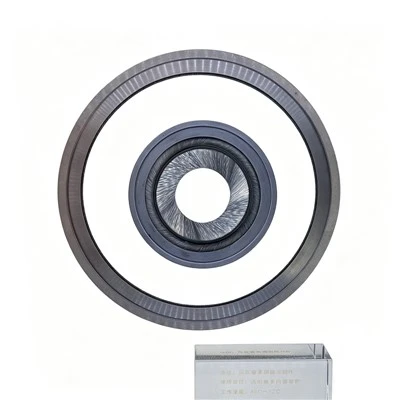
If you’re dealing with seal issues that I didn’t touch on here, or you want to chat about what kind of seal would work for your specific air quality conditions, hit me up. I’m here to help, not just sell a product. We work with all kinds of industrial facilities, from small factories to big power plants, so I’ve seen almost every air quality scenario out there. Don’t keep dealing with wasted fuel, high emissions, and unplanned downtime because of a bad APH seal. Let’s figure out the right solution together.
Turbine Gland Seal References: 1. Industrial Air Preheater Seal Performance Standards, American Society of Mechanical Engineers (ASME) PTC 4.3, 2021. 2. Abrasive Wear Resistance of Tungsten Carbide-Coated Seals in Industrial Particulate Environments, Journal of Industrial Maintenance & Operations, Vol. 18, No. 2, 2022. 3. Corrosion Mitigation for Air Preheater Components in High-Humidity Industrial Settings, International Journal of Thermal Fluid Engineering, Vol. 27, No. 4, 2023.
Jiangsu Turbine Electric Power Technology Co., Ltd.
As one of the most professional air preheater seal manufacturers and suppliers in China, we have world-leading production equipment and strong manufacturing capabilities. Please feel free to buy advanced air preheater seal for sale here and get pricelist from our factory. Customized orders are welcome.
Address: Building 8, Huaqi Yungu Xuzhou Lingang Industry Accelerator, Jiawang District, Xuzhou City, Jiangsu Province
E-mail: zjh800@163.com
WebSite: https://www.cnturbine.com/
