Hey everyone, let’s cut to the chase – if you’ve ever wandered around a manufacturing floor, a robotics lab, or a warehouse’s automated sorting system and wondered how all those wires, sensors, and machines link up seamlessly without dropping a signal or blowing a fuse, chances are modular industrial connectors are the unsung heroes making it happen. As a connector supplier, I get asked all the time what makes these things different from the basic plugs you’d use for your home TV, and why they matter more than most people realize when it comes to keeping industrial operations running smooth. Today, I’m breaking it down like I would for a new client or an intern who just started here. Industrial Connector
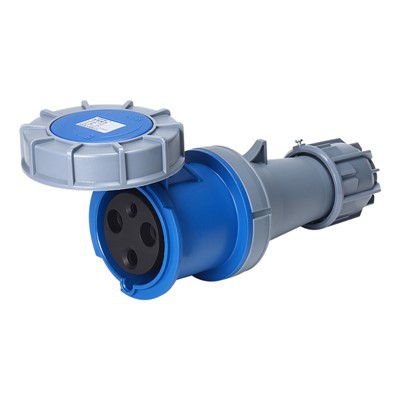
First off, let’s ditch the jargon for a sec. A modular industrial connector isn’t a single, fixed part you cram into a box. It’s like a Lego set for industrial power, signal, and data transfer. Each piece is designed to slot together, swap out, or rearrange without needing a soldering iron, a whole new assembly, or a team of electricians hanging around for hours. That flexibility is the whole point, and it’s why these things have replaced those clunky, one-size-fits-all connectors that everyone used to complain about back in the day. Think about it: if you’re running a factory that makes car parts, you might need a connector that handles high-voltage power for a robotic arm, low-voltage data for a camera, and maybe a little Ethernet to stream sensor data all in one neat package. Modular connectors let you mix and match those modules – power, signal, data, even things like pneumatic lines if you need them – so you don’t have to use five separate connectors when one will do the job.
Now, let’s get into what makes these things actually work the way they’re supposed to, because at the end of the day, industrial environments are harsh. We’re not talking about plugging your laptop into a wall here. Factories get covered in oil, dust, metal shavings, moisture, and sometimes even extreme temps – like the parts of a steel mill that’s 120°F or the cold storage warehouse that’s -20°F. A cheap, off-the-shelf connector would die in that kind of setting. Modular industrial connectors are built with specific ratings for that: IP codes, for example. IP67 means they’re dust-tight and can be submerged in a meter of water for 30 minutes, which is perfect for washdown areas in food and beverage plants where they spray everything down with high-pressure hoses. Some are IP69K, which even handles the high-temperature, high-pressure steam cleaning those facilities use. We test every batch we get against those ratings because if a connector fails on a production line, you’re looking at thousands of dollars in downtime before you can even fix it.
Another big part of modularity is how easy they are to maintain. Let’s say a sensor on a packaging line goes bad. With an old-style connector, you’d have to cut the old wire, strip it, solder a new connector on, test it, and hope it works. With a modular one? You just pull the old module out, slot a new one in, and you’re done. No soldering, no special tools, almost no downtime. That’s a game-changer for small maintenance teams, which most factories don’t have a surplus of. Even if you’re reconfiguring a line – say you’re adding a new robot to your assembly line – you don’t have to rewire half the plant. You just swap out the modular power and signal modules to fit the new machine, and you’re good to go. I’ve had clients tell me this cut their maintenance time by 70% when they switched over, and that’s the kind of number that makes anyone in operations perk up.
Wait, let’s talk about the different types, because not all modular connectors are created equal. We specialize in a few main lines, and I always match the right one to what the client needs, not just push whatever we have in stock. First, there’s the heavy-duty ones, used for high-power applications like cranes, wind turbines, and large industrial robots. These have thick, durable housings – often metal or high-grade plastic that can take a beating – and are built to carry 100A or more. We use copper alloy contacts because they’re way more conductive than regular copper and don’t corrode as fast, even when exposed to salt air for offshore applications.
Then there’s the smaller, data-focused ones, like modular Ethernet connectors for industrial IoT (IIoT) setups. These let you transfer high-speed data between sensors, SCADA systems, and cloud platforms, which is huge right now as more factories go digital. A lot of our clients are setting up smart factories where every machine is sending data to monitor performance, catch issues before they cause downtime, and even adjust production on the fly. Modular data connectors make that easy because you can add more data modules as you add more sensors, no major upgrades needed.
There are also miniature modular connectors for tight spaces – like inside a medical device that builds pacemakers or a robotic surgical tool, where every millimeter counts. These are still tough, but small enough to fit into cramped assemblies, and they handle low-voltage signal without failing, which is critical for medical equipment where accuracy is non-negotiable.
Now, let’s address a common misconception I hear all the time: “Modular connectors are more expensive upfront, so I’ll just stick with the old ones.” Yeah, okay, you might save a few bucks today, but let’s do the math. If a basic connector fails once a month, that’s 12 downtime incidents a year, each costing you $5,000 in lost production (which is actually on the low end for many factories). A modular connector might cost 30% more upfront, but it could last 5 times longer, and when it does need replacing, it takes 5 minutes instead of 2 hours. Suddenly, that “cheaper” old connector is way more expensive when you add up downtime, labor, and replacement costs over a year. We’ve done a side-by-side cost analysis with a client that makes agricultural equipment, and switching to modular connectors saved them over $200k in the first year alone. That’s the kind of return on investment that doesn’t just look good on a spreadsheet – it pays for new equipment, raises for the team, whatever the client needs.
Another thing that’s cool about modular connectors is how customizable they are. A lot of people think they’re all cookie-cutter, but no – we can design custom modules for specific applications. Need a connector that carries power to a conveyor belt, signal for its speed sensor, and a pneumatic line to push a box all in one? We can build that. Need something that fits into a tight space on a agricultural tractor that has to bounce around on rough fields? We can adjust the housing for vibration resistance. Most of our regular lines work for 80% of common applications, and the custom stuff is for the unique 20% that we handle all the time. I think that’s why so many repeat clients come back to us – we don’t just sell a part, we work with them to find what fits their exact setup.
Let’s also talk about quality, because at the end of the day, a connector that breaks is useless. We source our components from ISO-certified manufacturers, and we do rigorous testing here before anything leaves our warehouse. We test for temperature extremes, vibration, dust, moisture, even salt spray for marine applications. A client of ours that runs a seafood processing plant used to have connectors that corroded within 6 months because of all the salt in the air. We swapped them for our IP67-rated, corrosion-resistant modular ones, and they’ve been going strong for 2 years now with no issues. That’s the kind of reliability that keeps factories running 24/7, which is exactly what industrial operations need – no shutdowns, no last-minute repairs, just consistent performance.
Wait, let’s circle back to the whole “modular” part, because it’s not just about swapping parts – it’s also about scalability. If you’re a small startup that’s just getting into manufacturing, you might start with a small line that only needs power and basic signal. As you grow, add more robots, more sensors, more data streams, you can just add modules to your existing connector system instead of ripping out all your old wiring and starting over. That’s huge for growing businesses because it means you don’t have to invest in a whole new connector system every time you expand. You just build on what you already have, which saves time and money as you scale.
I’ve seen so many projects fail or run way over budget because someone cut corners on connectors. The thing about industrial connectors is they’re invisible until they don’t work. You don’t think about them until a line goes down, and that’s when you realize how critical they are. Modular ones solve so many of the problems that come with fixed connectors: downtime, maintenance headaches, inflexibility, high long-term costs. They’re built for the reality of industrial work – tough environments, changing needs, the need to keep running no matter what.
Now, if you’re reading this and thinking, “Hey, that sounds like something we could use,” don’t just take my word for it. Hit us up for a quote or to chat through your specific needs. Whether you’re a small machine shop, a big automotive factory, a food processing plant, or anything in between, we can help you figure out if modular industrial connectors are the right fit, customize them if you need, and make sure they work for your setup. We don’t do one-size-fits-all here – we work with you to solve your problems, not just sell you a part.

So that’s the lowdown on modular industrial connectors. They’re the versatile, tough, workhorse parts that keep modern industry moving, and they’ve come a long way from the clunky connectors of the past. If you’ve got questions about them, or you’re looking to upgrade your current setup, don’t hesitate to reach out. We’re here to help you keep your operations running smooth, no downtime required.
Panle Mount Industrial Plug References:
- Industrial Automation and Control Systems: Modular Connector Standards, International Electrotechnical Commission (IEC) 61076
- Modular Industrial Connector Performance Guidelines, National Institute of Standards and Technology (NIST) Special Publication 1500-22
- IP Rating System for Industrial Equipment, International Organization for Standardization (ISO) 20653
Zhejiang Hefeng Electric Co., Ltd.
Zhejiang Hefeng Electric Co., Ltd. is one of the most professional industrial connector manufacturers and suppliers in China, featured by quality products and low price. Please rest assured to buy durable industrial connector made in China here from our factory. Also, OEM service is available.
Address: Wenzhou Daqiao Industrail Park, Beibaixiang Town, Yueqing City, Zhejiang Province, China
E-mail: hefengplug@chinahfe.com
WebSite: https://www.hfcee.com/
