As a supplier of endoscope fixed adapters, I get a lot of questions from customers—both new and returning—about warranty coverage. It makes sense; when you’re investing in precision medical equipment components, you want to be sure your purchase is protected. Let me break down what endoscope fixed adapter warranties actually look like, why they matter, and what you should look for when buying. Endoscope Fixed Adapter
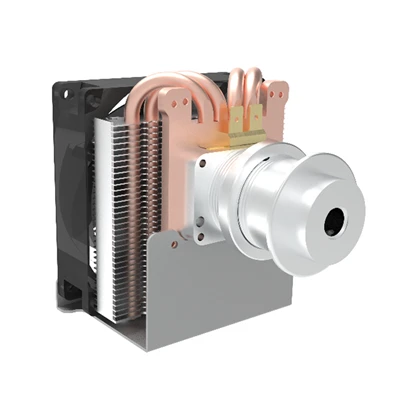
First, let’s start with the basics: what is an endoscope fixed adapter? For anyone who might be new to the industry, these adapters are critical parts that secure the endoscope’s optical system, camera head, and light source together. They need to maintain precise alignment—even during repeated sterilization, transport, and use—because a single shift can blur images, cause diagnostic errors, or lead to equipment downtime. That precision means they’re built to strict standards, but no product is perfect, which is where warranties come in.
When I first started in this business 12 years ago, warranties for endoscope accessories were often an afterthought. A supplier might offer a 30-day “return if defective” window, but that’s it. Today, things are different. Healthcare facilities, surgical centers, and equipment repair teams expect more, and as a supplier, I’ve had to evolve to meet those needs. I’ve seen too many customers lose thousands of dollars because a faulty adapter failed mid-procedure, with no safety net to cover repairs or replacements. That’s why our company built a warranty program tailored specifically to the unique demands of endoscope fixed adapters.
So, what does a typical endoscope fixed adapter warranty include? Let’s get into the details. First, the duration. Most reputable suppliers offer a 12-month limited warranty from the date of shipment. Wait, I know some of you might be thinking—12 months seems short compared to consumer products, but remember: these are medical devices used in high-stakes environments, often with heavy daily use. A 12-month warranty balances coverage for manufacturing defects with the reality of wear and tear from regular use. That said, we do offer extended warranty options for customers who use our adapters in multi-shift settings or for high-volume surgical centers; we can tailor coverage to 24 or 36 months based on your needs.
Next, what the warranty actually covers. It’s not just “if it breaks, we replace it.” Our warranty covers defects in materials and workmanship—so things like misaligned optical components, cracked housing that’s not from impact, or faulty locking mechanisms that fail to secure the endoscope properly. We also cover issues related to the adapter’s compatibility with standard endoscope systems, because a bad fit is a manufacturing flaw, not user error. That’s a big one: many customers assume an adapter will work with their existing equipment, but if a supplier cuts corners on machining tolerances, it won’t. Our warranty includes compatibility testing before shipment to reduce that risk, but if a manufacturing defect causes a compatibility issue, we cover replacement.
What the warranty does not cover is equally important to understand, because that’s where a lot of disputes happen. We don’t cover damage from accidental drops, impact, or improper handling—like trying to force the adapter onto an endoscope or using non-approved sterilization methods (like high heat or harsh chemicals that aren’t recommended for the adapter’s material). We also don’t cover adapters that have been modified by third parties, because altering the precision machining of the adapter can compromise its functionality and void warranty. Finally, regular wear and tear—like minor scratches on the exterior that don’t affect performance—isn’t covered. That’s standard across the industry, but it’s something I always make sure to explain to customers upfront.
I often get asked, “Why does my used adapter have a different warranty?” That’s a great question. New adapters have the full warranty coverage I mentioned, but reconditioned adapters (which some suppliers offer at a lower cost) typically have a shorter warranty—usually 6 months. Reconditioned adapters go through rigorous cleaning and testing, but they’ve already been used, so there’s a higher risk of hidden wear. As a supplier, I only offer reconditioned adapters if they pass all our performance tests, and I make the warranty length clear in every product listing. Customers who choose reconditioned adapters do so knowing the trade-off between cost and coverage, and I always prioritize transparency here.
Another common point of confusion: how does warranty service work? When a customer identifies a defect covered by the warranty, all they have to do is reach out to our team with the adapter’s serial number, a photo of the defect, and a description of how the adapter was used. We don’t make customers ship the entire unit back right away—for most issues, we can troubleshoot remotely and send a replacement part or a new adapter within 3 business days. That’s crucial for healthcare facilities, because downtime isn’t just inconvenient; it can disrupt patient care. We also cover the cost of return shipping for defective adapters under warranty, which is a small detail but one that adds up for customers dealing with frequent replacements.
Over the years, I’ve had to honor a lot of warranties, and that’s taught me a lot about what makes a good warranty vs. a bad one. For example, a few years back, a customer had a batch of 10 adapters that had a misaligned lens housing—all from the same manufacturing run. Our team processed replacements for all 10 within a week, no questions asked. That kind of thing builds trust, and it’s why we’ve stayed in business as long as we have. On the flip side, I’ve seen suppliers refuse warranty claims because they claimed a customer “misused” the product, when really the adapter was just poorly made. That’s why I always advise buyers to look for suppliers with a track record of resolving warranty claims quickly and fairly.
There’s also the difference between a “limited warranty” and a “full warranty.” Some suppliers might advertise a “full warranty” that sounds great, but in fine print, it only covers defects in materials, not workmanship. Our warranty is a true limited warranty that covers both, and we make sure the terms are clearly listed on every product page and in our sales contracts. I think that transparency is non-negotiable—if a supplier can’t clearly explain their warranty terms, they probably don’t stand behind their products.
I should also mention compliance, because endoscope fixed adapters are medical devices, so they have to meet regulatory standards. In the U.S., that means FDA clearance, and in Europe, CE marking. Our warranty is only valid for adapters that meet these regulatory requirements, because products that don’t are more likely to have defects and can’t be used in clinical settings. That’s another reason to buy from a reputable supplier—warranties tied to regulatory compliance mean you’re not just getting a product, but a component that’s safe and meets industry standards.
Let me talk about a few real scenarios I’ve seen to put this in context. Last year, a surgical center in Chicago contacted me because an adapter they’d bought from another supplier broke during a laparoscopic procedure. The supplier refused to honor the warranty, saying the customer had “dropped it,” but the photos the center sent showed no signs of impact. Turns out, the adapter’s locking mechanism was made with a cheap plastic component that cracked under regular use. We replaced that adapter with one made with a metal locking component, and gave the center a 12-month warranty, which they still have a great experience with. That’s exactly why I build our adapters with durable, medical-grade materials—we don’t cut corners on parts that affect reliability, and the warranty reflects that commitment.
Another scenario: a small diagnostic clinic had a batch of adapters that didn’t align properly with their endoscopes, leading to blurry images. The supplier they’d bought from said the problem was with their endoscopes, not the adapters. Our team tested a sample of the adapters the clinic had, and found that the machining tolerances were off by 0.2mm—enough to cause alignment issues. We replaced all the adapters under warranty, and since then, that clinic has been a repeat customer. That kind of issue is avoidable when suppliers invest in quality control, which is why our production line includes three separate alignment checks before every adapter ships.
I know some customers are tempted to choose the cheapest adapter, but I always advise them to factor in the warranty. A $50 adapter with a 30-day warranty might seem like a good deal, but if it breaks after 2 months, you’ve wasted $50 and lost time. Our adapters cost a bit more upfront, but with a 12-month warranty, quality control, and reliable service, you’re getting a product that’s built to last, and support when you need it.
Now, I want to be clear: a warranty isn’t a replacement for good product quality. It’s a safety net. The best suppliers build products so well, they rarely have to honor warranty claims, but when they do, they make it easy. That’s the approach we take at our company. We spend more on materials and manufacturing to reduce defects, so our customers rarely need to use the warranty, but when they do, we process claims quickly and fairly.
If you’re in the market for endoscope fixed adapters, don’t just look at price. Ask about the warranty terms: how long is it? What does it cover? What’s the process for filing a claim? A reputable supplier will be happy to answer those questions, no hesitation. If a supplier dodges those questions or gives vague answers, that’s a red flag.
At the end of the day, your endoscope’s performance depends on the fixed adapter. You can’t afford to cut corners on a component that affects image clarity, patient safety, and the efficiency of your procedures. That’s why our warranty program is designed to give you peace of mind: knowing that if a manufacturing defect slips through our quality checks, we’ll cover the cost of replacement, no hassle.
I’ve been in this industry long enough to know that trust is everything. When a customer buys from us, we don’t just sell an adapter—we build a relationship. Our warranty is part of that. It’s our way of saying we stand behind the products we make, and we’re here to support you when you need us.

If you’re looking for endoscope fixed adapters with clear, reliable warranty coverage, I’d love to discuss your needs with you. Whether you’re a small clinic, a large hospital network, or an equipment repair team, we can tailor a solution that fits your requirements, from standard adapters to custom configurations. We can walk you through our warranty terms, answer any questions you have, and make sure you have all the details you need to make an informed decision.
Medical Endoscope Camera References
- FDA. (2022). Medical Device Warranty Requirements for Endoscopic Components. U.S. Food and Drug Administration.
- International Organization for Standardization. (2021). ISO 13485:2016 – Medical Devices Quality Management Systems. ISO.
- American College of Surgeons. (2020). Healthcare Equipment Maintenance and Warranty Best Practices. ACS Press.
- European Commission. (2022). CE Marking Requirements for Endoscopic Accessories. Directorate-General for Internal Market, Industry, Entrepreneurship and SMEs.
Shenzhen INNOP Medical Instruments Co., Ltd.
With abundant experience, we are one of the leading manufacturers and suppliers of endoscope fixed adapter in China. Please feel free to buy advanced endoscope fixed adapter in stock here from our factory. We also accept customized orders.
Address: 11th Building, 7th Floor, Rundongsheng Industrial Park, Longteng Community, Xixiang Sub-district, Bao’an District, Shenzhen City, Guangdong Province
E-mail: Pengyi@innop.cn
WebSite: https://www.innopmedical.com/
