Yo, what’s up everyone! I’m here as a supplier of Autonomous Mobile Robots (AMRs), and today we’re gonna dive into a super important topic: What is the accuracy of Autonomous Mobile Robots in object recognition? Autonomous Mobile Robot

First off, let’s talk about why object recognition accuracy is such a big deal for AMRs. These robots are everywhere these days – in warehouses, factories, even in some retail stores. They’re supposed to move around on their own, avoiding obstacles, picking up and delivering things. And all that depends on how well they can recognize objects around them.
Let’s get into the tech behind it. AMRs use a bunch of sensors to figure out what’s in their environment. The most common ones are LiDAR (Light Detection and Ranging), cameras, and ultrasonic sensors. Each of these has its own strengths and weaknesses when it comes to object recognition.
LiDAR is like the robot’s eyes that can see in 3D. It sends out laser beams and measures how long it takes for them to bounce back. This way, it can create a detailed map of the space around the robot. The accuracy of LiDAR is pretty high, especially when it comes to detecting the distance and shape of objects. It can spot things like walls, racks, and other big obstacles from a good distance away. But it’s not perfect. For small or transparent objects, LiDAR might have a hard time. Transparent things like glass can let the laser beams pass through, so the LiDAR might not even "see" them.
Cameras are another key sensor. They can capture a wide range of visual information, like colors, textures, and patterns. With the help of advanced computer – vision algorithms, cameras can identify different types of objects. For example, they can tell the difference between a pallet of goods and a random box on the floor. However, cameras also have their limitations. Lighting conditions can mess with their performance. In low – light areas or places with strong glare, the camera might not be able to get a clear picture, which affects the accuracy of object recognition.
Ultrasonic sensors work by emitting high – frequency sound waves. When these waves hit an object, they bounce back, and the sensor measures the time it takes to return. Ultrasonic sensors are great for detecting objects in close proximity. They’re often used as a backup to detect sudden obstacles right in front of the robot. But they’re not very good at providing detailed information about the object. They can only tell that there’s something there, not what it is.
Now, let’s talk about how accurate these AMRs are in real – world scenarios. In a well – structured environment like a modern warehouse, the accuracy can be pretty impressive. The layout is usually designed in an organized way, with clear aisles and marked storage areas. AMRs can use pre – mapped locations and their sensor data to recognize and navigate around objects with a high degree of precision. For example, they can pick up the right pallet from a specific rack and deliver it to the correct destination. In some cases, the accuracy of object recognition can be as high as 95% or even more.
But when we step outside of these ideal environments, things get a bit more tricky. In a dynamic and cluttered space, like a construction site or a busy retail store during a sale, the accuracy can drop. There are more random objects, people moving around, and changing lighting conditions. The AMRs might struggle to distinguish between different types of objects or might misjudge the distance to an obstacle.
To improve the object – recognition accuracy, we’re constantly working on developing better algorithms. Machine learning and deep learning techniques are being used to train the robots to recognize a wider range of objects. These algorithms can analyze large amounts of data from the sensors and learn to make more accurate predictions. For example, by training the robot on thousands of images of different objects, it can become better at identifying them in real – time.
Another approach is to use multiple sensors in combination. By fusing the data from LiDAR, cameras, and ultrasonic sensors, we can get a more comprehensive view of the environment. This way, the strengths of one sensor can make up for the weaknesses of another. For instance, if the camera is having trouble with low – light conditions, the LiDAR can still provide accurate distance information.
So, what does all this mean for you? If you’re thinking about using AMRs in your business, the accuracy of object recognition is a crucial factor to consider. A high – accuracy robot can save you a lot of time and money. It can reduce the risk of collisions, improve the efficiency of your operations, and ensure that the right tasks are carried out correctly.
Whether you’re running a small – scale e – commerce fulfillment center or a large manufacturing plant, our AMRs are designed to offer top – notch object – recognition accuracy. We’ve spent a lot of time and effort in research and development to make sure that our robots can handle different types of environments and objects.
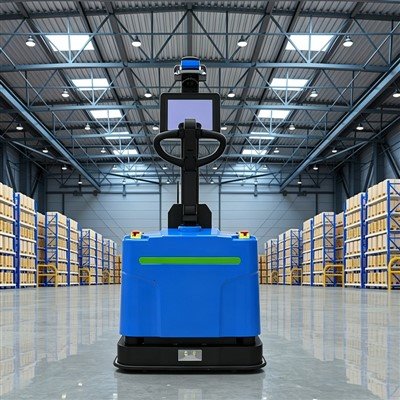
If you’re interested in learning more about how our AMRs can fit into your business and how they can provide accurate object recognition, don’t hesitate to reach out. We’re here to have a chat, answer your questions, and discuss how we can customize the solution to meet your specific needs. Let’s work together to take your operations to the next level with the power of accurate object – recognizing AMRs!
Automated Guided Vehicle References:
- Robotics Research Journal: "Advances in Sensor Fusion for Autonomous Mobile Robots"
- Industrial Automation Magazine: "Object Recognition in Dynamic Environments for AMRs"
- Machine Learning in Robotics Conference Proceedings: "Improving Object Recognition Accuracy in AMRs with Deep Learning"
Shenzhen Ginnee Intelligent Warehousing Robotics Co., Ltd.
As one of the most professional autonomous mobile robot suppliers in China, we’re featured by quality products and low price. Please rest assured to wholesale durable autonomous mobile robot in stock here and get quotation from our factory. We also accept customized orders.
Address: Room101, No.162 JunXin Road, Niuhu Community, Guanlan Strect, Longhua District, Shenzhen, Guangdong Province, China.
E-mail: huangyongmei@szginnee.com
WebSite: https://www.ginneerobotics.com/
