If you’ve ever stood on a worksite at 2 a.m. watching a piece of heavy machinery seize mid-job, you know hydraulic motor downtime isn’t just an inconvenience—it can cost thousands in lost production, missed deadlines, and frustrated crews. For 12 years, I’ve worked hands-on with hydraulic motors: first as a service tech, then as a supplier, and now I field troubleshooting calls from operators, maintenance teams, and plant managers every single day. The best part of the job? Walking a team through fixing a motor that’s acting up without needing to haul it back to our shop, saving them time and money. Hydraulic Motor

Today I’m breaking down the step-by-step troubleshooting process I use with every customer, grounded in real-world fixes—not just textbook theory. This works for gear motors, vane motors, piston motors, the most common types you’ll find in excavators, forklifts, conveyor systems, and industrial presses. Let’s start with the basics: before you touch the motor, you need to eliminate the most obvious, easily fixed issues first. I can’t tell you how many times a call starts with, “My motor won’t turn,” and we spend 5 minutes confirming it’s not a tripped circuit breaker or a clogged filter.
Step 1: Rule Out the Simple, Common Culprits First
When a hydraulic motor acts up, the first 15 minutes of checks should be quick, no disassembly required. This is where most people waste time diving into the motor internals when the fix is right in front of them.
First, check the pressure and flow to the motor. Every hydraulic system has a pressure gauge somewhere, usually at the pump outlet or right before the motor. If pressure is way lower than the manufacturer’s spec (that’s in your motor’s manual, by the way—keep it on your worksite, don’t store it in a desk drawer), low pressure could mean a clogged suction line, a bad relief valve, or even a leak in a hose before the motor. Flow is just as important: if the system is delivering less flow than the motor needs to turn at the desired speed, the motor will stall or run too slow. I once had a construction foreman call me because his excavator’s swing motor kept locking up. We checked pressure—too low—and found a suction line filter that had been changed 6 months prior, never again. It was so clogged with dirt that it starved the pump, which starved the motor. Simple fix, and it would’ve been 2 days of downtime if he’d taken apart the motor first.
Next, check for leaks. Hydraulic fluid is the lifeblood here—even a small external leak from a seal or a hose fitting can drop system pressure enough to make the motor underperform. If you see fluid pooling around the motor’s shaft or mounting bolts, trace the leak. Sometimes it’s just a loose fitting; other times, a seal that’s worn out and needs replacement. Also, check the fluid level in the reservoir. It sounds silly, but if the level is too low, the pump will pull in air, and air in the hydraulic system is a top cause of erratic motor performance, weird noises, or complete stall. I saw this on a conveyor system at a food processing plant: the maintenance team had topped off the fluid but didn’t bleed the air lines, so the motor would jerk every 10 seconds. Bleeding the system fixed it in 10 minutes.
Step 2: Listen and Watch—The Motor Tells You a Lot
Hydraulic motors communicate through sound and movement. If you learn to read those cues, you can diagnose most issues without taking the motor apart. Let’s start with noise:
- A high-pitched whine when the motor is running? That’s almost always cavitation. Cavitation happens when the pump pulls in too much air, or the suction line is restricted, creating bubbles in the fluid. When those bubbles collapse, they erode the motor’s internal parts over time and make that whirring noise.
- A grinding or clunking noise? That’s usually metal-on-metal contact, which could be worn bearings, damaged gears, or bent vanes in a vane motor. I had a customer with a skid steer that had this grinding noise—we found the motor’s output shaft bearing was worn out because they’d run the motor under excessive load for months without servicing.
- No noise at all, and the motor won’t turn? That’s either a complete blockage in the lines, a seized motor, or a problem with the drive coupling connecting the motor to the load. Check the coupling first—sometimes it slips or breaks, so the motor turns but doesn’t move the equipment.
Watch the motor’s movement too. Is it running slow even when the system pressure is correct? That could mean internal wear inside the motor, or maybe a relief valve that’s set too low. Is it running uneven, speeding up and slowing down for no reason? That’s almost always air in the system, or worn components inside the motor that create inconsistent flow. One time, a forklift operator called saying his lift motor would only go up halfway. We checked pressure—normal. We checked for leaks—none. We took the motor apart (after ruling out all external issues) and found that the piston seals inside were cracked, letting fluid bypass instead of moving the pistons to create torque. That was the internal fix, and it matched the uneven movement we saw.
Step 3: Test the Motor Under Load (Carefully)
Once you’ve ruled out all external system issues, it’s time to test the motor directly. First, disconnect the motor from the load if possible—turn off the system, remove the hoses, and run hydraulic fluid directly through the motor to test it. This isolates the motor from any problems with the driven equipment (like a stuck gearbox or a jammed conveyor).
When you run the motor without the load, watch its speed and smoothness. If it runs fast when there’s no load, but slows way down or stalls when you apply even light pressure, that’s internal leakage. Hydraulic motors rely on sealed internal chambers to create torque; if seals between those chambers are worn, fluid bypasses instead of creating force. That’s the most common internal issue I see as a supplier—usually from dirty fluid or lack of maintenance. Over time, contaminants wear down seals and piston surfaces, leading to internal leakage.
Another test: check the motor’s torque. If you have a torque wrench (or a way to measure the force the motor is applying to the load), compare it to the manufacturer’s spec. Low torque under load usually means internal leakage, or sometimes a misadjusted or damaged relief valve in the motor itself. For example, in a piston motor, worn cylinder barrels or damaged pistons will create low torque because they can’t build enough pressure.
Step 4: Digging Into Common Wear and Tear
If the tests point to internal motor issues, here are the most common problems we fix daily, and what causes them:
- Worn seals and gaskets: This happens most often because of contaminated fluid. Hydraulic fluid that’s not changed regularly has dirt, metal shavings, or water in it, which act like sandpaper on seals. I recommend customers change their fluid and filters every 1,000 hours of operation, even if it looks clean. It’s way cheaper than replacing a motor because of seal failure.
- Damaged bearings: Bearings take the brunt of the load on the motor’s shaft. If the equipment is operated under excessive load (like trying to lift more than the motor’s rated capacity), or if there’s misalignment between the motor and the load coupling, bearings wear out fast. A good maintenance habit is to check bearing play every 6 months—if the shaft wiggles more than 0.5mm, it’s time to replace the bearings before they seize the motor.
- Contaminated internal components: Dirt that gets past the external hoses and filters will end up inside the motor. For gear motors, this can scratch the gear teeth, leading to low torque and noise. For vane motors, it can bend or chip the vanes, making the motor run erratically. For piston motors, it can score the cylinder walls, leading to internal leakage. This is why proper filtration is non-negotiable—we recommend 10-micron or finer filters for most hydraulic systems.
- Misalignment: This is an easy-to-fix issue that causes so many premature motor failures. If the motor’s coupling is not aligned perfectly with the load’s shaft, it puts extra stress on the motor’s bearings and shaft, leading to wear and seal damage over time. I always tell customers to check alignment when they install a new motor, and every time they do routine maintenance.
When to Replace vs. Repair
A common question I get is: “Should I repair my motor, or buy a new one?” The answer depends on a few factors: the age of the motor, the cost of repair, and the availability of parts. For small gear motors, repair is often cheaper than replacement, but for large piston motors (used in heavy equipment), sometimes a remanufactured motor from a reputable supplier is a better bet, because it’s tested to the same specs as new and comes with a warranty. As a supplier, I always encourage customers to get a second opinion if they’re unsure—we offer a free diagnostic check for motors sent to our shop, so you don’t end up paying for unnecessary repairs.
Final Pro Tips to Avoid Future Headaches
After troubleshooting hundreds of hydraulic motors over the years, I’ve picked up a few habits that keep customers’ equipment running smoothly:
- Keep a spare filter and a small hydraulic fluid sample on hand for quick checks. If you suspect contamination, a fluid analysis test can tell you what’s in it before you tear apart a motor.
- Never exceed the motor’s rated pressure or load. I see people do this all the time to get one more job done, but it shortens the motor’s lifespan by years.
- Do routine checks: every 500 hours, check fluid level, leaks, and coupling alignment. Every 1,000 hours, change fluid and filters, and do a basic pressure test on the motor.
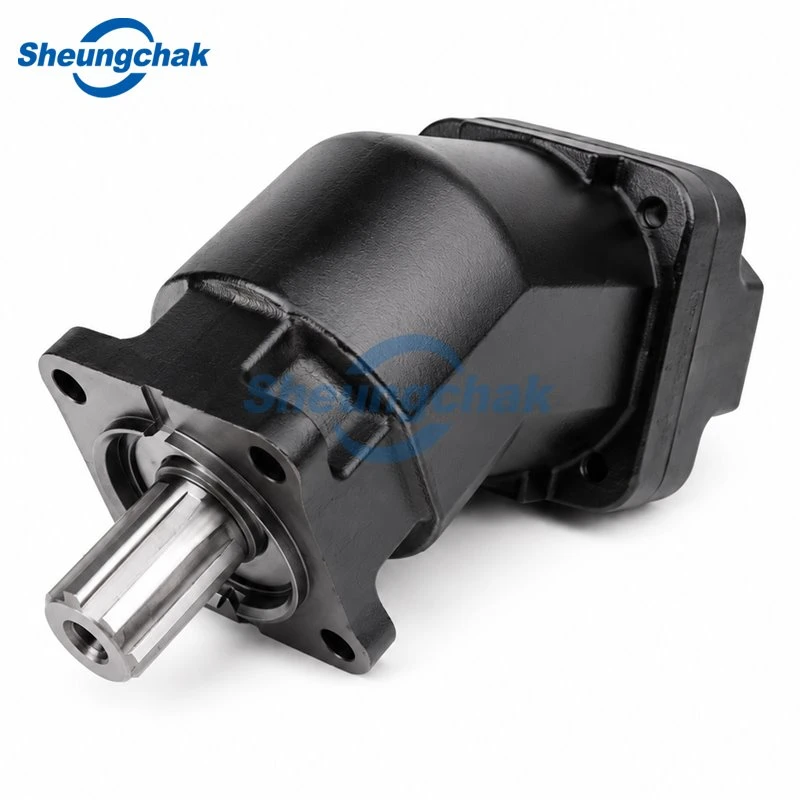
If you’re dealing with a hydraulic motor that won’t run right, or you need a replacement or spare parts, don’t waste time guessing—reach out to our team to get the right support for your equipment. We work with operators, maintenance teams, and fleet managers to get downtime resolved fast, whether that’s troubleshooting over the phone, supplying parts, or delivering remanufactured motors that meet your exact specs.
References
Hydraulic Piston Pump Hydraulic Motor Technology. Fluid Power Society, 2021.
Troubleshooting Hydraulic Systems. Parker Hannifin Corporation, 2020.
Hydraulic Motor Maintenance and Repair Guide. Eaton Corporation, 2022.
Guangdong Sheungchak Hydraulic Technology Co., Ltd.
Guangdong Sheungchak Hydraulic Technology Co., Ltd. is one of the most professional hydraulic motor manufacturers and suppliers in China. We are committed to providing high quality customized products with competitive price. Please rest assured to wholesale durable hydraulic motor for sale here and get pricelist from our factory.
Address: Building 25, Liantang Industrial City, Shangcun Community, Gongming Subdistrict, Guangming District, Shenzhen, China
E-mail: info@hydraulicsc.com
WebSite: https://www.hydraulicsc.com/
