Let’s cut to the chase—if you’re in the injection molding, die casting, or mold-making game, you’ve probably stared at your hydraulic setup at 2 a.m. when a last-minute mold swap goes sideways, wondering why every quick coupling feels like it’s designed to waste your time. As a guy who’s been selling mold hydraulic quick couplings for over a decade (I’m not gonna name-drop my company—you’ll find me if you need me), I can tell you this: most people don’t get the real purpose of these little metal parts. They see ’em as just another quick connect/disconnect gizmo, but if you skip the right ones, you’re gonna pay for it—big time. Mold Hydraulic Quick Couplings
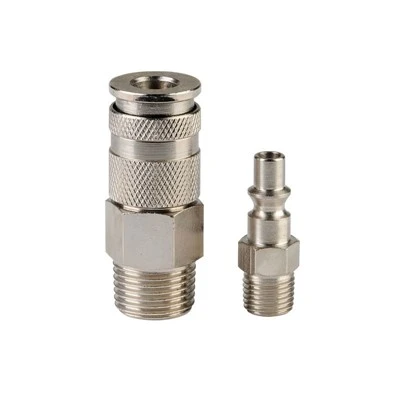
Let’s start with what “mold hydraulic quick couplings” even are, for the newbies. They’re the bits that link your mold’s hydraulic lines (you know, the ones that run ejector pins, lifters, valve cores, all the stuff that moves inside a mold) to your press’s hydraulic system. Old-school methods used flared fittings or permanently crimped lines, which meant you had to wrench lines loose, bleed pressure, clear fluid, and swap lines one by one—total buzzkill. Quick couplings? They let you yank a mold off the press and drop a new one in minutes, no fancy tools, no messy fluid spills. But that’s just the surface. The actual purpose? It’s three-fold, and it’s all tied to stopping the kind of headaches that make your team’s weekly KPI meetings way longer than they need to be.
First purpose: they speed up mold changeovers—like, real speed, not the “we’ll do it in 10 minutes if we rush” kind. Let’s be honest: mold change time is money in molding. Every second your press is idle? That’s 50 cents, a dollar, even $2 worth of lost production, depending on your run rate. I’ve seen shops swap a mold in 20 minutes with good couplings, vs. 2 hours with garbage ones. Why? Because cheap couplings leak, stick, or don’t align right. I remember a guy in Ohio who was running 10 different molds for auto parts—his old couplings had him taking 90 minutes per change, so he was only running 2 shifts a day. Swapping to the right mold-specific quick couplings cut that to 15 minutes, and suddenly he was running 3 shifts, no extra equipment, no extra labor. That’s not a win—that’s a game-changer. And here’s the thing: not all quick couplings are made for molds. Some are for general hydraulic use, which means they don’t handle the pressure (mold hydraulic systems run 3,000 psi minimum, often way higher) or the constant, harsh swaps that molds go through. Mold-specific ones are built to handle that cycle after cycle, so they don’t wear out in a month like the cheap garbage you get on Amazon.
Second purpose: they keep your workplace safe and clean. Let’s talk about the fluid mess. When you disconnect a hydraulic line the old way, oil sprays every which way—on the press, the floor, your shoes, even your nice work shirt. That’s not just gross; it’s a slip hazard. OSHA’s got stats on workplace injuries, and slip-and-falls from hydraulic fluid are way too common, especially in shops that do a lot of mold changes. I’ve got a customer in Michigan who had three guys slip on oil in a month because their old couplings didn’t seal right. Switched to mold hydraulic quick couplings that have a dry-disconnect design—meaning when you pull them apart, they close automatically, no fluid comes out. Now, his shop’s safety metrics went through the roof, and he saved on cleaning costs too. No more mopping up 5 gallons of oil after every shift, no more replacing floor mats every week. And for shops that handle food-grade or medical molds? That’s even more important. Contaminating a mold with hydraulic fluid means scrapping parts, which is a huge hit. The right quick coupling keeps your lines sealed tight, so no crud gets in, no leaks that ruin parts.
Third purpose: they protect your mold and your press. Wait, people never talk about that. But here’s the thing: if your coupling leaks, or doesn’t connect right, you’re not just wasting fluid—you’re messing with the hydraulic pressure that makes your mold work. For example, if an ejector pin isn’t getting enough pressure because of a bad coupling, it could get stuck, or break, or damage the part you’re molding. I had a customer in Texas once who had a $10,000 mold damaged because a cheap coupling failed mid-run—hydraulic pressure surged, bent a lifter, and they had to replace the whole core. The fix? Just swapping to a mold quick coupling rated for their pressure, with a check valve that stops pressure spikes. Now, no more surges, no more mold damage. Also, when you’re disconnecting a mold, if the coupling doesn’t hold pressure properly, you’ve got residual pressure in the line that can shoot fluid, or even damage the press’s hydraulic system. The right coupling bleeds that pressure slowly, so everything stays intact.
But wait, a lot of guys I talk to say, “Why can’t I just use any quick coupling? They all look the same.” No, man, that’s a rookie mistake. Mold hydraulic quick couplings have specific specs that matter. First, they have to be “shut-off” couplings, not “open-flow.” Open-flow couplings let fluid run free when you disconnect, which is exactly what you don’t want for mold swaps. Shut-off couplings close the line when you pull them apart, so no fluid escapes, no pressure is lost. Second, they’re sized for specific ports. Molds have different port sizes for hydraulic lines—you can’t use a 1/4-inch coupling on a 3/8-inch port, that’s a leak waiting to happen. Mold-specific couplings are made to match the port standards used in mold making (like JIC, NPT, or metric, depending on where you’re at), so you don’t have to adapt anything. Third, they’re built for durability. A cheap coupling has a steel body that rusts, or a plastic seal that cracks after a few hundred swaps. Mold quick couplings use hardened steel bodies and seals made for hydraulic fluid, so they last thousands of cycles. I’ve got a customer who’s been running the same set of couplings for 7 years, swapping molds 5 times a week, and they haven’t had to replace a single one. The cheap ones he tried before? Lasted 3 months, tops.
Let’s also talk about something a lot of people miss: compatibility with your mold and press. Some molds have specialized lines for specific functions—like cooling lines? Wait no, we’re talking hydraulic, but even so, some quick couplings are designed for high-temperature environments, which molds definitely get. If you’re molding plastic that runs at 500 degrees, your hydraulic lines and couplings have to handle that heat, otherwise the seals will fail. Mold hydraulic quick couplings are tested for temperature ranges from -40 to 400 degrees Fahrenheit, which covers almost every molding application out there.
I know what you’re thinking: “This sounds great, but what’s the catch? They’re probably expensive.” Yeah, upfront they cost more than the ones you get at the hardware store. But let’s do the math. If a cheap coupling costs $10, and a good mold coupling costs $50, but the cheap one breaks in 3 months, and the good one lasts 7 years—wait, no, let’s do annual cost. Cheap: $10 each, 4 a year = $40. Good: $50 each, 1 a year (or less) = $50. But wait, that’s not all. The cheap ones cause downtime, part scrap, safety costs. If a cheap coupling causes a mold to break, that’s $10,000 in repairs, which is way more than the extra cost of the couplings. So the purpose of mold hydraulic quick couplings isn’t just to make mold swaps easy—it’s to save you money, keep your team safe, and protect your most expensive equipment.
I’ve been in this game long enough to see every trick in the book. I’ve watched guys skimp on parts and end up paying for it. I’ve watched guys invest in the right quick couplings and see their production go up, their costs go down, and their team be happier. Because let’s be real—no one likes dealing with leaky fittings, slow mold swaps, or mold damage that makes them stay late on a Friday.
If you’re tired of dealing with the hassle of your current quick couplings, if you’re tired of lost production, safety issues, or mold damage, you should reach out to someone who knows mold hydraulic quick couplings inside and out. I’m not here to sell you something you don’t need— I’m here to help you figure out what you do need, so you can stop wasting time and money on garbage parts. We can talk through your specific setup, what molds you run, what pressure and temperature you need, and get you set up with couplings that actually do what they’re supposed to.
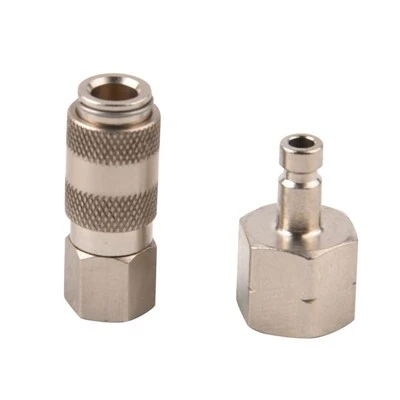
Don’t wait until your next mold swap goes wrong. Don’t wait until you have a slip-and-fall or a broken mold. The right mold hydraulic quick couplings aren’t just a part—they’re an investment in your business. Let’s connect and figure out what works for you.
High Pressure Hydraulic Quick Couplings References
Society of Plastics Engineers. (2022). Mold Hydraulic System Best Practices for Injection Molding. SPE Press.
Occupational Safety and Health Administration. (2021). Hydraulic Fluid Leak Prevention in Manufacturing Facilities. OSHA Technical Manual.
MoldMaking Technology. (2023). Selecting Quick Couplings for Mold Changeover Efficiency. MoldMaking Media.
Hydraulic Institute. (2020). Specifying Quick Disconnect Couplings for High-Pressure Hydraulic Applications. Hydraulic Institute Standards.
Plastics Engineering. (2022). Reducing Downtime in Die Casting Operations Through Improved Hydraulic Components. Smithers Group.
Cixi Poolke Hydraulic Pneumatic Co., Ltd.
Cixi Poolke Hydraulic Pneumatic Co., Ltd. is one of the most professional mold hydraulic quick couplings manufacturers and suppliers in China, also supports customized service. Please feel free to wholesale the newest mold hydraulic quick couplings made in China here from our factory. Quality products and reasonable price are available.
Address: #88 Zhengtong Road, Kandun Industrial Park315303, Cixi, Zhejiang, China
E-mail: contact@poolke.com
WebSite: https://www.poolkecouplings.com/
