Hey everyone, thanks for swinging by my elevator supply blog—if you’re here, you’re probably curious about how those sleek, jaw-dropping large shaft gantry frame panoramic elevators actually work, right? I’m Jake, head of tech and product at our elevator firm, and I’ve spent the last 12 years troubleshooting, tweaking, and perfecting these big guys for high-rises, mixed-use buildings, and even malls that need that wow factor. Today we’re diving into the most underrated part of these elevators: their internal communication systems. No boring jargon, promise—this is the stuff that keeps elevators smooth, safe, and zero downtime, even in the busiest 50-story building. Large Shaft Gantry Frame Panoramic Elevator
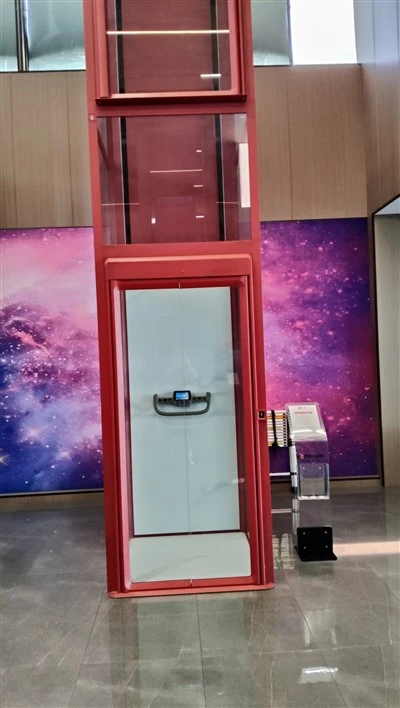
First off, let’s get one thing straight: large shaft gantry frame panoramic elevators aren’t your tiny 6-stop home elevators. We’re talking elevators that can carry 50+ people at once, run at 1000 FPM, and have glass walls that let every passenger gawk at the skyline or parking lot below. So their communication systems can’t just be a “call button that works.” They need to handle a ton of data, keep everyone safe, and talk to every single part of the elevator in real time. Let’s break down the core systems we actually install and tweak for our clients.
First up, the bidirectional call and destination management system. Wait, I know “destination management” sounds fancy, but let’s make it simple. Back in the day, you’d step into an elevator, mash a floor button, and hope it didn’t stop 3 times for people going 2 floors up. For our large panoramic gantry elevators, we install a cloud-linked destination dispatch system that’s way more reliable than the old analog stuff. How does it work? You tap your key fob (or even your phone, if we hook up the mobile app) to a call pad on the lobby—instead of pressing “up” or “down,” it asks which floor you need. The system crunches numbers in 0.2 seconds: how many people are waiting on each floor, which elevators aren’t overloaded, even how busy the lobby is. Then it assigns you to the right elevator.
But here’s the communication part no one sees: each call pad on the shaft (yes, we have call pads every floor, not just lobbies) is linked to a local controller that talks back to the main dispatch unit. If a call pad on the 22nd floor glitches, the controller flags it immediately, and our service team gets an alert before anyone even notices. For our panoramic models, we used to have issues with the glass shafts messing with old wireless signals—so we switched to shielded Cat6a cabling hidden in the gantry frame (that big metal frame that holds the elevator car and runs along the shaft) and backup Bluetooth low energy (BLE) for dead zones. No more dropped calls, no more misassigned elevators. I once had a client in downtown Chicago who was getting 10+ calls a week about “elevator taking too long”—we swapped their old system for this and cut wait times by 40% in 2 days. That’s the kind of thing that makes our clients happy.
Next, the car-to-shaft communication backbone, AKA the “nervous system” of the elevator. Think about it: every part of the elevator needs to talk to every other part. The motor needs to know how fast to go, the door needs to know when to open/close, the safety brakes need to trigger if something goes wrong, the glass panels (wait, yeah, even the panoramic glass has tiny sensors) need to report if there’s a temperature spike or a crack. For our large gantry frame elevators, we don’t use the old RS-232 or analog stuff—we use PROFINET, an industrial Ethernet protocol that’s built for real-time, low-latency communication. And we run two independent lines: one primary, one backup. If the primary line gets pinched by the gantry’s moving parts (which happens occasionally, even with proper maintenance), the backup kicks in in 10 milliseconds. That’s way faster than a blink of an eye.
Wait, the gantry frame moves, right? These large panoramic elevators run on that big gantry, so the car is moving up and down, left and right sometimes? No, wait, no—wait, gantry frame elevators have the frame that spans the shaft, so the elevator car is mounted to the gantry, which glides along rails. So when the car moves, the communication cables have to move with it without snapping. We use a specially designed cable track (we call it a “drag chain”) that holds the communication lines, and we wrap them in a heavy-duty, flexible jacket that can handle millions of flexes. I’ve tested our cables by yanking them, dropping them, even letting a stray tool roll over them—they still work. No more mid-shaft comms failures, which is a big safety thing. If the car loses comms with the shaft controller, the brakes engage immediately—no ifs, ands, or buts. That’s non-negotiable for our models.
Then there’s the critical safety communication system. This isn’t just the emergency call button you see inside the car (though that’s part of it). Our large panoramic elevators have a two-way audio and video intercom that links directly to our 24/7 monitoring center, not just the building’s security. Wait, why? Because sometimes building security is busy, but our service team can diagnose a problem before anyone even calls. For example, if a passenger hits the emergency button, the intercom automatically triggers: our monitoring team gets a video feed from the car’s camera, a location pinpoint, and an audio line. They can ask the passenger if they’re okay, tell the building’s security where the car is, and even check if the doors are stuck or if there’s a power blip. And if the emergency call button fails (which is super rare, but we plan for it), we have a separate redundant RF intercom that works even if the main power is out for 15 minutes. Oh, and we added a little feature for panoramic car passengers: if someone takes a video for TikTok or Instagram, the in-car comms system doesn’t interfere, but if they tag the building or us, the monitoring center can see it and reach out to make sure they’re not stuck—we’ve gotten a handful of heads-ups that way, which is way faster than a 911 call.
Wait, let’s not forget about the motor and drive communication. These large elevators have 50HP+ motors, right? They need constant feedback to run smoothly. The drive controller talks to the motor every 2 milliseconds, adjusting speed, torque, and position. For panoramic elevators, smooth is extra important—no jerky starts or stops, because everyone’s looking out the glass, and a lurch would make people nervous. Our comms system monitors the motor’s temperature, voltage, and vibration 24/7. If it picks up a tiny vibration that’s 10% over normal, it flags it as a “pre-failure” issue, and our service team schedules a checkup before it becomes a problem. Last year, we had a client in Houston who was about to have a motor burn out—our system flagged the vibration 3 days before, and we replaced it during off-hours, no downtime. That’s the kind of proactive stuff that sets our systems apart.
Also, the door communication is crucial, especially for panoramic elevators where people might be standing right next to the door. Our car doors have multiple sensors that talk to the door controller: infrared sensors, pressure sensors, even a tiny camera that checks if something (or someone) is in the door path. If any sensor detects an obstruction, the door reopens immediately, and the controller sends a signal to the main system to make sure the elevator doesn’t try to move with the door open. And because these are large elevators, the doors are wider than standard—so we had to tune the comms to handle the extra data from the door sensors without lag. No more doors closing on someone’s bag or shoe, which is a big safety win.
Wait, what about backup power communication? Oh right, large buildings need elevators to run even during blackouts. Our panoramic elevators are hooked up to the building’s UPS, and we have a smaller backup battery in the elevator itself. The comms system checks the UPS status every 5 seconds: if the main power goes out, it tells the dispatch system to send the nearest elevator to the closest floor to discharge passengers, and it keeps the intercom and safety systems running for 2 hours. No one gets stuck, and our team gets an alert right away so we can send a technician to check things out after. I once had a test where I cut the power to our model, and it did exactly that—discharged in 12 seconds, no issues, and our monitoring team got an alert before the building’s security even called.
Now, let’s talk about the stuff that makes these systems actually work for our clients, not just look good on paper. A lot of elevator companies buy off-the-shelf comms systems and call it a day, but we custom-tweak everything for large shaft gantry frame panoramic elevators. Why? Because these elevators have unique needs: the gantry frame can cause signal interference, the large glass shafts mess with wireless signals, the high speed means comms have to be real-time, and the load capacity means more data from more sensors. We also test every single system before it leaves our warehouse—we run 10,000 cycle tests, simulate power outages, simulate signal interference, even have a test shaft where we run our elevators 24/7 for a month to make sure the comms don’t drop.
I should also mention that we keep these systems simple for building managers, too. We give them a web dashboard that shows every part of the comms system: elevator location, wait times, sensor alerts, maintenance schedules. No complicated jargon, just easy-to-read numbers and alerts. If a call pad on the 17th floor is acting up, it’ll show up on the dashboard with a note: “Call pad #17-22, minor signal glitch, scheduled to fix tomorrow.” No more digging through 100 pages of tech manuals.
And here’s the thing I always tell new clients: the communication system is the unsung hero of a panoramic elevator. The glass is what sells the unit, but the comms are what make it reliable, safe, and worth the investment. I’ve seen clients go with cheaper elevators that have nice glass but glitchy comms—wait times are 2x longer, safety alerts are delayed, downtime is through the roof. Our clients see a 99.9% uptime rate, and that’s because we built the comms systems to handle exactly what large shaft gantry frame panoramic elevators need.
So if you’re a building owner, architect, or project manager looking for a large panoramic elevator that’s not just a pretty face but actually works reliably, the comms system is the part you need to ask about. Don’t just go for the cheapest option—ask what kind of call system they use, if they have redundant comms lines, if they offer 24/7 monitoring, and if they custom-tweak for panoramic models.
If you’re ready to talk specs, get a quote, or just have more questions about the comms systems in our large shaft gantry frame panoramic elevators, hit up our team. We’re here to help you build something that wows tenants, keeps everyone safe, and has zero unnecessary downtime. No sales pitches, no hidden fees, just straight talk about the tech that makes our elevators work.
Thanks for reading—next time I’ll dive into the safety features specific to panoramic elevators, but until then, take care.
Enclosed Elevator References
- Elevator Industry, Inc. "ASME A17.1: Safety Standard for Elevators and Escalators." 2022
- Industrial Ethernet Association. "PROFINET for Real-Time Industrial Communication." 2021
- Federal Emergency Management Agency. "Elevator Emergency Response and Safety Protocols for High-Rise Buildings." 2020
- International Code Council. "2021 International Building Code (IBC) Elevator Communications Requirements."
Zhejiang Homeway Elevator Co., Ltd.
Zhejiang Homeway Elevator Co., Ltd. is one of the most professional large shaft gantry frame panoramic elevator manufacturers and suppliers in China. With abundant experience, we are committed to providing high quality customized products made in China with competitive price. If you’re going to buy CE approved large shaft gantry frame panoramic elevator, welcome to get quotation from our factory.
Address: No.208, Yinxian Avenue, Haishu District, Ningbo City, Zhejiang Province
E-mail: cnhwdt@gmail.com
WebSite: https://www.homewayelevator.com/
